All species › Tubenoses › Petrels, shearwaters and diving petrels › Providence Petrel
Providence Petrel | Pterodroma solandri
Solanders stormvogel | Petrel de Solander
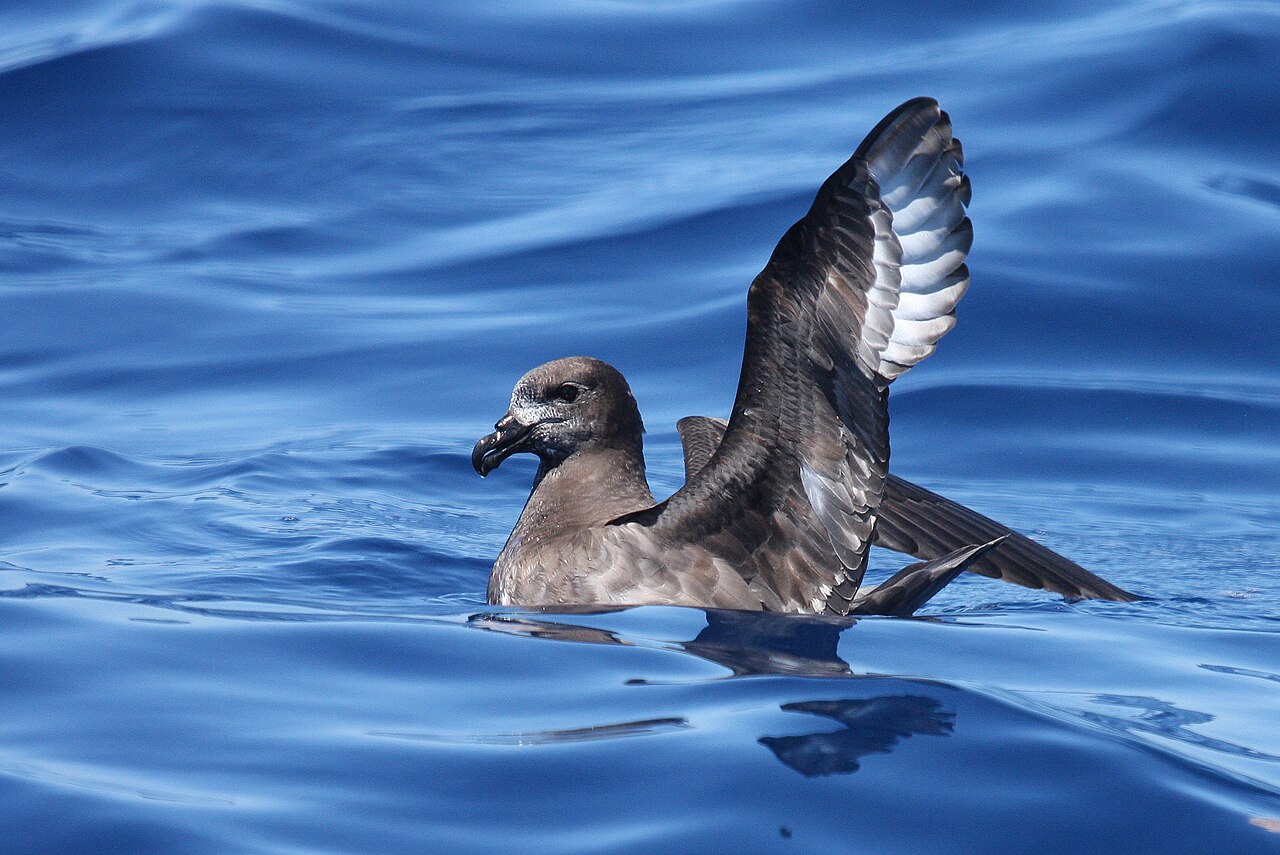
The Providence Petrel is the big dark gadfly petrel of the Tasman Sea: forty centimetres, greyish brown, with a pale scaly face, a long wedge-shaped tail and a white flash at the base of the primaries on the underwing. More than ninety-nine per cent of the world population breeds on two mountain tops of Lord Howe Island, where in winter it can literally be called down out of the air.
Voice
Silent at sea, as all members of the genus are. Over the colony it is anything but: in flight it gives a screeching, rattling kir-rer-rer-kik-kik-kik that carries across the peaks of Lord Howe by night and by day alike. That the birds call and land in daylight is highly unusual for a petrel.
Recording: Todd Mark — CC BY-NC-SA 4.0 · Little Island, Lord Howe Island, New South Wales, Australia · xeno-canto
Identification
A large, heavy petrel of forty centimetres and about half a kilo, dark grey-brown throughout. The face is paler, grey and scaly in pattern, with a pale chin, giving the bird a grey-faced look; the rest of the head is brown. On the underwing, close to the wingtip, sits a white flash formed by the pale bases of the primaries — that is the feature everything turns on. The tail is long and wedge-shaped, the bill stout and black, the eye dark, legs and feet greyish black. The flight is heavy and powerful, in high broad arcs.
Confusion species
All the big dark petrels of this region look alike; the underwing decides. Great-winged Petrel (Pterodroma macroptera) is the closest match but lacks the white underwing flash and shows only a limited pale face. The dark morph of Kermadec Petrel (Pterodroma neglecta) is smaller, lacks the grey scaly face, and has pale shafts to the primaries that produce a pale patch not only below but also on top of the wing — so check the upperwing to separate those two. The dark morph of Herald Petrel (Pterodroma heraldica) also shows a pale underwing flash but is smaller and slimmer, has dark shafts, and is a bird of the tropical Coral Sea while Providence Petrel holds the Tasman Sea. White-chinned Petrel (Procellaria aequinoctialis) and Black Petrel (Procellaria parkinsoni) are told by their pale yellow to horn-coloured bill against the black bill of this species.
Habitat
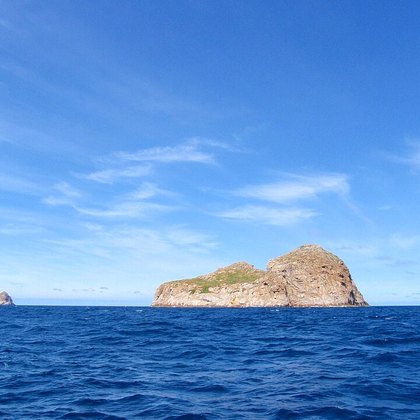
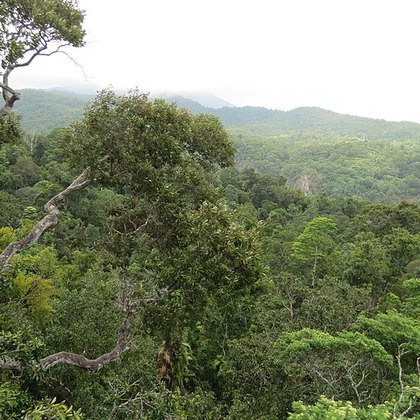
At sea, temperate to subtropical water over and beyond the continental shelf of eastern Australia. To breed it moves into mountain forest: the burrows lie on the mossy, fern-rich summits and steep slopes of Mount Gower and Mount Lidgbird on Lord Howe, among tree roots and boulders in the cloud forest, and on Phillip Island beside Norfolk Island in rougher, lower ground.
Where the bird is most often found, arranged by main group and formation.
Range and movements
Within the map window it breeds almost entirely on Lord Howe Island, with about thirty-two thousand pairs on Mount Gower and Mount Lidgbird, plus a few tens of pairs on Phillip Island beside Norfolk Island. In the breeding season, March to October, it feeds off eastern Australia from Fraser Island to south-eastern Tasmania, and that is exactly when it is the commonest gadfly petrel on the winter pelagics off New South Wales. After breeding it moves away to the north-western Pacific off Japan and Kamchatka and into the Bering Sea. In New Zealand waters it is no more than a vagrant.
- Winter
- dark = core range, pale = thinly spread
Where and when to look
Two ways, both in the Australian winter. Between May and September walk the climb to the summit of Mount Gower on Lord Howe, or the Little Island Track at its foot: call or whistle and birds come down out of the air, land at your feet and sometimes even climb into your lap — a performance no other petrel in the world puts on. If you stay on the mainland, take a pelagic out of Sydney, Wollongong or Port Stephens between May and August; on every dark gadfly look for the white flash near the base of the primaries and for the pale, scaly cheek.
Conservation
Least Concern (LC), with some sixty-four thousand birds, but that reassuring status hides a precarious position: practically the whole species breeds on two mountain tops of one island plus one islet. History warns why that matters: after European settlement on Norfolk Island in 1790 up to five thousand birds a night were killed for food and an estimated million taken in all, after which introduced cats, rats and pigs wiped the species out there by about 1800; only after the rabbits were removed did it return to Phillip Island. On Lord Howe, burrow flooding and predation by the native Lord Howe Woodhen are the natural losses; rats and mice were removed from the island in a large operation in 2019, the single biggest gain of recent decades. At sea, drowning on longlines and the ingestion of plastic both occur, though neither is currently the leading cause of death.
Scientific name
Pterodroma solandri | (Gould, 1844)
Gould described the species in 1844 as Procellaria solandri, so author and year stand in parentheses. The epithet, which the Dutch guide name follows, honours Daniel Solander, the Swedish botanist who sailed with Banks and Cook on the Endeavour. Gould gave no real type locality; Bass Strait is taken as the place. The English name Providence Petrel comes from the hungry winter of 1790 on Norfolk Island: the birds that arrived on the mountain then were seen by the starving settlement as a deliverance of providence. The genus Pterodroma was introduced by Bonaparte in 1856, from Greek pteron (wing) and dromos (runner).