All species › Kingfishers, bee-eaters and rollers › Kingfishers › Little Kingfisher
Little Kingfisher | Ceyx pusillus
Papoea-ijsvogel | Martín pescador menudo
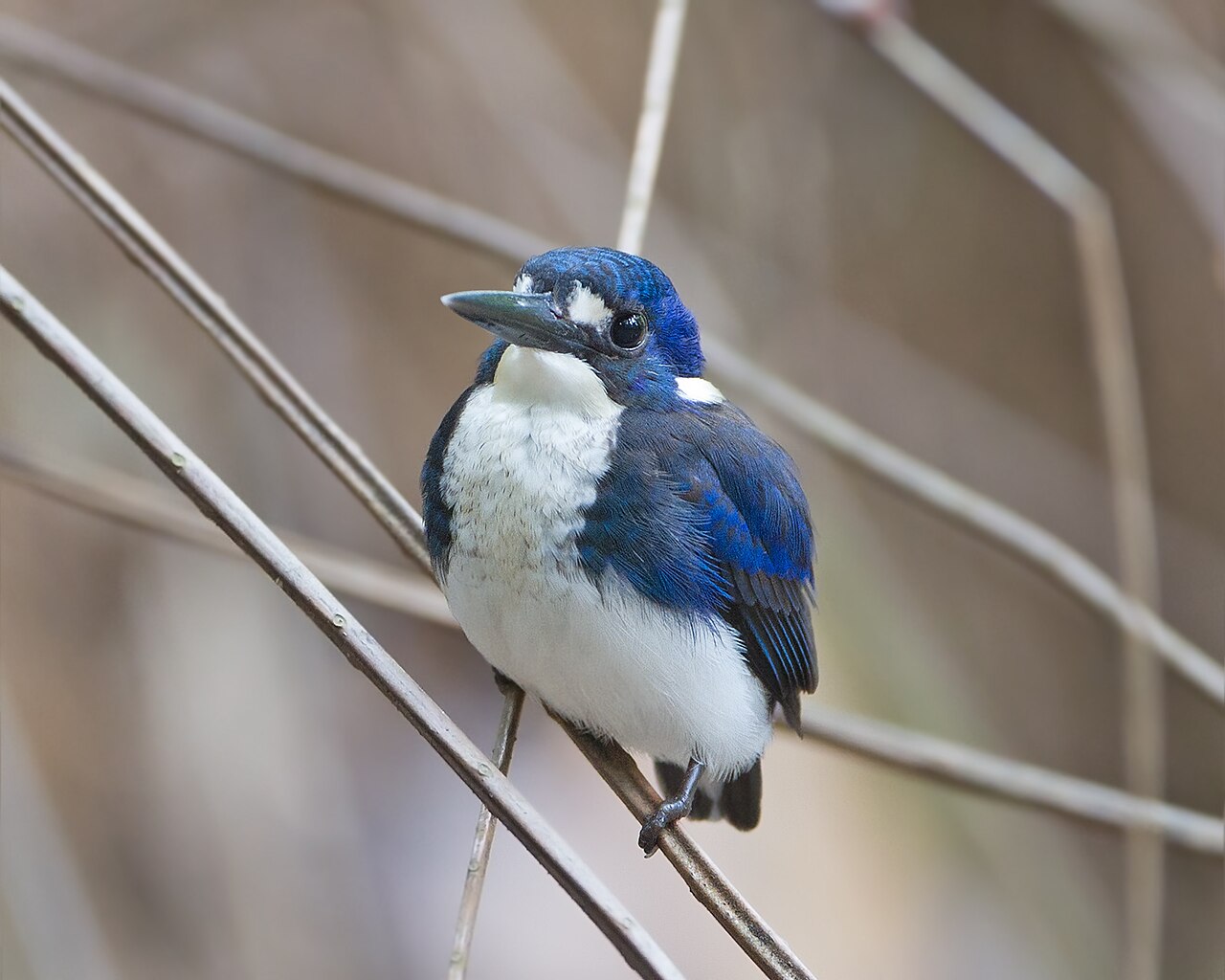
The Little Kingfisher is Australia's smallest kingfisher and barely bigger than a thumb: eleven to thirteen centimetres, glossy deep blue above and snow-white below. It lives retiringly in mangrove and shaded forest pools, calls at a pitch close to inaudible, and is therefore missed far more often than it is seen.
Voice
The only sound you hear in practice is a very high, thin, squeaky tzeit-tzeit, given in flight as the bird shoots low over the water. It is so slight and so high that it usually carries only at close range, and in a mangrove full of insect noise it is easily lost. At the nest there are soft, quickly repeated peeps.
Recording: Phil Gregory — CC BY-NC-SA 4.0 · Isaisao Resort near Suavanao, Isabel Province, Solomon Islands · xeno-canto
Identification
A minute kingfisher of at most thirteen centimetres and ten to fifteen grams — the weight of a sparrow, and three quarters of it seems to be bill and head. Crown, back and wings are glossy deep blue, the crown finely spangled with pale blue; throat, breast and belly are pure white, with a white spot on the side of the neck. The bill is black, long and dagger-shaped, the tail almost absent, and the feet dark brown to blackish with only two toes forward. Some northern birds show a faint blue wash across the flanks.
Confusion species
Azure Kingfisher (Ceyx azureus) shares the same creeks and mangroves, and two marks settle it: Azure is half again as large at seventeen to nineteen centimetres, with warm orange-red underparts, an orange neck stripe and fiery red feet, where this bird is white below with dark brown to black feet. If all you see is a small blue bird shooting away, size helps: Little Kingfisher reads like a blue bumblebee, Azure like a starling with a big bill. Every other kingfisher in the region is far larger and wears a black mask.
Habitat
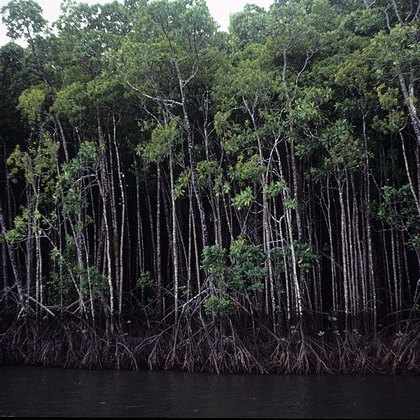
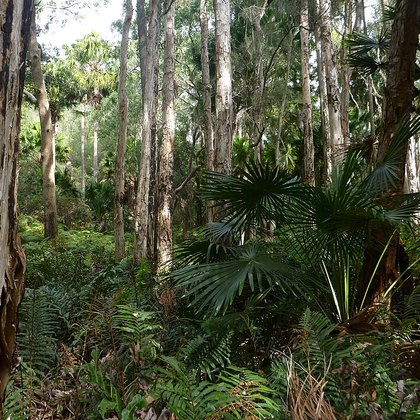
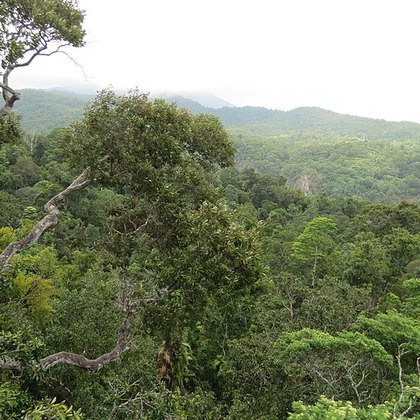
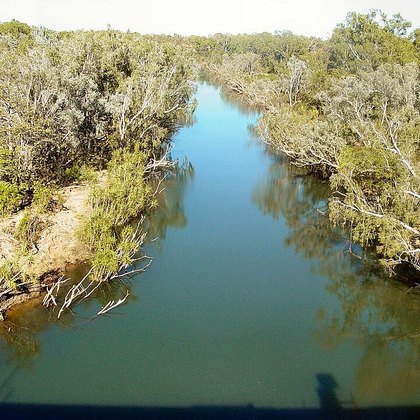
Sheltered still or slow water in dense cover: mangrove, melaleuca swamp, forest pools and creeks in rainforest and monsoon forest, and lagoon margins. It hunts motionless from a low twig just above the water for small fish, prawns and aquatic insects, diving from a metre at most. The nest is a short tunnel in an earth bank or in a termite mound near the water.
Where the bird is most often found, arranged by main group and formation.
Range and movements
The tropical north coast only: the coastal Top End of the Northern Territory, and the east coast of Cape York south through the Wet Tropics to about the Townsville area. Also on some islands in Torres Strait. Elsewhere in Australia it is absent, and it does not occur in New Zealand; the weight of the world range lies on New Guinea and its surrounding islands, which the Dutch name points at.
- Resident
- dark = core range, pale = thinly spread
Where and when to look
Take a mangrove boardwalk or a forest walk along a quiet creek in northeastern Queensland — Cairns, the Daintree, Mission Beach — and search slowly and low: this bird perches still between twenty centimetres and a metre above the water. Often a thin, very high peep is the only sign; then look for a minute blue flash disappearing round the bend. If you have patience, wait at a regular perch: it comes back.
Conservation
Least Concern (LC), because the world range is large and the species is common on New Guinea. In Australia, though, it is uncommon, sedentary and wholly dependent on mangrove and shaded fresh water; the loss of mangrove to port development and coastal building strikes exactly at its strongholds there. Being small and quiet, it is also easily undercounted in surveys.
Scientific name
Ceyx pusillus | Temminck, 1836
Coenraad Jacob Temminck described the species in 1836 as Ceyx pusilla, and it has stayed in that genus, so author and year carry no parentheses. pusillus is Latin for 'very small' or 'puny', which in this bird is no exaggeration at all. The genus Ceyx carries the name of Ceyx of Greek myth, who was turned into a kingfisher. The type locality is Lobo Bay in New Guinea, and the Dutch name papoea-ijsvogel points at that same island, where the bulk of the species lives.