All species › Birds of prey › Kites, Old World vultures, eagles and hawks › Letter-winged Kite
Letter-winged Kite | Elanus scriptus
Letterwouw | Elanio escrito
The Letter-winged Kite is the only hawk or eagle in the world that hunts by night: a white and pale grey kite of the dry Australian interior, with a black band across the underwing that opens into the shape of an M — or, seen the other way, a W. Its fortunes hang on the long-haired rat, and with each rat irruption its numbers swing by a factor of ten.
Voice
A harsh, rasping karr, karr, karr, given over the plain at dusk, and in alarm a sharper keek, keek, keek. In the breeding colonies calling runs right round the clock, deep into the night; young birds beg with a hoarse, persistent scraping note from the nest tree.
Recording: Louis Masarei — CC BY-NC-SA 4.0 · Middleton, Winton Shire, Queensland, Australia · xeno-canto
Identification
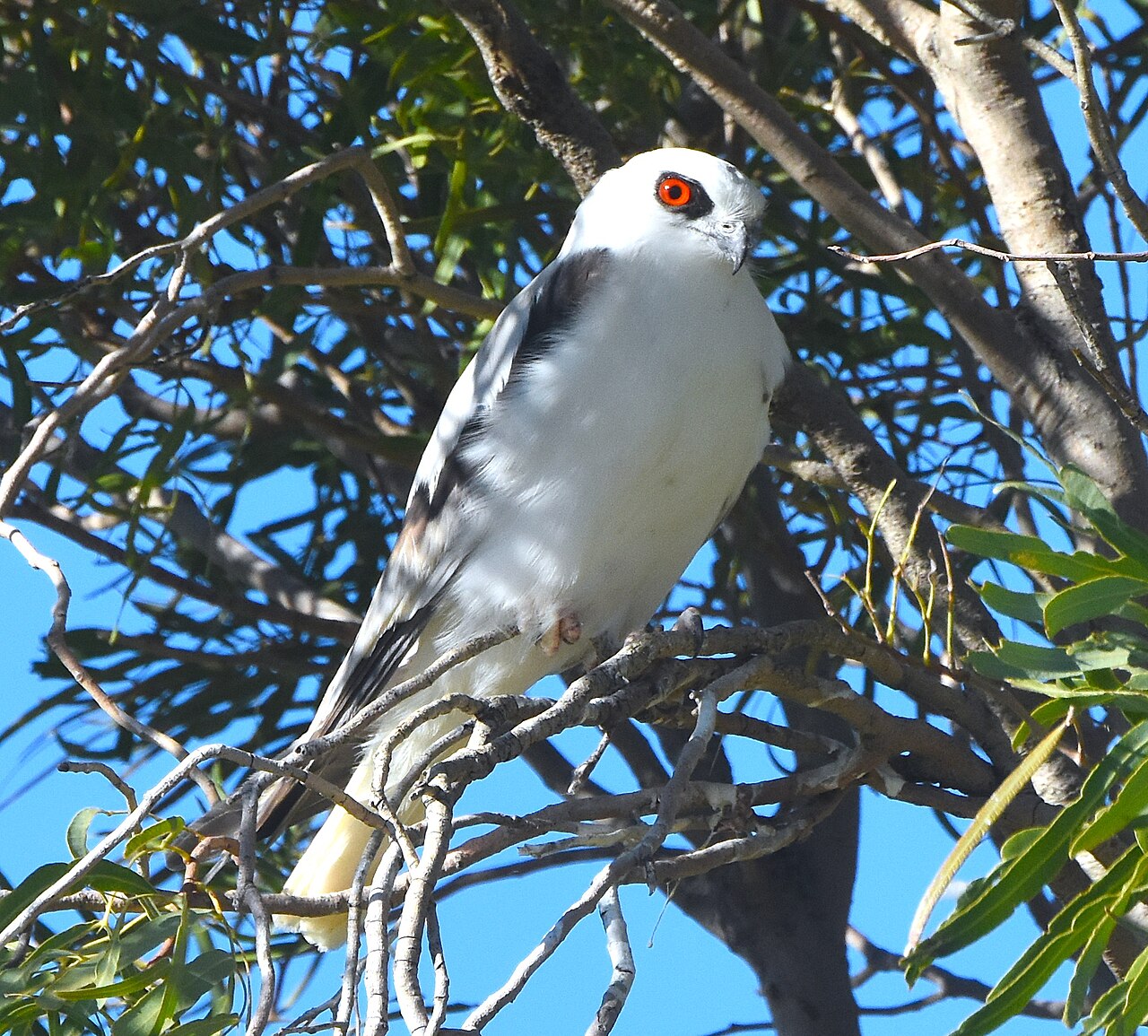
Thirty-three to thirty-eight centimetres, with a wingspan of eighty-four to a hundred centimetres. The head is white with a grey crown, the upperparts pale grey, the underparts and tail white. The decisive mark is under the wing: a broad black band across the coverts running from body to carpal, which across both wings together makes the shape of an M or a W. The eye is deep red and black-rimmed, but without a comma; the perched bird shows a black shoulder patch. The flight feathers are soft and frayed along the trailing edge, as in an owl, so the flight is all but silent, and the beat is slower and deeper than in its relative.
Confusion species
Black-shouldered Kite (Elanus axillaris) is the only real problem, above all on a perched bird. That species has an all-white crown, a black comma over and behind the red eye, and under the wing only a small black carpal patch instead of the continuous letter band. In flight Black-shouldered Kite hovers silently over grass by day, while Letter-winged Kite beats more slowly and hunts mostly at dusk or after dark. Range separates them too: Letter-winged Kite belongs inland and reaches the coast only in irruption years.
Habitat
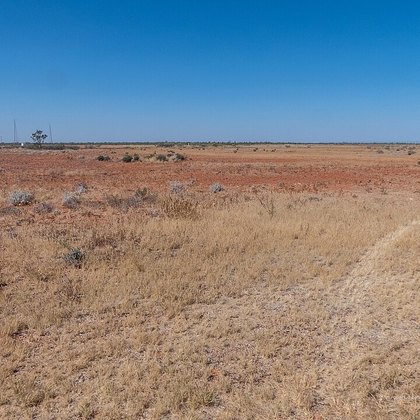
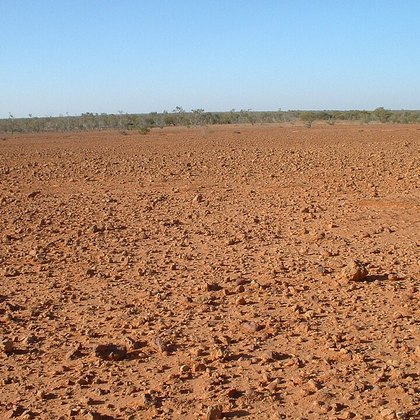
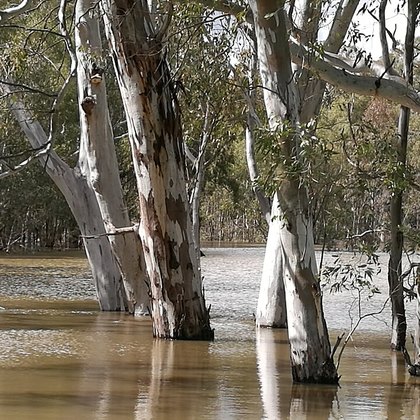
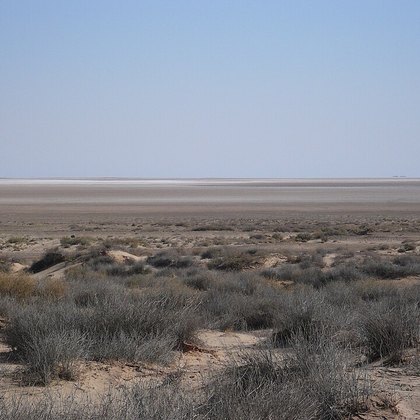
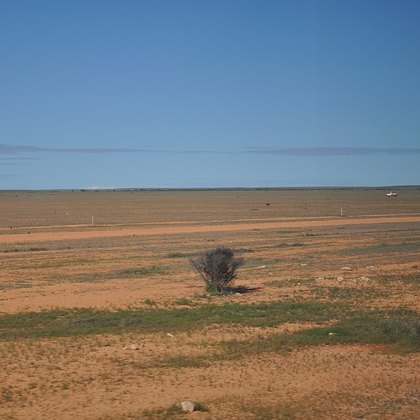
Arid and semi-arid grassland, gibber (stony desert with a pavement of polished stones) plain, claypans (shallow clay basin that holds water for a time after rain) and the clay flats of the Channel Country, always near the timbered lines along creeks — coolibah and gum — where it roosts colonially in the canopy by day and also nests. The rat burrows that hold its prey lie out on the clay, so grassland and nest trees must be close together.
Where the bird is most often found, arranged by main group and formation.
Range and movements
The interior of western Queensland, northern South Australia and the southern Northern Territory, centred on the Channel Country around the Diamantina and Cooper Creek. Beyond that core it appears irregularly: after a large rat irruption birds fan out to the southern coast and have reached Melbourne, Adelaide and Perth. It does not occur in New Zealand.
- Resident
- Winter
- dark = core range, pale = thinly spread
Where and when to look
Go inland a season or two after heavy rain, when the rats break out, and search over the grass plain in late dusk. By day it pays to work the timber along the creeks: the birds sit in dozens together. Check the underwing of every Elanus you see inland — the black letter band survives even against the light, the carpal patch of Black-shouldered Kite does not.
Conservation
Near Threatened (NT). Numbers swing hugely with the rat irruptions, and between two of them the whole species may fall to about a thousand birds. What makes it vulnerable is that it forms exposed colonies in open country where foxes and feral cats have a free hand, and that grazing by stock and rabbits thins the sward the rats live on. Long droughts and shifting rainfall press the same button.
Scientific name
Elanus scriptus | Gould, 1842
Gould described the species in 1842 as Elanus scriptus, and it has stayed in that genus, so author and year carry no parentheses. The genus Elanus was introduced by Savigny in 1809 and goes back to Greek elanos, a kite. scriptus is Latin for 'written, inscribed' and refers to the lettering under the wing — the same idea as in the English and Dutch names. The type locality is South Australia, narrowed by Mathews in 1927 to Cooper's Creek.