All species › Birds of prey › Kites, Old World vultures, eagles and hawks › Red Goshawk
Red Goshawk | Erythrotriorchis radiatus
Rosse havik | Azor rojo
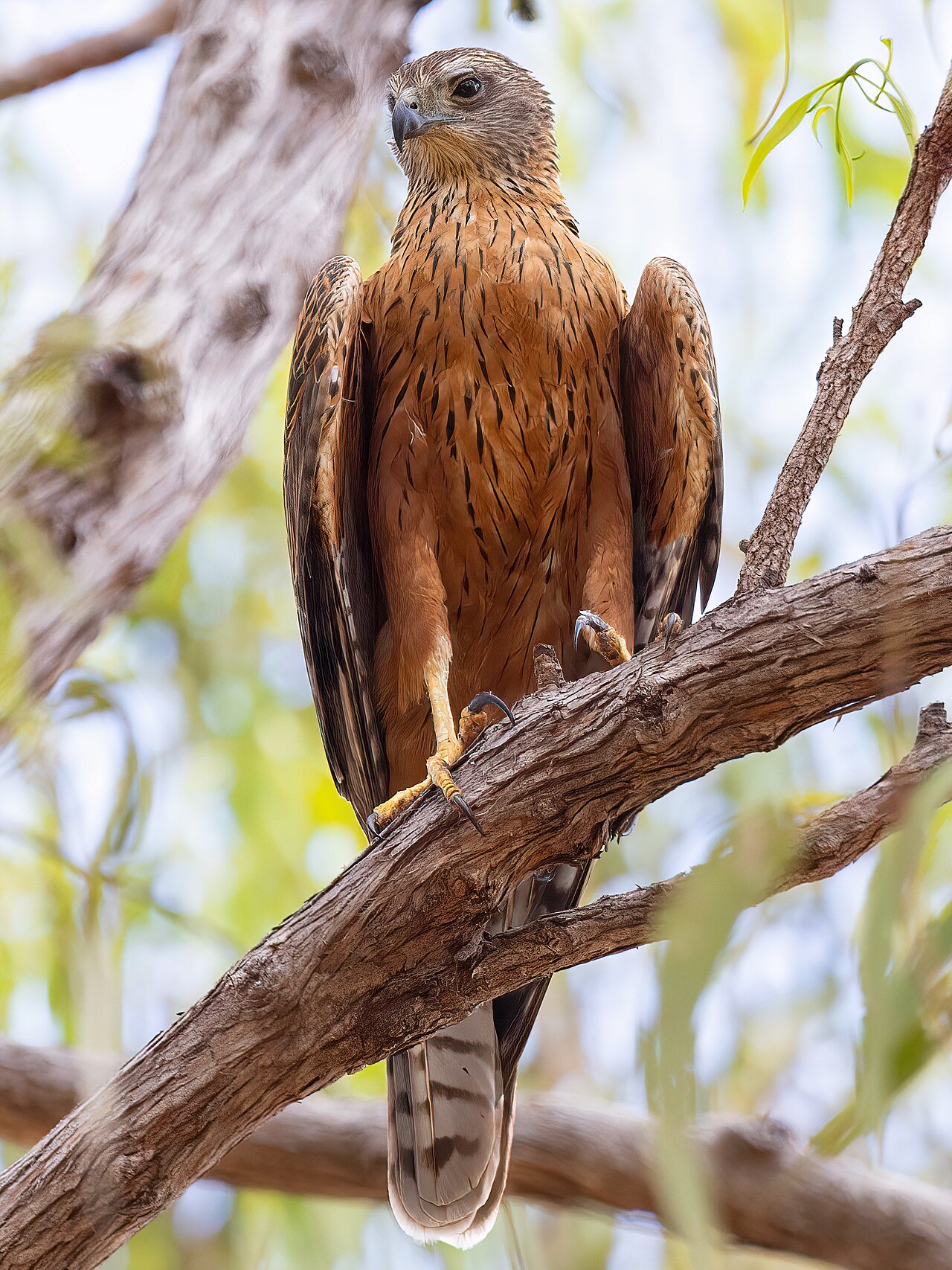
The Red Goshawk is Australia's rarest raptor and occurs nowhere else in the world: a powerful rufous hawk of the northern savanna woodlands, with a heavily streaked head, black markings above and outsized yellow legs. It is retiring, hunts large birds, and most birdwatchers never see one.
Voice
Seldom heard and poorly documented — precisely because the species is so rare and so retiring. Away from the breeding territory it is almost always silent. At the nest comes a fast harsh chattering and, from the female, a longer drawn-out wailing scream, while young birds beg with a shrill whistle. Do not count on it in the field: sound is no way of finding this species, and whoever finds it finds it by eye.
Recording: Pieter de Groot Boersma — CC BY-NC-SA 4.0 · Artemis Station, Musgrave, Queensland, Australia · xeno-canto
Identification
A large hawk of half to six-tenths of a metre with a wingspan of up to a little over a metre and a half. The plumage is largely rufous: the head is streaked black and white with more white on face and throat, the upperparts are rufous marked with black, and the flight feathers are barred grey. Adults have a yellow iris and yellow legs, juveniles a brown iris and pale grey to cream legs with a more rufous, less streaked plumage. The legs and toes are strikingly heavy, more powerful than in any other Australian raptor of this size. The silhouette is that of a long-winged goshawk: broad wings fingered at the tip and a long rounded tail. The female is up to twice the weight of the male, which regularly causes confusion about size in the field.
Confusion species
Brown Goshawk (Tachyspiza fasciata) is the obvious error and shares the woodland, but is smaller and finer built, with evenly rufous-barred underparts instead of heavy streaks, a grey rather than streaked head, and far thinner legs. Grey Goshawk (Tachyspiza novaehollandiae) is grey or pure white and never rufous. Brown Falcon (Falco berigora) has pointed falcon wings and a different head shape. Whistling Kite (Haliastur sphenurus) is also rufous and streaked but has much roomier wings, a shaggy head, short bone-coloured legs and the pale M on the underwing.
Habitat
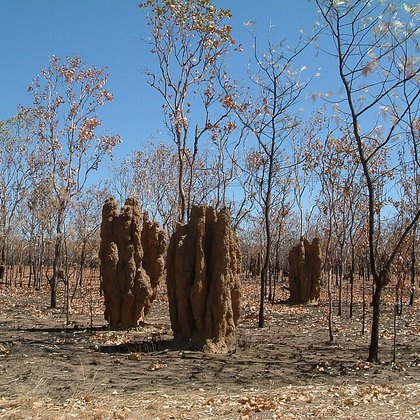
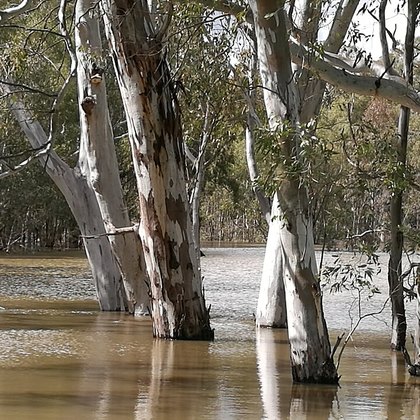
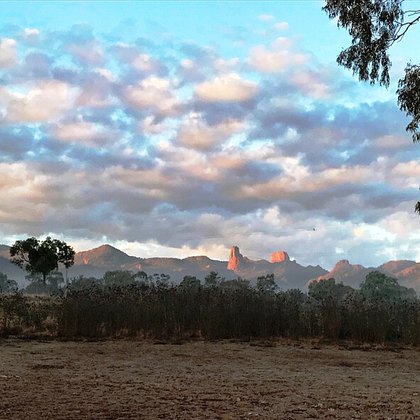
Coastal and subcoastal tall open forests and woodlands, tropical savanna crossed by wooded rivers, and rainforest edges. For the nest it needs an emergent tree of fourteen to twenty metres or more, nearly always close to a watercourse; the pair build a stick platform in an open fork and line it with green leaves. It hunts medium to large birds — parrots, pigeons, cockatoos, lorikeets, kookaburras, herons and waterfowl — from a perch, in a gliding flight through the trees, or in a stoop from height, mostly in the early morning and late afternoon. A breeding pair needs an enormous area: tracked birds use hunting ranges of one hundred and twenty to two hundred square kilometres.
Where the bird is most often found, arranged by main group and formation.
Range and movements
Endemic to Australia. The breeding population now sits in an arc across the north: the Kimberley in Western Australia, the Top End and the Tiwi Islands in the Northern Territory, and Cape York and northern Queensland. Some non-breeders wander south into central Australia, and satellite tracking shows movements of more than fifteen hundred kilometres. The range has contracted sharply: it disappeared from New South Wales over the 1980s and 1990s, and was largely gone from south-east Queensland by about 2010. It does not occur in New Zealand.
- Resident
- dark = core range, pale = thinly spread
Where and when to look
Here patience serves better than precision. In the north, take a vantage point over a wooded river in savanna — the Kimberley, Kakadu, the Tiwi Islands or Cape York — and scan in the first hours after sunrise, when it hunts and sometimes circles above the forest. Watch for the heavy yellow legs and the heavily streaked head; on a perched bird the weight of the legs already decides it. Records are so scarce that every report has value: pass a sighting on through eBird, but do not publish the exact nest site.
Conservation
Endangered (EN) on the Red List, and in Australia the species has been uplisted from Vulnerable to Endangered under national environment law. The estimate comes out at about one thousand three hundred and forty mature birds, within a range of nine hundred to fourteen hundred and with low reliability — very few for a continent of this size. The breeding range has contracted sharply since 1980: extinct in New South Wales, largely gone from south-east Queensland, and now confined to the Kimberley, the Top End with the Tiwi Islands, and Cape York. The heaviest threats are the clearing and fragmentation of forest and the altered fire regimes of the northern savanna, where fires that are too frequent and too late in the season remove old nest trees and the prey base; after these come degradation by intensive grazing, the draining of wetlands, and on a smaller scale secondary poisoning and the parrot disease PBFD in its prey. Recovery work aims at protecting and rehabilitating breeding habitat, revising forestry plans and fire regimes, limiting intensive grazing in breeding habitat, and finding and guarding known nest sites — often together with Aboriginal ranger groups, who manage most of the habitat in the Kimberley and the Top End. Because a single pair needs one hundred and twenty to two hundred square kilometres, that protection has to work at landscape scale; scattered small reserves will not do.
Scientific name
Erythrotriorchis radiatus | (Latham, 1801)
Latham described the bird in 1801 as Falco radiatus; the later move to a genus of its own puts author and year in parentheses. The genus Erythrotriorchis was introduced by Sharpe in 1875 and combines Greek eruthros 'red' with triorkhes, the name of a hawk or buzzard in the classical authors. radiatus means 'rayed, streaked' and refers to the streaking of head and underparts; old English names such as Radiated Goshawk translated that directly. The type locality is New South Wales — the state from which the species has since vanished.