All species › Passerines › Honeyeaters › Grey Honeyeater
Grey Honeyeater | Conopophila whitei
Blauwgrijze honingeter | Mielero de White
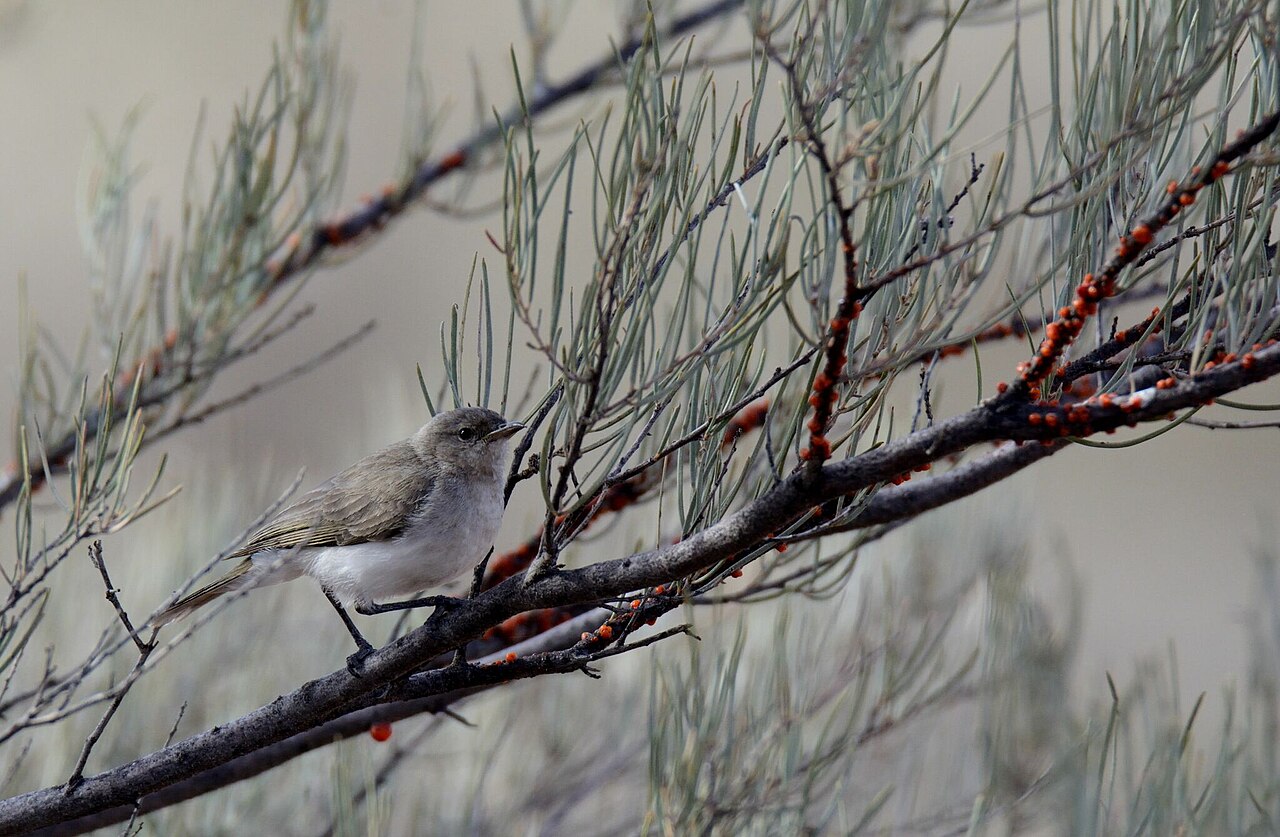
The Grey Honeyeater is one of the least-recorded birds in Australia — not because it is especially scarce, but because it looks like nothing at all and lives in empty country. It is cold grey above, paler below, with no yellow, no ear tuft, no face stripe: a honeyeater that lacks every mark honeyeaters are known by. It lives in the mulga (acacia scrub of the dry interior, dominated by Acacia aneura) of the arid centre and west, often in mixed parties with thornbills, and gives itself away by its metallic call rather than by its appearance.
Voice
The call is the best feature this species has. It is a piercing, metallic, quick double squeak — chirra-wik, chirra-wik — that strikingly recalls the call of the White-bellied Cuckooshrike and carries far in the silent mulga. There is also a weak, grating high tinkling, and a plaintive series of notes delivered in quick succession, written as troo-whee, troo-whee. Anyone searching mulga for this species does so by ear: the appearance yields nothing at a distance, the voice does.
Recording: Mark Carter — CC BY-NC-SA 4.0 · Hale, Macdonnell Shire, Northern Territory, Australia · xeno-canto
Identification
A tiny honeyeater of ten and a half to twelve centimetres. The upperparts are cold grey, the underparts paler, and just before moult the bird turns browner. The flight feathers and tail are blackish-brown, the tail feathers white-tipped — in flight the only thing that catches the light. Around the eye lies a faint, pale ring tinted buff, and an inconspicuous eye-stripe runs towards the bill. The bill is relatively short, slightly decurved, grey with a darker tip: the only thing that betrays it as a honeyeater. Juveniles have a faintly yellowish eye-ring and a yellow-green wash over the flight feathers. There is no yellow in the plumage, no plume, no patch.
Confusion species
This is the confusion species par excellence, and the confusion runs outside the honeyeaters. The Western Gerygone (Gerygone fusca) is as small and grey, but has a white tail band and a quite different, descending song. Thornbills of the genus Acanthiza — with which it often forages in a single mixed party — have a short, straight, pointed bill with no curve, and nearly all species show a pale rump or forehead markings. The female Redthroat (Pyrrholaemus brunneus) is likewise plain and unmarked, but bulkier and longer-tailed. Within the honeyeaters confusion is less likely: the Grey-headed Honeyeater (Ptilotula keartlandi) and Grey-fronted Honeyeater (Ptilotula plumula) share the mulga, but both have a yellow ear patch or a yellow-green wash this species entirely lacks. Anyone who sees a small grey bird in mulga with a slightly curved bill and not one detail of colour should think of this species.
Habitat
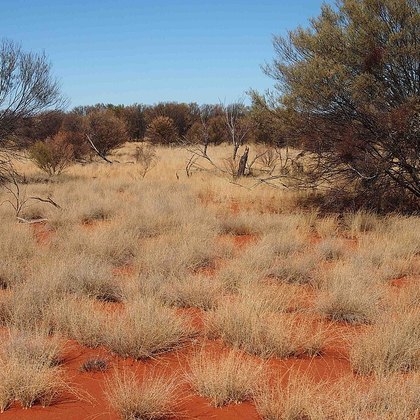
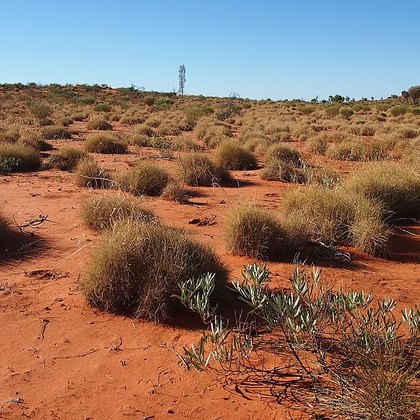
Semi-arid mulga (Acacia aneura) and comparable acacia scrub, with the distribution of mistletoe as a probable governing factor. It forages busily over leaf surfaces for lerp (sugary scale secreted by psyllids, food for honeyeaters) and similar insects, hanging from twigs, and takes flying insects in short hovering sallies. It also drinks nectar from deep tubular flowers such as those of Eremophila and from mistletoe flowers, and eats mistletoe berries. The nest is a small, frail, untidy cup of fine grass stems lined with hair and plant down and bound with spider web, in a mulga shrub; the clutch is one or two eggs. Breeding runs from August to November and may continue to May with summer rain.
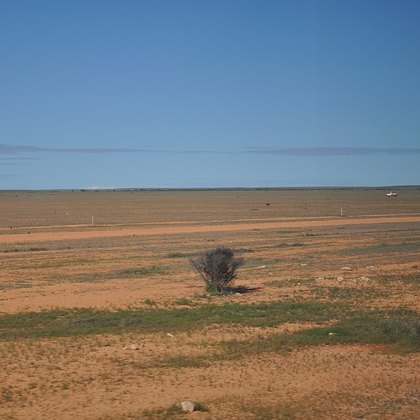
Where the bird is most often found, arranged by main group and formation.

Range and movements
Endemic to Australia, in the arid centre and west: chiefly the Pilbara and Murchison regions of Western Australia and the southern and central Northern Territory, with outliers into adjoining South Australia and Queensland. Everywhere within that area it is rare to uncommon. It is regarded as sedentary with nomadic movements, but little is known of their extent. With about five hundred Australian records in ten years it is one of the least-reported land birds in the guide — a telling figure for a species with so large a range, and one that says more about findability than about numbers. It does not occur in New Zealand.
- Resident
- dark = core range, pale = thinly spread
Where and when to look
Use your ears, not your eyes. Walk mulga carrying mistletoe in the early morning, preferably at the known sites west of Alice Springs or in the Murchison, and listen for the quick metallic chirra-wik. Then search the mixed party that comes through: among the thornbills there may be one bird with a slightly longer, curved bill and white tail tips. Always check the bill — straight and pointed belongs to Acanthiza, slightly curved to this species — and do not expect a patch of colour anywhere, because there is none.
Conservation
Least Concern (LC) on the IUCN Red List, on the strength of a very large range. That figure says little: the species is nowhere numerous, is rarely reported, and no usable population estimate exists. The threats that apply to mulga in general apply to it too: fires that are too extensive and too hot, which set acacia scrub back for decades because mulga does not resprout from the root, and grazing by stock, goats and rabbits, which removes the shrub layer and the young growth. Nothing has been published on measures or counts aimed specifically at this species that could be cited here.
Scientific name
Conopophila whitei | (North, 1910)
Alfred John North described the species in 1910 as Lacustroica whitei, in a genus of its own that has since been abandoned; because it now stands in Conopophila, author and year go in parentheses. The genus name Conopophila comes from Greek konops (gnat) and philos ('-loving'), so 'gnat-lover', after the insect-rich diet of the group. The epithet whitei honours Alfred Henry Edsworth White, son of the South Australian ornithologist and collector Henry L. White. The English name Grey Honeyeater and the Dutch blauwgrijze honingeter both take the colour, which for this bird is all there is to take; the Spanish mielero de White follows the epithet.