All species › Waders, gulls and terns › Coursers and pratincoles › Australian Pratincole
Australian Pratincole | Glareola isabella
Steltvorkstaartplevier | Canastera patilarga
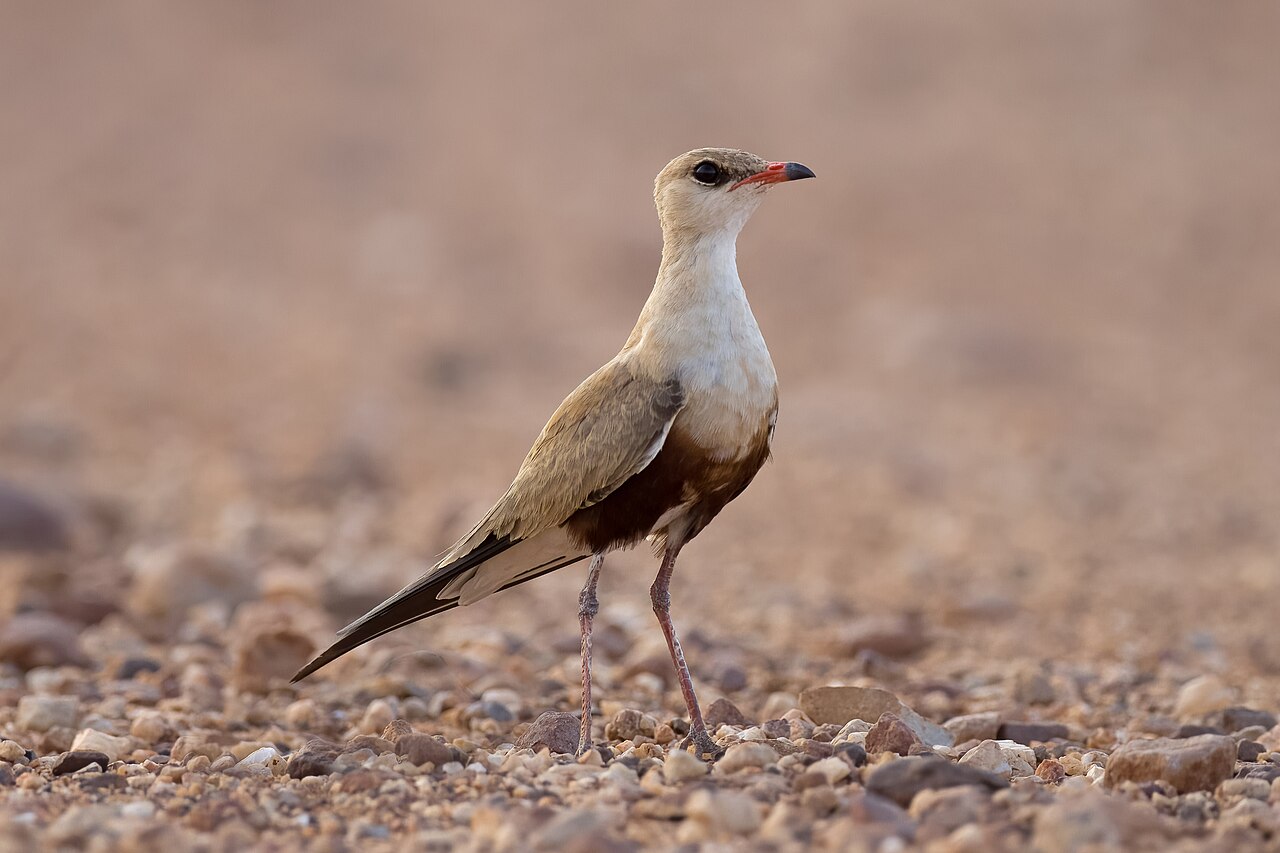
The Australian Pratincole is the pratincole that took to walking: where its relatives crouch low on the ground, this one stands tall on long legs in the middle of a bare gibber (stony desert with a pavement of polished stones) plain, often the only bird in the shimmering light. It runs after insects like a plover and at dusk also takes them in the air, on long pointed wings. It breeds in the dry interior; after breeding it moves north, well beyond Australia.
Voice
The flight call is a clear, upslurred whistle, wee-teet or kirry-peet, which carries far from a flock over open ground. At the nest and on disturbance it runs into sharp, quickly repeated notes that grow in force as the intruder comes closer. Birds hawking together at dusk exchange short dry calls. On the ground it is usually silent.
No recording with a suitable Creative Commons licence has been found for this species yet; what to listen for is described below.
Identification
A slim, long-legged bird of nineteen to twenty-four centimetres, sandy to pale cinnamon above and white below, with a dark chestnut and black patch in the middle of the belly. The bill is short and, in breeding plumage, bright red with a black tip; a dark line runs from the eye to the bill. In flight the long pointed wings show an almost black underwing, along with a white rump and a short forked tail with a black terminal band. Outside the breeding season and in young birds the bill is dark, the belly patch faint or absent and the upperparts scaled with pale feather edges. The sexes look alike.
Confusion species
Oriental Pratincole (Glareola maldivarum) arrives in the Australian summer in large flocks from Asia and is the only real confusion: shorter in the leg, warmer brown, with a cream throat framed by a thin black line, and with chestnut underwing coverts instead of an evenly dark underwing. Inland Dotterel (Peltohyas australis) shares the gibber but is short-legged, has black markings across crown and breast and runs with its head low. In flight the species suggests a tern or a small falcon; the white rump and black tail band rule out both. At long range Little Curlews stand in the same fields, but they have a decurved bill and a streaked breast.
Habitat
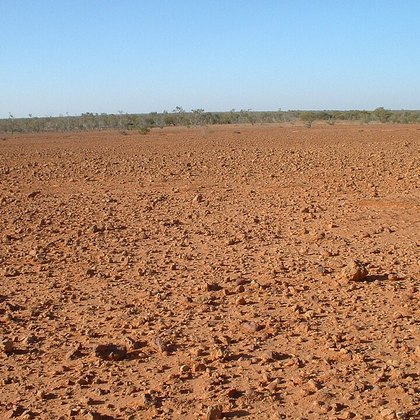
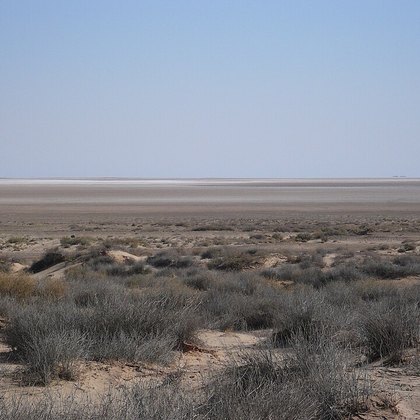
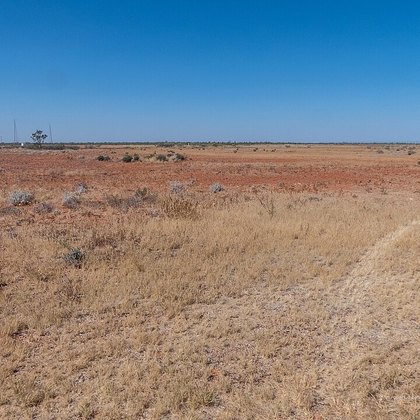
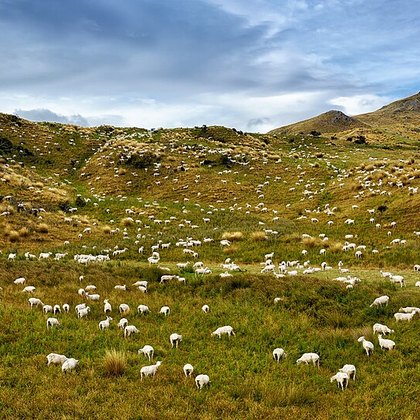
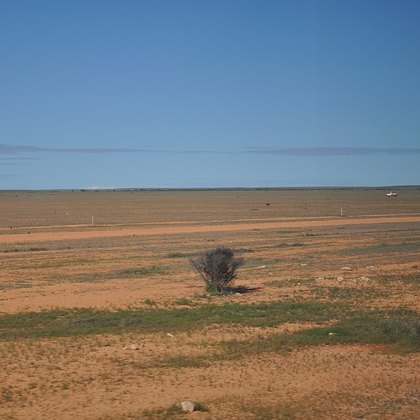
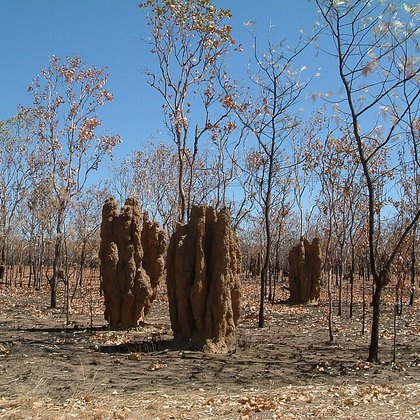
Bare, open, stone-hard ground: gibber plains, drying claypans (shallow clay basin that holds water for a time after rain), closely grazed Mitchell grass, ploughed paddocks, airstrips and the shores of shrinking inland lakes. It wants a clear view and room to run, and avoids anything that blocks the sight of what is coming. Water need not be near, though in the heat a flock will stand at a pool or a stock dam. In the north, outside the breeding season, it also uses open savanna and freshly burnt plains.
Where the bird is most often found, arranged by main group and formation.
Range and movements
Breeds in the dry interior of Australia, from the Kimberley and inland Northern Territory through western Queensland to northern Victoria and eastern South Australia, from August to December. It then moves north: in the Australian winter, June and July, the largest numbers are in the tropical north and, outside the guide, in New Guinea, Java, Sulawesi and southern Borneo. It is thus a migrant that leaves the region not to winter but to seek the north, and the map therefore colours in the opposite way to a northern guide. It reaches New Zealand as a vagrant and no more than that.
- Resident
- dark = core range, pale = thinly spread
Where and when to look
In late spring, between September and November, drive a gravel road across a gibber plain or claypan and look for upright pale silhouettes on the bare ground; they stand still until the vehicle is close and then run a short way off. Do not get out: from the road a flock stays put, while walking onto the plain flushes it at once. In the last two hours of light, look up, because the whole flock takes to the air to hawk insects.
Conservation
Least Concern (LC), with a population estimated in the order of sixty thousand birds spread across an enormous range. The greatest uncertainty is not the trend but the count: the bird breeds in country almost nobody visits and shifts with the rain, so that a site holds dozens of birds one year and none the next. Vehicle strikes on unsealed inland roads and the trampling of clutches by stock matter locally, for the eggs lie on bare ground without a nest.
Scientific name
Glareola isabella | Vieillot, 1816
Vieillot described the species in 1816 as Glareola isabella, and this guide keeps it in that genus, so author and year carry no parentheses; for a long time it stood in the separate genus Stiltia, of which it was the only member. Glareola is a diminutive of Latin glarea, 'gravel', after the bare stony ground these birds occupy. isabella stands for isabelline, a pale yellowish-brown shade. As a type locality Vieillot gave only 'Australasia', with no closer place.