All species › Caryophyllales › Sundew family › Drosera nidiformis
Drosera nidiformis
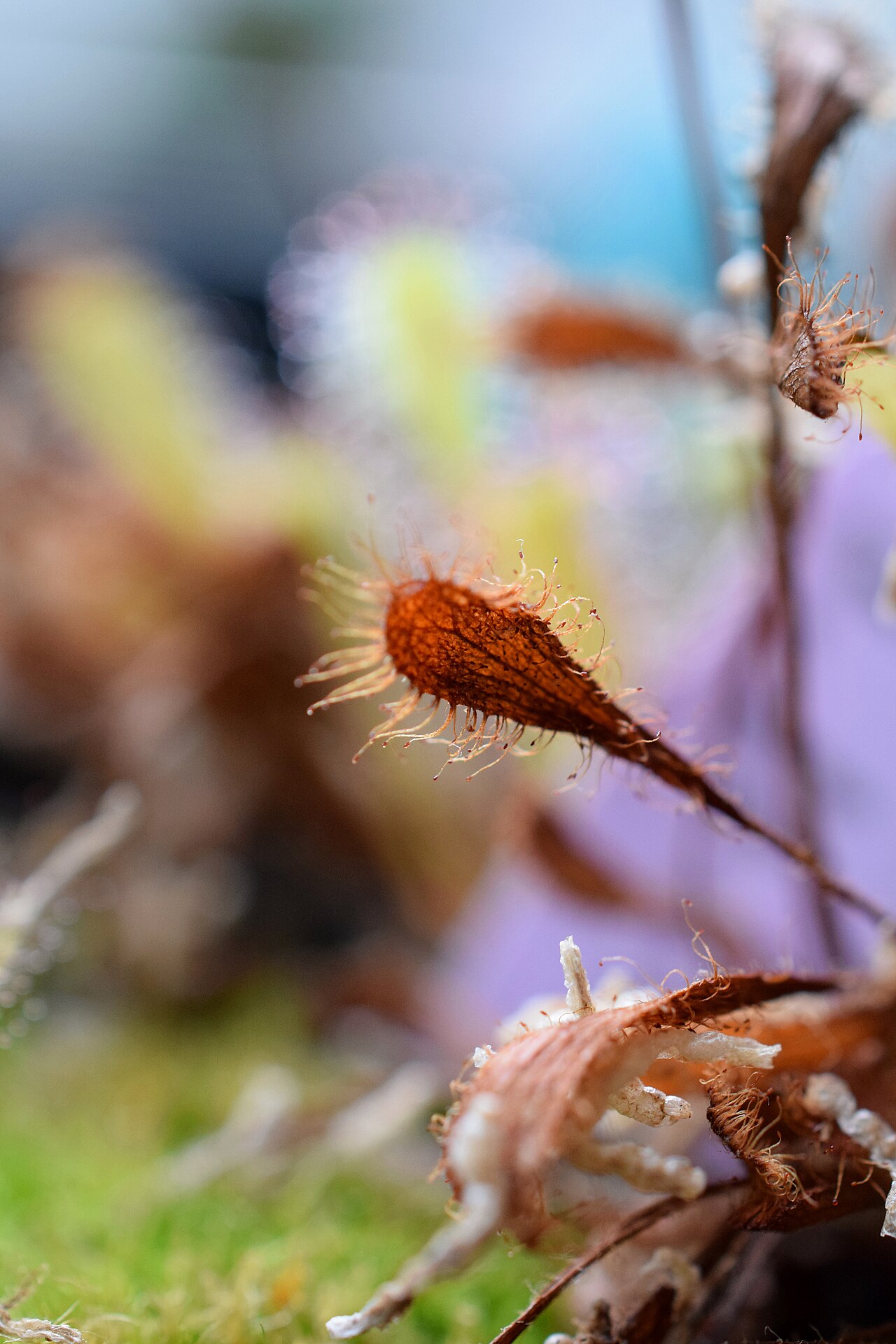
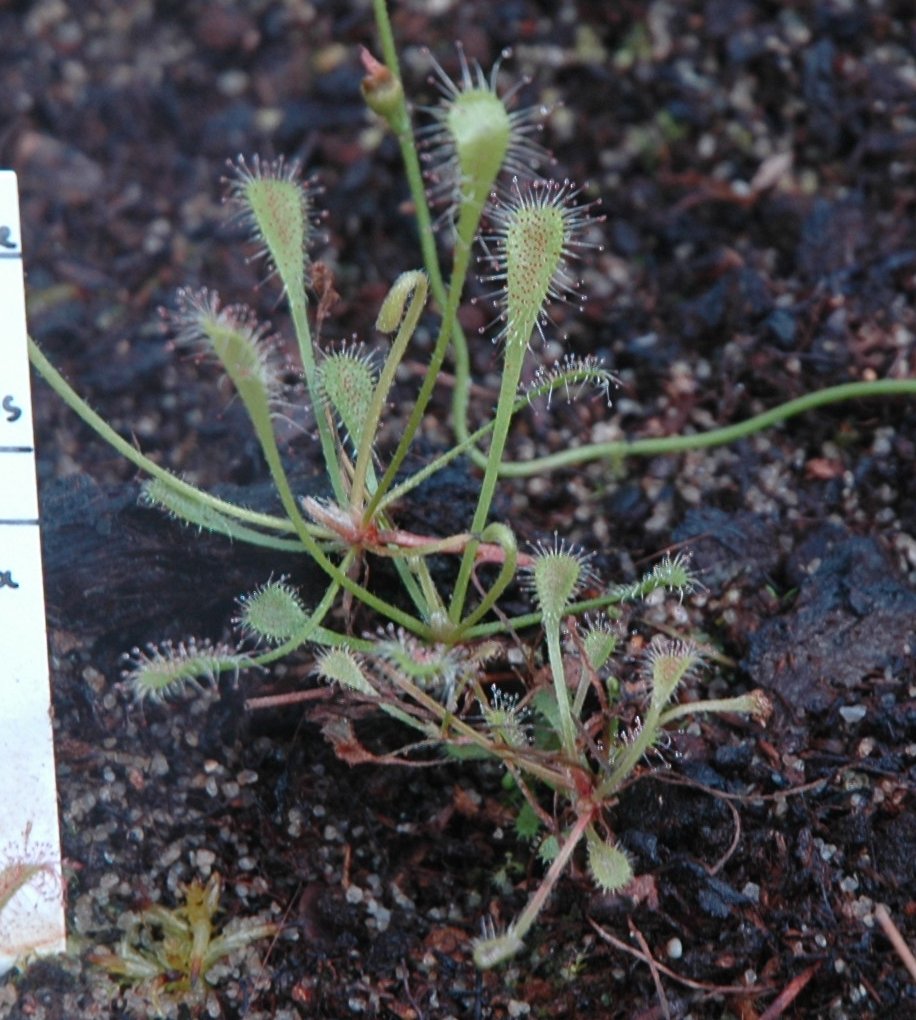
A sundew with a rosette like a bird's nest. Drosera nidiformis — 'nest-shaped' — was described in 1991 by Paul Debbert. The name refers to the way the upright leaves form a cup-shaped rosette. The species belongs with the summer-growing sundews of eastern South Africa.
Identification
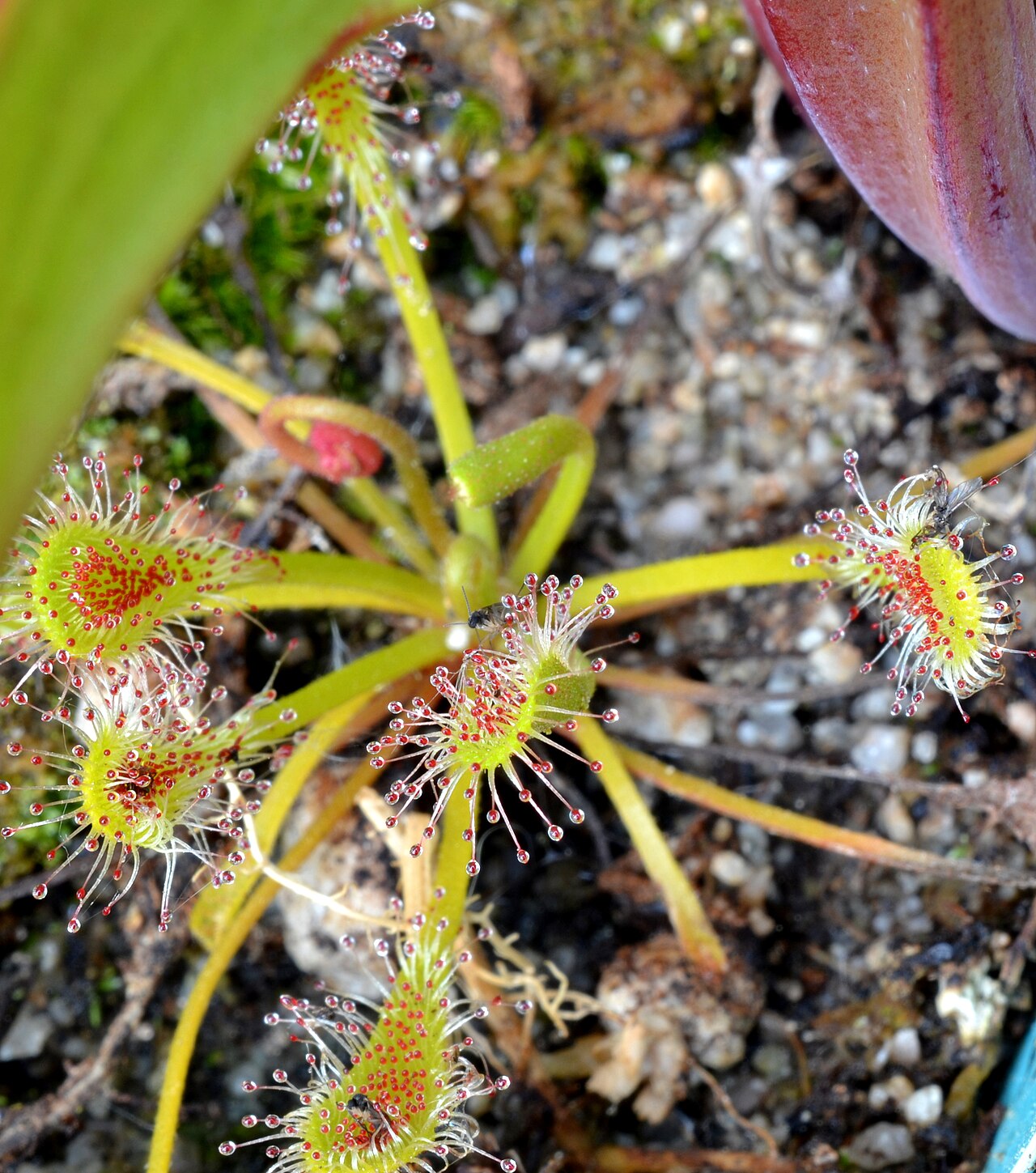
A rosette of obliquely erect, spatulate trapping leaves with red tentacles, together forming a shallow cup — the 'nest' of the name. The scape rises from the centre of the rosette. Reliable measurements and a flower colour from the original description were not available for this text; the measurement fields are left empty.
Similar species
Drosera natalensis and D. dielsiana are the main confusion species; their rosettes usually lie flatter. Drosera madagascariensis forms a stem with scattered leaves, and D. burkeana has short, round blades.
The trap and how it works
An active flypaper trap: stalked glands with sticky droplets hold small insects, after which the tentacles bend towards the prey and the glands secrete digestive enzymes. The upright leaves also catch insects flying just above the ground.
Habitat and ecology
Wet places in grassland and on mountain slopes in the summer-rainfall region: seeps, wet rock sheets and marsh margins (W4, R1, B6). Specific habitat data are scarce.
Distribution and elevation
South Africa: the east of the country, in the Eastern Cape and KwaZulu-Natal (as this guide's working list states). A more precise range could not be established from the sources consulted; altitudinal limits were not found.
- Recorded (one-degree cells)
Forms and variation
No varieties. The species belongs to a group of small rosetted sundews of the summer-rainfall region (with D. natalensis, D. dielsiana and D. collinsiae) whose mutual delimitation is not settled in every respect. Some authors have linked D. nidiformis with D. natalensis; Kew accepts it as a separate species.
Where and when to see it
Search in the wet summer months on wet slopes and in seep zones. The cup-shaped rosette distinguishes it from the flat rosettes of most relatives.
Conservation status
Not assessed for the global IUCN Red List and not listed in CITES. Wet grasslands in eastern South Africa are under pressure from forestry plantations, agriculture and overgrazing.
Scientific name
Drosera nidiformis | Debbert, 1991
Drosera nidiformis was described by Peter Debbert, dated 1991 (published 1992), in Mitteilungen der Botanischen Staatssammlung München, volume 30, p. 374. The type material originates from Natal (present-day KwaZulu-Natal), South Africa, and was collected by P. Debbert (collection number 124). The description is based on material cultivated at the Munich Botanical Garden, May 1991; the precise wild origin of this material could not be established further. The name is descriptive Latin, composed of "nidus" ("nest") and the suffix "-formis" ("shaped"), thus meaning "nest-shaped" — a reference to the shape of the leaf rosette, which resembles a small bird's nest.
World Checklist of Vascular Plants (WCVP), via Plants of the World Online (POWO), Royal Botanic Gardens, Kew.