All species › Caryophyllales › Sundew family › Drosera dielsiana
Drosera dielsiana
A small rosetted sundew of the wet grasslands of eastern southern Africa, described in 1956 by Exell and Laundon and named after Ludwig Diels, the German botanist who wrote the first world monograph of the family. Drosera dielsiana is one of the species that take the place of the Cape winter growers in the summer-rainfall regions.
Identification
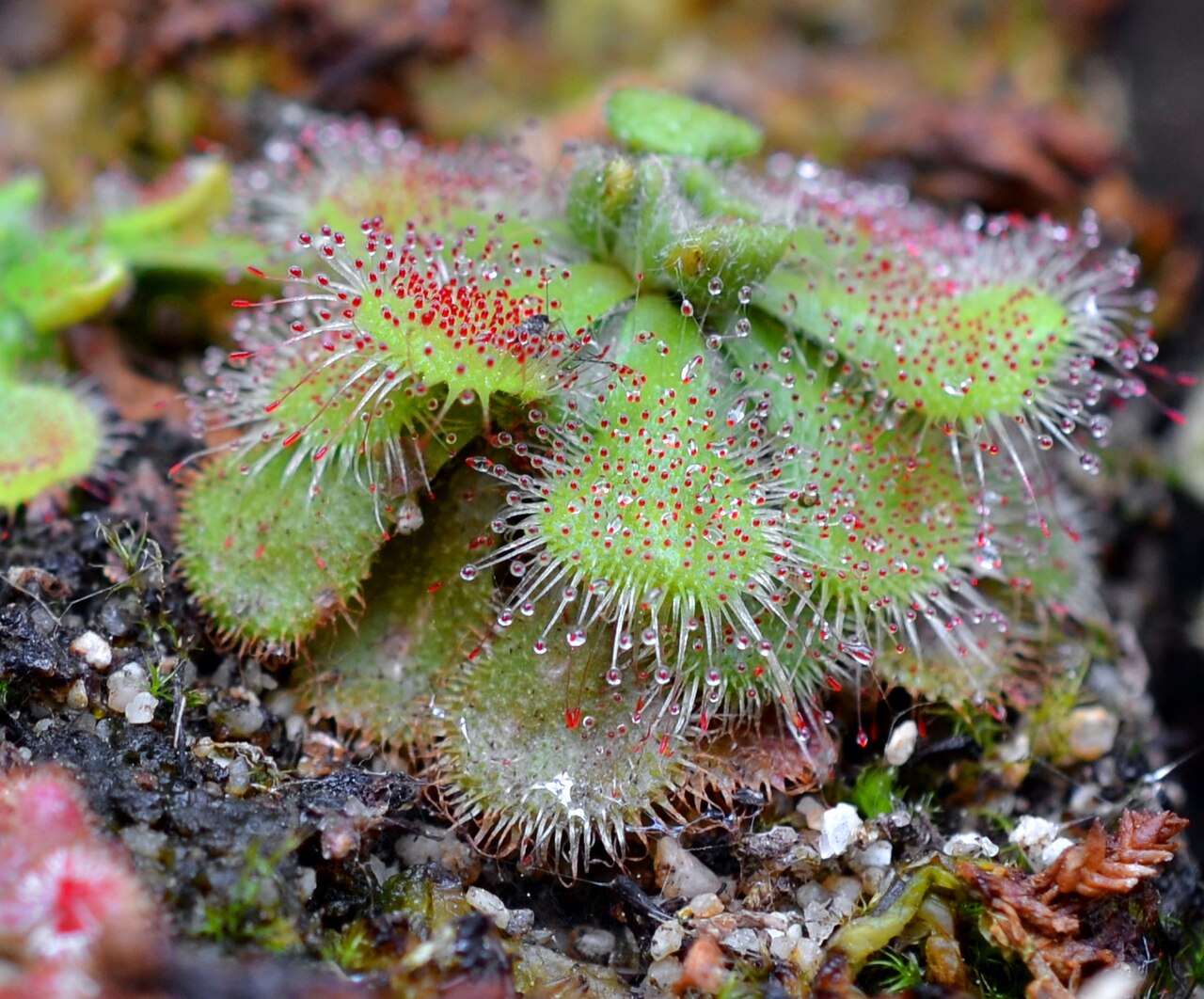
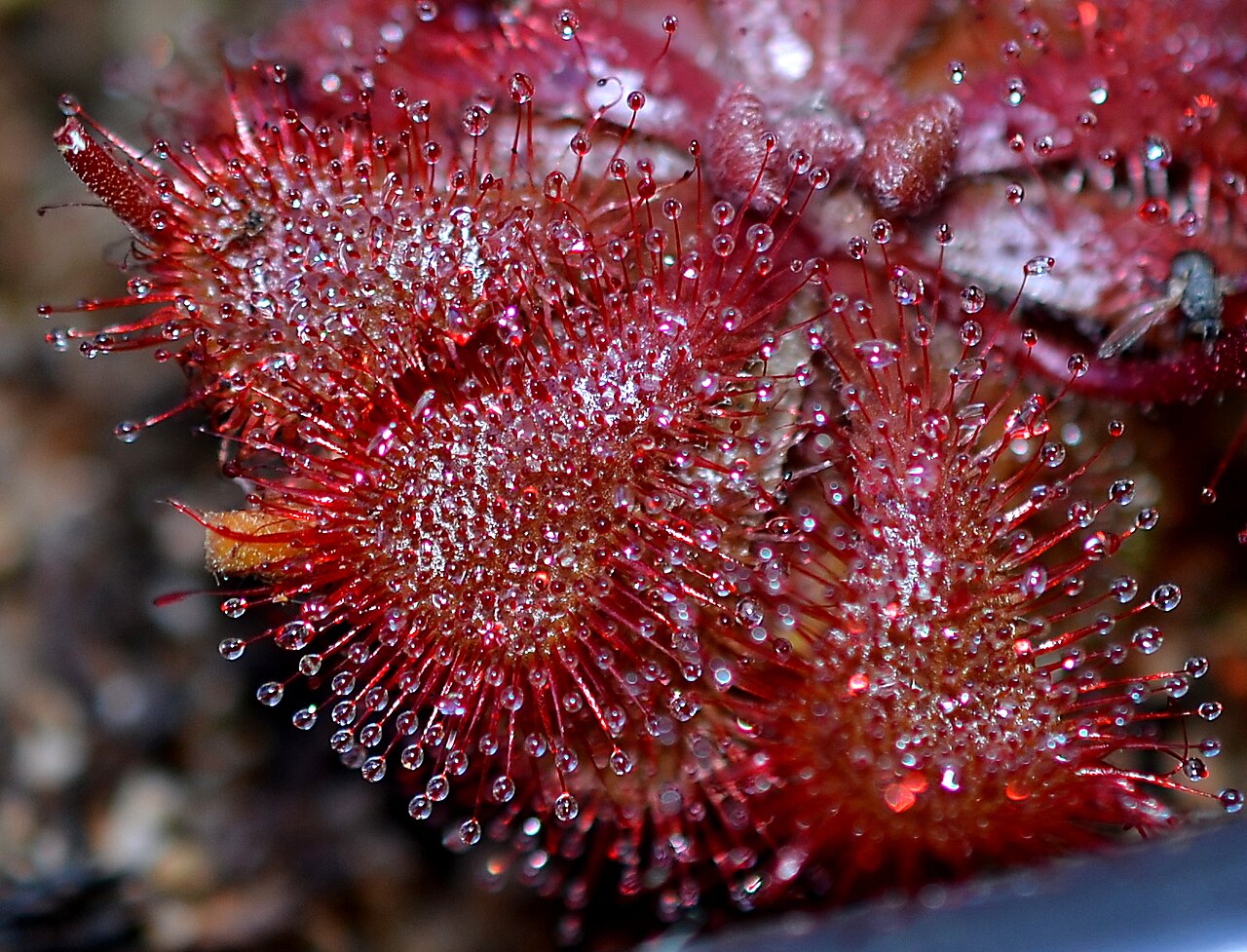
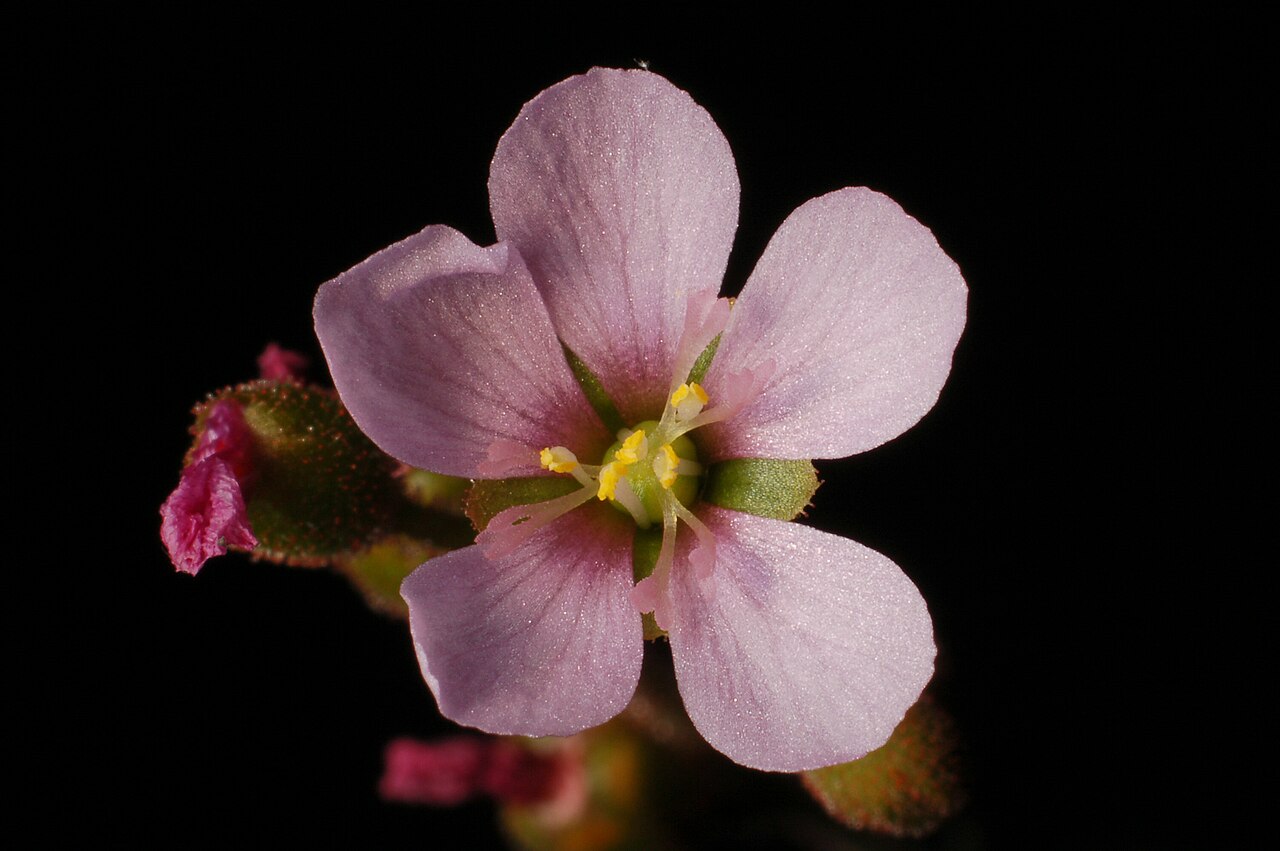
A small, flat rosette of spatulate leaves with a short petiole passing into the blade and red tentacles. The scape rises from the centre of the rosette and carries a few pink flowers. Published measurements from a flora were not available for this text; the measurement fields are left empty.
Similar species
Drosera collinsiae and D. natalensis are very similar and are separated on details of leaf, stipules and hairiness; in the field that is hard without a hand lens. Drosera burkeana has shorter, broader, rounder blades, and D. madagascariensis forms a stem with scattered leaves.
The trap and how it works
An active flypaper trap: sticky droplets on stalked glands hold small insects, after which the tentacles bend towards the prey and the glands secrete digestive enzymes.
Habitat and ecology
Wet, open places in grassland and savanna: seeps, marsh margins and seasonally wet hollows, often on acid, nutrient-poor soil (W4, W7, B6). The plant grows and flowers in the wet summer.
Distribution and elevation
Southern Africa: eastern South Africa and neighbouring countries, north into Mozambique and Zimbabwe. Precise altitudinal limits were not found.
- Recorded (one-degree cells)
Forms and variation
No varieties are recognised. The species belongs to a group of small rosetted sundews of the summer-rainfall region whose mutual boundaries are not always sharp.
Where and when to see it
Search in the wet summer months in marshy grassland and along seeps on mountain slopes. The rosettes are small; look in open, wet patches among the grass.
Conservation status
Assessed on the IUCN Red List as Least Concern; not in CITES. The range is large. Locally wet grasslands are lost to forestry, agriculture and drainage.
Scientific name
Drosera dielsiana | Exell & Laundon, 1956
Described by Arthur Wallis Exell & Jack Rodney Laundon in 1956, in Boletim da Sociedade Broteriana, series 2, volume 30, p. 214. The precise type locality could not be established. The species occurs in South Africa (KwaZulu-Natal, Free State, northern provinces), Eswatini, Mozambique, Malawi and Zimbabwe. Named in honour of Ludwig Diels, author of the influential 1906 monograph on the Droseraceae.
World Checklist of Vascular Plants (WCVP), via Plants of the World Online (POWO), Royal Botanic Gardens, Kew.