All species › Even-toed ungulates › Deer › Water Deer
Water Deer | Hydropotes inermis
Chinese waterree | Hydropotes inermis
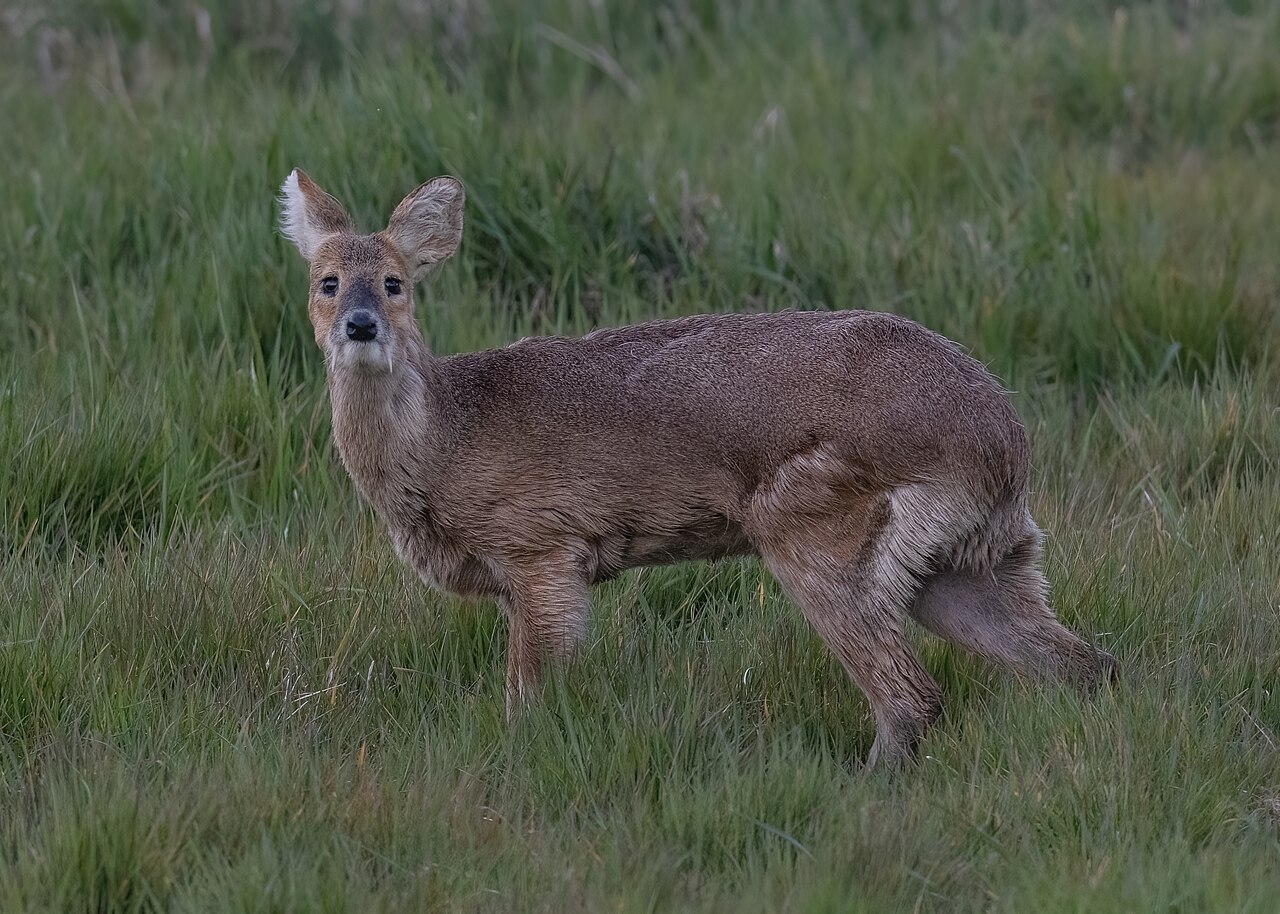
The water deer (Hydropotes inermis) is a small deer without antlers from eastern China and Korea; instead the buck has long, tusk-like canine teeth. In the guide area the species is an introduced animal with a free-living population only in England, mainly in East Anglia and the adjacent counties. It descends from animals that escaped from parks at Woburn and Whipsnade.
Tracks
The slot is small and pointed, slightly smaller than that of roe deer. Territorial animals make dung piles along the boundary of their territory and mark twigs with scent from the gland in front of the eye. Sound is a good character: when disturbed the water deer gives a hoarse bark, often repeated; bucks make clicking sounds and a weak whistle or squeak during the rut, and an injured animal screams.
Identification
A small, compact deer of 82 to 106 cm head-body length, 42 to 65 cm shoulder height and 12 to 18.5 kg, with a short tail of 2.5 to 9 cm. The coat is pale sandy brown, thicker and greyer in winter. The head has large, rounded ears and conspicuously black, round eyes and nose. Neither sex carries antlers. The buck has long, downward-pointing canine teeth, 5.5 cm on average and up to 8 cm long, which protrude below the upper lip; in does the canines are small. There is no white rump patch.
Similar species
The roe deer is longer-legged, the buck has antlers, and it has a white to cream rump patch that flares when alarmed; at close range the water deer looks like a small, pale roe deer without a rump patch and with round ears. The Reeve's muntjac is smaller, darker reddish brown, has a hunched back and a long tail held up when fleeing, and the buck carries short antlers on long pedicles in addition to small canines. At a distance the tusks are usually not visible; the round ears and the absence of rump patch and antlers decide.
Habitat
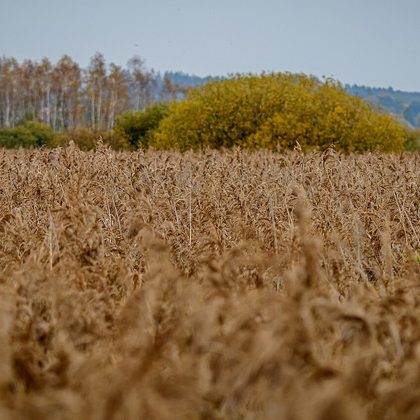
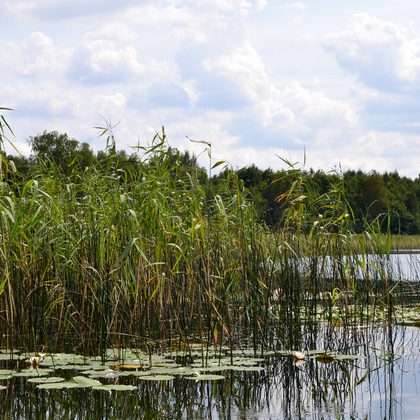
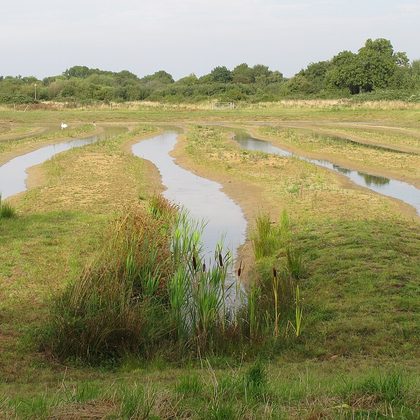
Reedbeds, marshes and tall grass in river deltas and along riverbanks, and in England also wet grassland, arable land, broadleaved woodland and fen close to woodland. The animals hide in tall reed and grass and swim well. On arable land they eat mainly weeds and hardly any crops.
Where the animal is most at home, classified with EUNIS — the European standard for habitats.
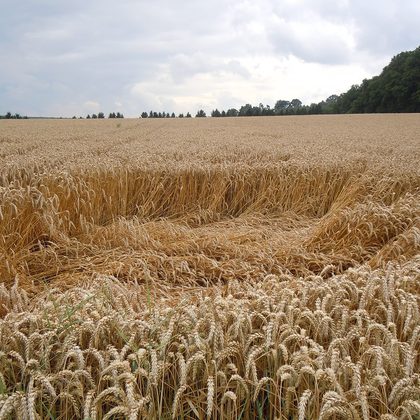
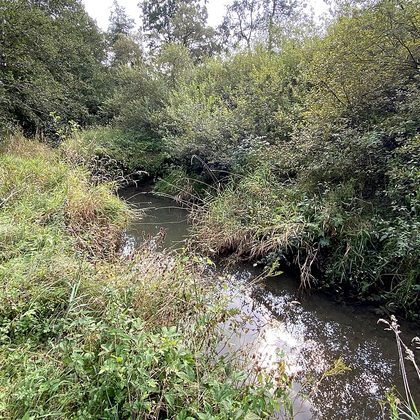
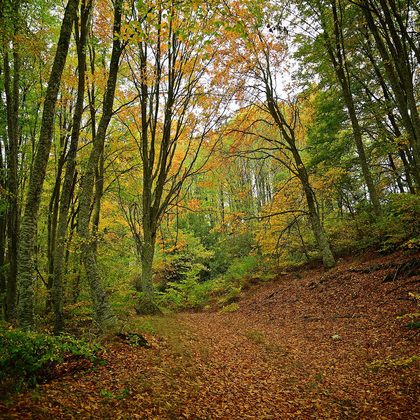
Distribution
Originally eastern China, especially the Yangtze basin, and the Korean Peninsula. In England the first animals arrived at London Zoo in the 1870s; in 1896 they went to Woburn Abbey, and in 1929–1930 32 animals were taken to Whipsnade. The first free-living water deer was recorded in Buckinghamshire in 1945. The species now lives in Bedfordshire, Buckinghamshire, Cambridgeshire, Norfolk, Suffolk and Essex and has been spreading since 2000. In France animals escaped from an enclosure in Haute-Vienne in 1960; that population is considered extinct, with no records since 2000.
- Established introduction
- dark = core range, pale = thinly spread
Way of life
The water deer feeds mainly at dawn and dusk, on weeds, grasses, herbs and to a lesser extent twigs and leaves. Bucks and does are territorial and live alone or as a doe with young; herds are not formed. The rut falls in November and December, when bucks fight with their tusks. After a gestation of 160 to 210 days the young are born in May or June, usually two or three; the water deer has the largest litters of any deer, up to six or seven young. The young are weaned after about three months. Does are sexually mature at 7 to 8 months.
Where and when to look
Search the Norfolk Broads and the Cambridgeshire fens, for example at Strumpshaw Fen, Hickling Broad and Woodwalton Fen, in the first and last hours of daylight, along the edges of reedbeds and wet meadows. In winter, when the reed has been partly cut and the vegetation is low, the animals are easiest to see. Listen at dusk for the hoarse bark.
Conservation status
Vulnerable (VU, 2015). In China the species has declined in large parts of its range through hunting and loss of wetlands. In South Korea it is numerous and designated as harmful wildlife: between 2014 and 2016 the number killed for bounties rose from more than 58,000 to more than 113,000 a year, and in 2016 about 60,000 animals were killed by traffic. Unlike Reeve's muntjac, the English population has so far not caused major damage to woodland or agriculture.
Scientific name
Hydropotes inermis | Swinhoe, 1870
Swinhoe described the species in 1870 and placed it straight away in the genus where it still stands. Hydropotes is Greek hydropotēs, 'water-drinker', from hydōr, 'water', and potēs, 'drinker'. inermis is Latin for 'unarmed', from in-, 'not', and arma, 'weapons', after the absence of antlers; the buck carries long tusks instead. The specimen the first description was based on came from China.