All species › Rodents › Voles and hamsters › Social Vole
Social Vole | Microtus socialis
Microtus socialis | Microtus socialis
Microtus socialis is a vole of the dry grasslands between the Black Sea and Central Asia. The species name refers to its way of life: the animals live in families sharing a burrow system, and they are usually found through their colonies. In Europe the species occurs in Crimea, in the steppes of southern Ukraine, along the lower Volga and north of the Caucasus. Densities can be high: in peak years up to three hundred animals live per hectare, and the grass around the colonies is then grazed down to the ground.
Tracks
The main sign is the colony, visible from a distance as a closely grazed, slightly paler patch in the steppe. A family burrow system has on average seven entrances, sometimes sixteen; the tunnels lie at 25 to 30 cm depth and total from about sixty centimetres to several metres in length; the whole covers ten to one hundred and sixty square metres. Between the holes run runways three to five centimetres wide, worn down to bare soil, with short grass and hard ground. At the openings lie heaps of excavated soil and, characteristic of this species, small stores of cut stems and seed heads: grass is bitten off close to the tunnel and dragged inside, leaving bundles of equal length at the entrance. Droppings are four to six millimetres long, cylindrical, greenish black when fresh, in small latrines along the runways. Where the species does not dig itself, it uses tunnels of the Northern Mole Vole, of jirds or of sousliks; its droppings and runways then lie in another species' system. Pellets under roosts of Short-eared Owl and Little Owl consist in some years largely of this species in the steppe.
Identification
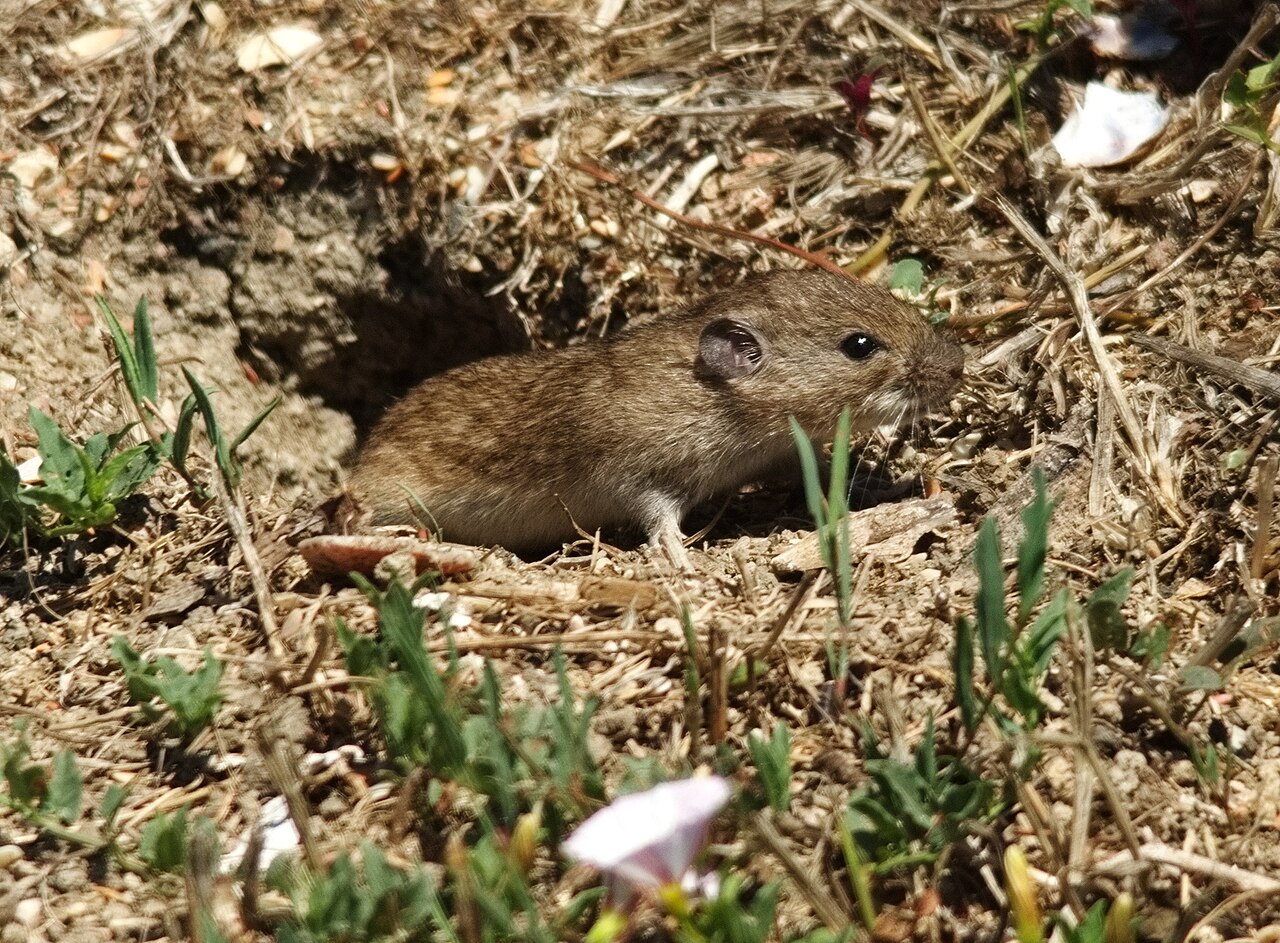
A medium-sized, pale vole with a short tail of 2.4 to 3.7 cm, about a quarter to a third of head-body length. Unlike the pine voles, the ears are clearly visible and the eyes large; the species is a grass-eating vole that also digs, not a specialised burrower. The fur is soft, without coarse guard hairs, grey to sandy buff above, often with a rusty tinge, and light grey below; in summer and on saline ground the coat is paler. The tail is bicoloured, pale below. Males are larger than females. Measurements vary strongly within the range, from small forms in the south to large ones in the north; the animals of Crimea belong to the large forms.
Similar species
In Europe the species overlaps mainly with Microtus obscurus and, in Crimea and the Balkans, with species of the guentheri group, including Microtus hartingi; these are larger, darker and longer-tailed, but the difference cannot be established with certainty from a photograph. The Common Vole is darker grey-brown and less sandy. The combination with the colony is useful: a pale, buff-grey vole in a dense, conspicuous colony of burrows in dry steppe or on fallow land is in this part of Europe almost always this species; Common Voles live more scattered and in damper grass. The Northern Mole Vole lives in the same steppe and sometimes shares its tunnels, but is immediately recognised by the lack of visible ears, the rudimentary eyes and the large, protruding incisors. Over the last twenty years the social voles have been split into a series of species on the basis of chromosomes and DNA; the name of an animal therefore depends on locality, not appearance.
Habitat
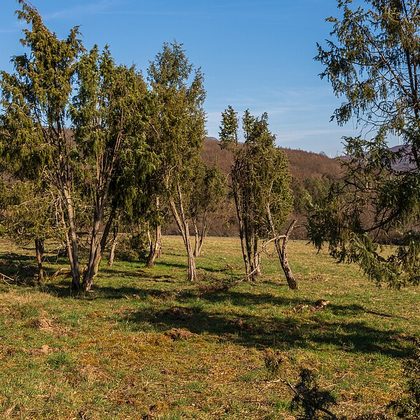
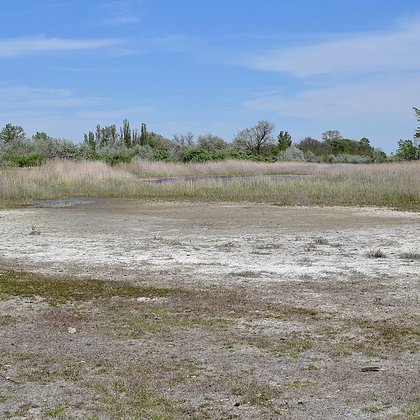
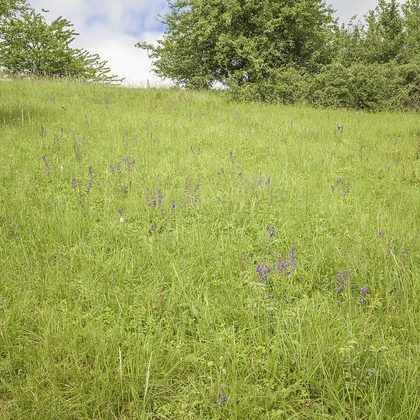
Open, herb-rich dry grassland: feather-grass and fescue steppe, semi-desert, salt steppe, fallow land, road verges and field margins, up to about 2,000 m. The species occurs on chernozem, clay, sand and saline soils, but within a dry area selects the damper sites: hollows, ditch edges and the margins of irrigated plots. Woodland and dense scrub are avoided.
Where the animal is most at home, classified with EUNIS — the European standard for habitats.

Distribution
The steppes and semi-deserts of south-eastern European Russia, the Caucasus, Turkey, the Levant and Central Asia into north-western China. In and on the edge of Europe the range includes Crimea, the steppes of southern Ukraine and the lower Volga, Kalmykia and the Caucasian foreland, and the Anatolian plateau. The species does not occur in central and western Europe.
- Native
- dark = core range, pale = thinly spread
Way of life
The activity rhythm depends on temperature: above about thirty degrees the species is mainly nocturnal, in cooler seasons predominantly diurnal. The diet includes up to one hundred and fifty plant species, mainly grasses and further legumes, composites and goosefoots; seeds and grain always make up at least thirty per cent of the diet, and daily intake is about three-quarters of body weight. Where the climate allows, breeding continues all year, with two to five litters a year and one to eleven embryos per litter; gestation is 21 to 22 days. A family consists of a breeding pair and the young of one or two litters; more than half of the breeding animals are monogamous, and families occupy the same burrow system over several years. Numbers fluctuate strongly, from four to six animals per hectare in a low to three hundred in a peak year. There is no winter dormancy; digging continues all year.
Where and when to look
In April or May search the steppe of Crimea or southern Russia for bare patches: a colony can be recognised from tens of metres by the short grass and the network of bare paths. Then wait at some distance. Unlike most voles, this species can be seen above ground on cool mornings: the animals emerge at the holes, bite off grass and drag it inside, and the family structure becomes visible. In summer heat the species is mainly nocturnal and hardly visible by day. Owl pellets from around a steppe colony give an overview of the small mammals of the area in a short time.
Conservation status
Least Concern (2016), with a range of about two million square kilometres and high numbers in most places. Where the species occurs in large numbers it is regarded as an agricultural pest and disease carrier and is controlled; a few isolated subspecies at the edges of the range have a less favourable status. The main long-term factor is the loss of steppe: this habitat is among the vegetation types in Europe most extensively lost to ploughing. With the steppe, species that feed on or live alongside this vole also disappear, such as the Steppe Polecat, the Marbled Polecat, the Steppe Eagle and the Northern Mole Vole.
Scientific name
Microtus socialis | (Pallas, 1773)
Pallas described the species in 1773 as Mus socialis; because it was later moved to another genus, the author and year stand in brackets. Microtus is Greek, from mikros, 'small', and ous, genitive ōtos, 'ear', after the small ears hidden in the fur. socialis is Latin for 'sociable, living in company', from socius, 'companion', after the colonies the animal lives in. The specimen the first description was based on came from Kazakhstan.