All species › Rodents › Birch mice › Severtzov's Birch Mouse
Severtzov's Birch Mouse | Sicista severtzovi
Sicista severtzovi | Sicista severtzovi
Sicista severtzovi, Severtzov's Birch Mouse, is a birch mouse of the forest-steppe of eastern Ukraine and adjoining south-western Russia. The Ukrainian red list estimates the population at fewer than a thousand animals, and the IUCN in 2024 assessed the species as Critically Endangered and possibly extinct. Its species status is disputed.
No photograph of a living wild animal of this species with a suitable Creative Commons licence exists. Do you have one that meets the rules? Send it in.
Tracks
There are no usable signs. A striped animal of about ten grams leaves no print, run, feeding sign or sound that can be identified, and in this species even a trapped animal proves nothing without laboratory analysis. In practice animals are caught with small live traps in undisturbed forest-steppe, or pellets of Barn Owl and Short-eared Owl are examined, in which the very long tail vertebrae indicate the genus Sicista; tissue or a DNA sample then goes to a laboratory, because only genetic analysis leads to the species. The chance of capture is very low: at the few known sites the species makes up less than half a per cent of the small mammals caught. A striped mouse in the forest-steppe of Kharkiv or Voronezh can only be recorded in the field as Sicista of the subtilis group.
Identification
A small striped rodent of the forest-steppe, in build and colour barely distinguishable from the other species of the Sicista subtilis group. Head-body length is usually 5.5 to 7 centimetres and reaches up to nine centimetres, the largest value within the group, with a tail of 6.8 to 8.0 centimetres exceeding the usual head-body length by about a quarter to a fifth, a slightly smaller proportion than in S. loriger, and a hind foot of 13 to 16 millimetres. The coat is grey-brown with a buff tinge, the belly paler. The pattern is that of the whole group: a dark spinal stripe with dark side stripes on either flank, separated by paler bands. All other external characters overlap with the related species.
Similar species
The species cannot be established in the field. It cannot be separated from Sicista loriger and S. subtilis at a distance, in the hand or from a photograph: the measurements overlap, and colour and stripe pattern are the same. Separation rests on the chromosome number (the genus Sicista is chromosomally highly variable, and chromosome races within the former S. subtilis proved to be separate species), on mitochondrial DNA, on the shape of the baculum and penile spines, which requires museum material and a microscope, and on range. Only the last is usable in the field, and in this species it is also the least certain. S. severtzovi lives in the forest-steppe east of the Dnieper, in eastern Ukraine and the Russian black-earth region around Voronezh; the type locality is the experimental steppe of Kamennaya Steppe near Bobrov. S. loriger lives in the steppe to the south and west, S. subtilis in the strict sense further east. In addition the species status is disputed: the 2016 revision found no support for a separate species and proposed placing it as a subspecies of S. subtilis; the Mammal Diversity Database retains it as a species in version 2.5. Only the Northern Birch Mouse can be separated, by its single spinal stripe without side stripes and by its woodland and mire habitat.
Habitat
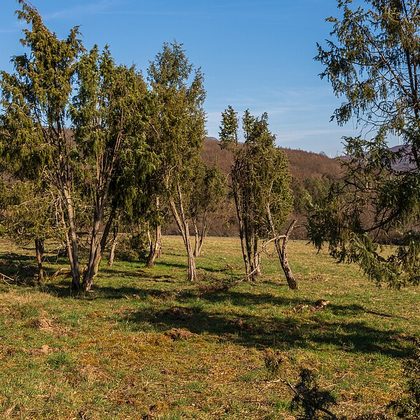
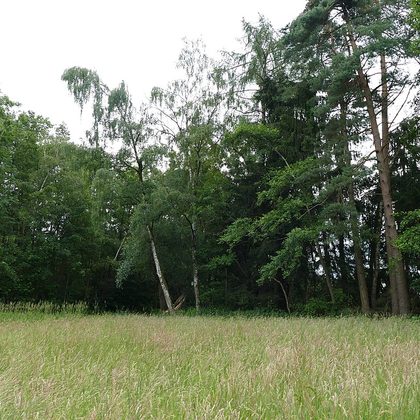
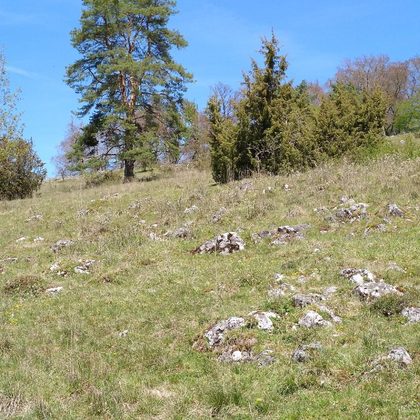
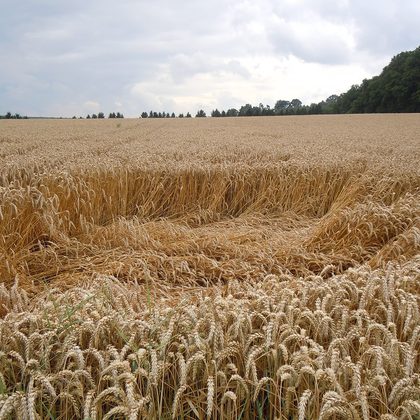
The transition zone between steppe and woodland: undisturbed herb-rich feather-grass and fescue steppe and meadow steppe, edges and slopes of ravines, and steppe scrub of blackthorn, dwarf almond and steppe cherry. Like all birch mice the species needs a dense, upright herb layer to climb and hide in; closely grazed, mown or burnt ground is unsuitable, and ploughed land entirely so. The core habitat, the black-earth forest-steppe, lies on the most fertile soils of eastern Europe, which have largely been taken into agricultural use.
Where the animal is most at home, classified with EUNIS — the European standard for habitats.
Distribution
Only the forest-steppe of eastern Ukraine and the adjoining south-west of Russia. The type locality is the Kamennaya Steppe experimental station in Bobrov district, Voronezh province. In Ukraine the occurrence of the species has been recognised only since 1999; there it is known from the steppe zone east of the Dnieper. The entire world range lies within the guide area. GBIF holds no record at all of the species within the guide area; this does not prove absence, but reflects how rarely the species is recorded and how rarely finds reach international databases.
Way of life
Almost nothing is known of the way of life of this species separately; the following applies to the group as a whole. Crepuscular and nocturnal and solitary, climbing in the herb layer with the long tail as support. For a rodent the diet consists to a large extent of insects and other invertebrates, supplemented with seeds and fruits of steppe herbs. The animals dig their own summer burrow and keep a long hibernation covering most of the year. They become sexually mature after the first winter, have one or two litters a year of three to five young, and live one to two years. Because of this slow life cycle a local population can disappear after a failed summer or a spring fire.
Where and when to look
There are no field search directions for this species. The entire range lies in eastern Ukraine and adjoining Russia, largely in or just behind the front zone, where no fieldwork has taken place since 2022 and where fires and mines make the ground impassable. Even in peacetime the species could only be demonstrated by licensed trapping series, with a hit rate below half a per cent and without certainty about the species name. Owl pellets from the forest-steppe of Kharkiv, Sumy, Belgorod and Voronezh are the least costly way of establishing whether Sicista still occurs.
Conservation status
Critically Endangered, possibly extinct (2024). The Ukrainian red list estimates the population at fewer than a thousand animals in the country, and the species makes up less than half a per cent of small-mammal catches at the known sites. The cause is the same as for S. loriger, but stronger: because of its fertility the black-earth forest-steppe has been almost entirely ploughed, and what remains lies in reserve fragments affected by spring fires, grazing and fragmentation. Since 2022 the war has been added: the range lies in the area of the heaviest fighting, with large steppe fires, armoured traffic, mines and a complete halt to fieldwork. No new record has been reported since. Because its species status is disputed, the species does not count as a separate unit in some lists, so that it may fall outside protection schemes. The species is included here following the classification of the Mammal Diversity Database.
Scientific name
Sicista severtzovi | Ognev, 1935
Ognev described the species in 1935 and placed it straight away in the genus where it still stands. Sicista is neither Latin nor Greek. Gray took the word over in 1827 without saying where from; it is generally referred to a vernacular name for the mouse in the Russian and Tatar language area, but which one is not settled. severtzovi honours a Severtzov, but which one is not settled: either the Russian explorer and zoologist Nikolai Severtzov (1827–1885) or his son Alexei Severtzov (1866–1936), the Moscow evolutionary morphologist at whose institute Ognev published the name. The specimen the first description was based on came from Russia, Voronezh.