All species › Rodents › Squirrels and marmots › Russian Flying Squirrel
Russian Flying Squirrel | Pteromys volans
Gewone vliegende eekhoorn | Ardilla Voladora Europea
Apart from the bats, the Siberian Flying Squirrel is the only gliding mammal in Europe. Within Europe it lives in old mixed woodland with spruce in Finland and Estonia. It is nocturnal and leaves its tree hole only after sunset. Most records are based on droppings under aspen trunks: yellow, 3 to 5 mm long and often by the hundred.
Tracks
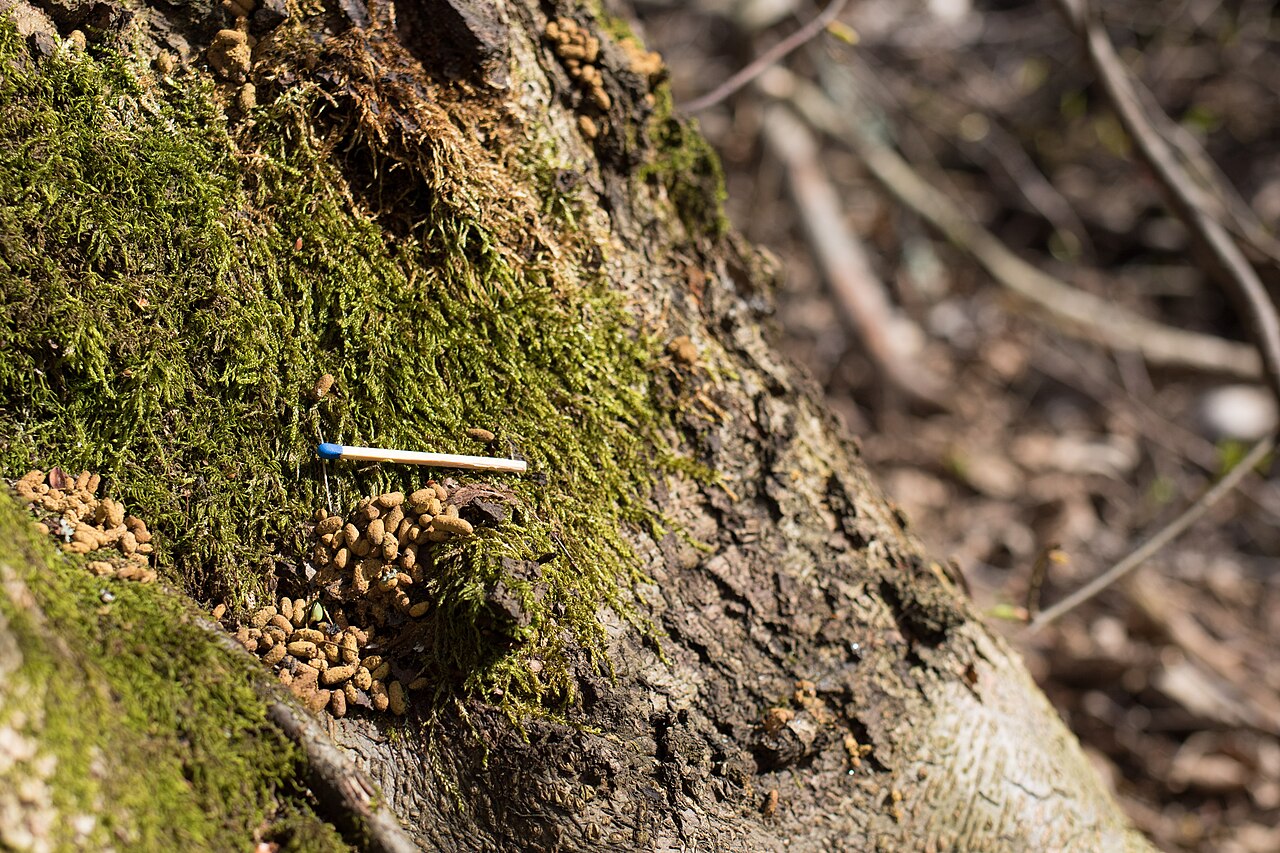
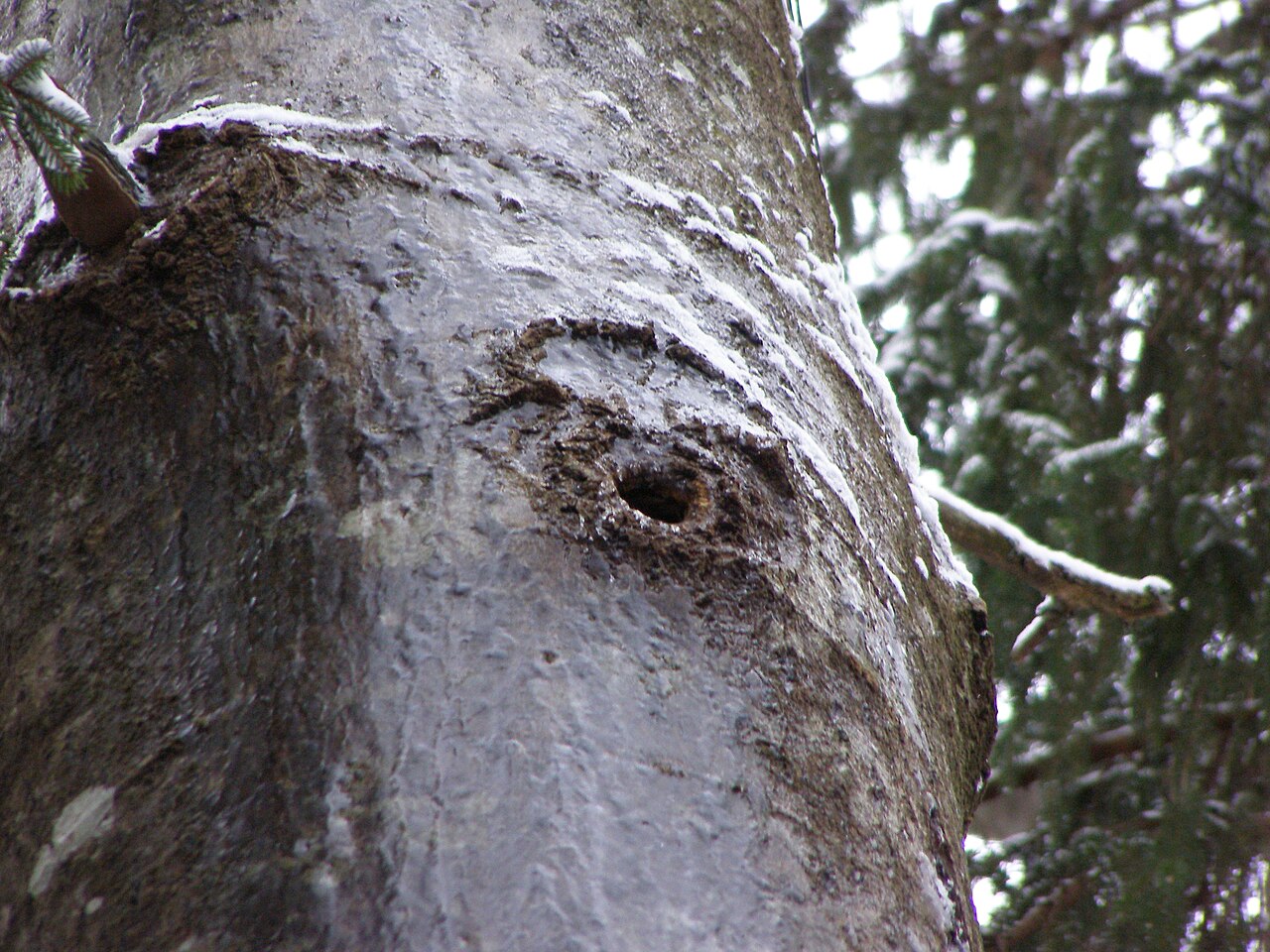
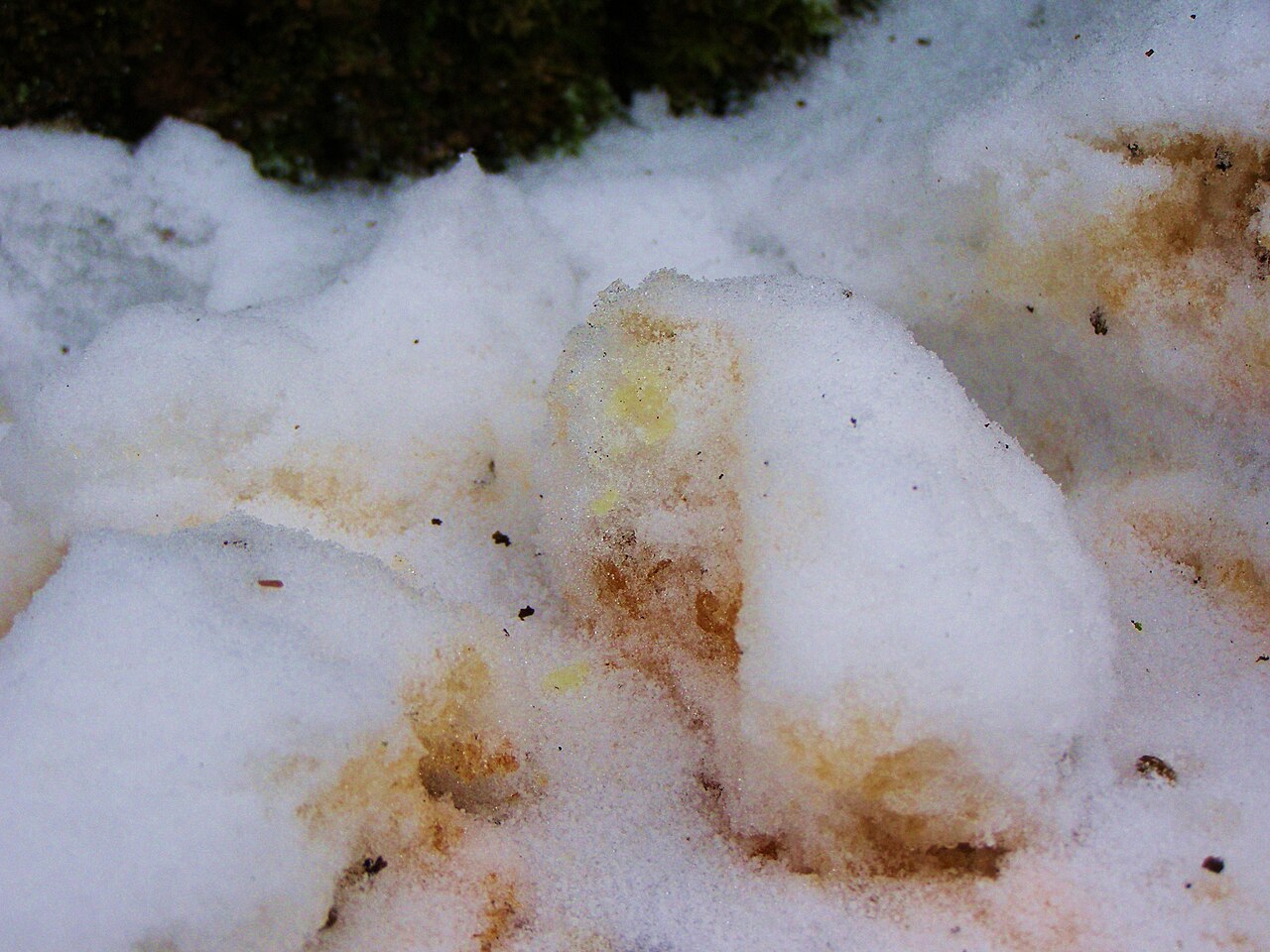
The species is recorded almost exclusively by its droppings; monitoring in Finland and Estonia is based on them. Under an occupied nest tree the droppings lie by the dozen to the hundred: oval to elongate, 3 to 5 mm long and bright yellow to orange. The colour comes from the winter food, alder and birch catkins; no other European mammal has droppings of this colour. They lie in small heaps at the foot of the trunk, on the moss edge, on root buttresses and on nearby stumps, and remain for months. In early spring, after snowmelt and before the grass grows, they are visible from a distance on brown forest moss. The second sign is the nest cavity: an old woodpecker hole four to five centimetres across, usually high in an old aspen, sometimes in a birch or a nest box, with spruce around it. The third is a winter sign: urine in the snow beneath the nest tree, yellow to orange stains in the last snow that are visible from ten metres. Feeding signs are scarce because the species eats leaves and catkins; bitten-off twig ends and loose catkins are sometimes found under the tree.
Head close-up
Identification
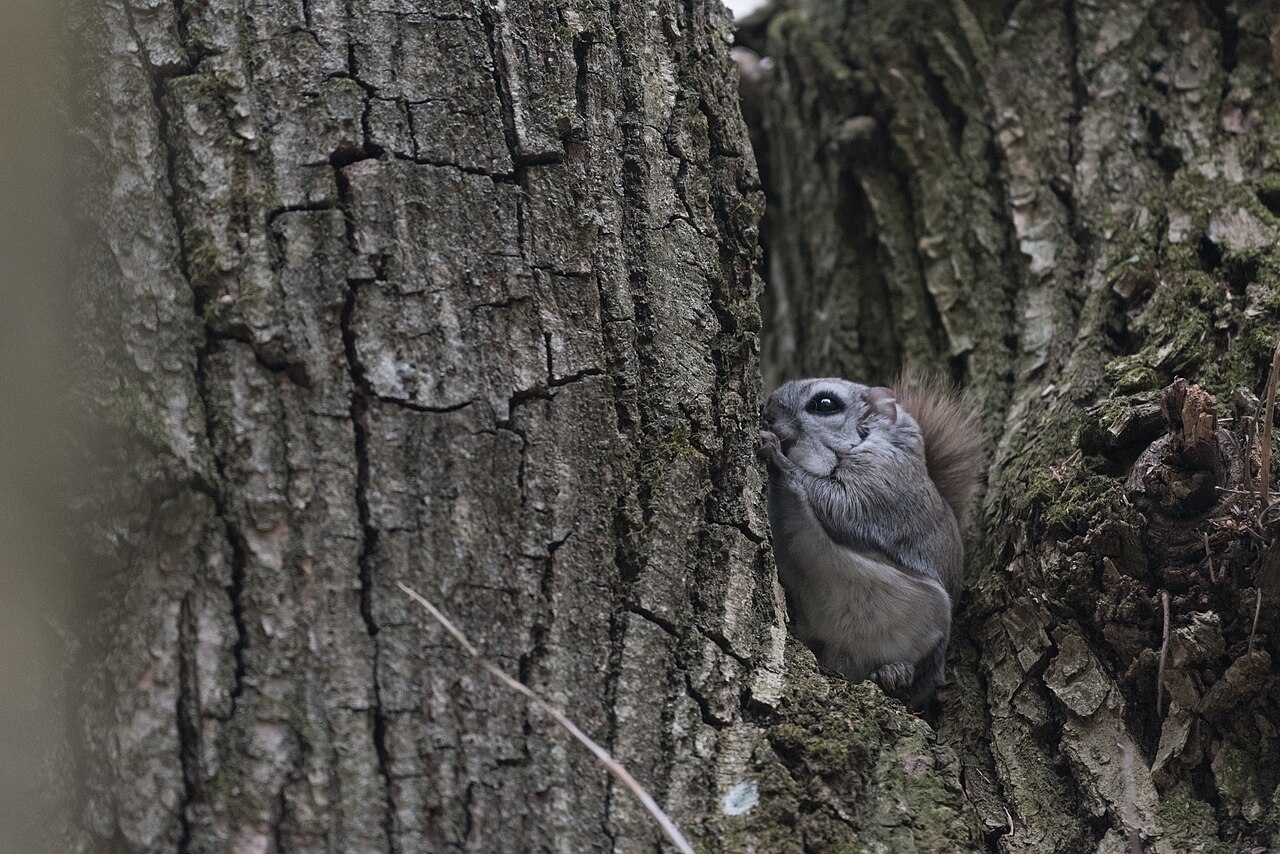
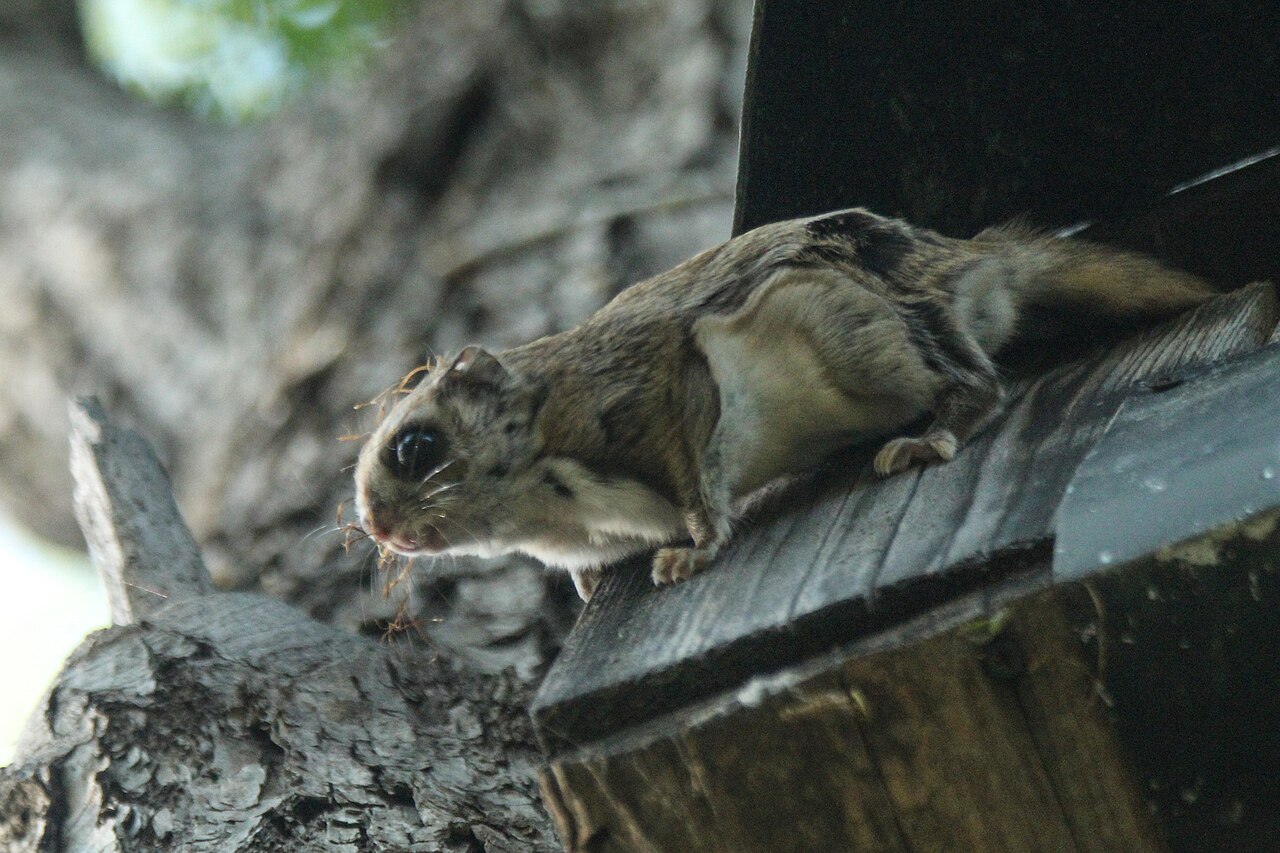
Head-body 13 to 20 cm, tail 9 to 14 cm, weight about 130 to 150 g; smaller and lighter than the Red Squirrel. The coat is silvery grey in winter and grey-brown in summer, the underparts white to pale grey. Two features are diagnostic. The first is the gliding membrane: a furred fold of skin between fore and hind limb, supported at the wrist by a cartilaginous spur. In a sitting animal it lies in a wavy fold along the flank; in a glide it is stretched into a square surface. The second is the eye: large in proportion to the head, black and domed, with a dark ring around it. The ears are small, round and untufted, the muzzle short and blunt, and the tail is flattened and broad, not round and bushy. The legs are short, the claws sharp and curved.
Similar species
Seen well, the species cannot be confused with any other European mammal; apart from the bats it is the only gliding mammal on the continent. In the dark three confusions are possible. The Red Squirrel is larger, red-brown to blackish, ear-tufted in winter, with a round bushy tail and no membrane; it is diurnal and almost always in its nest at night. A bat flaps its wings and changes direction constantly; the flying squirrel moves in one straight descending line from trunk to trunk and lands with a short upward swerve. A Tawny or Tengmalm's Owl leaving a tree silently flies on and does not land against a trunk. In daylight, in a nest box or in a cavity, identification is certain.
Habitat
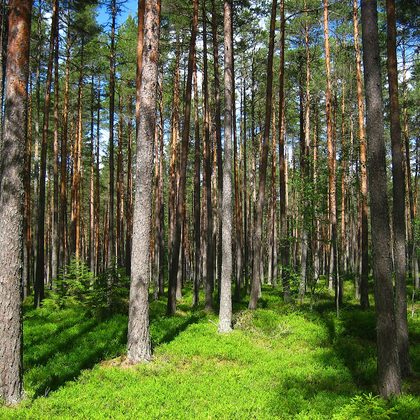
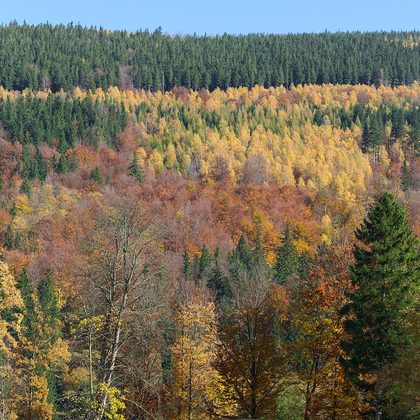
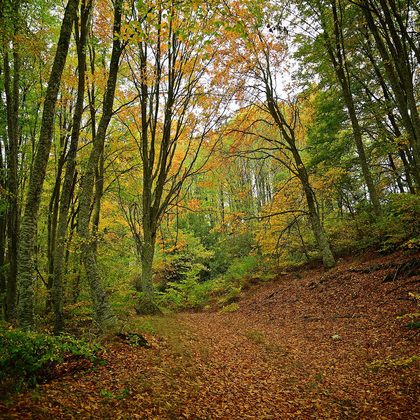
Old mixed taiga forest in which two elements occur together: old aspen, birch and alder for food and nest cavities, and tall spruce for cover and for continuous gliding routes between crowns. Young pure conifer stands are not occupied, nor are aspen stands without spruce. The species prefers forest edges along streams, mire margins and old gaps with thick aspens. In Finland and Estonia it is regularly found in old woodland near buildings: town woods, park woods and farmsteads with old aspens, where nest boxes are also used.
Where the animal is most at home, classified with EUNIS — the European standard for habitats.
Distribution
From Finland and the eastern Baltic region across the Russian taiga to the Pacific, Mongolia, Korea and Japan. The European part of the range is small and declining. The species occurs in Finland, from Lapland to the south, with the largest European population, and in Estonia, where it is confined to the north-east. In Latvia it was last recorded in 2001 and has been regarded as regionally extinct since 2013; it has disappeared from Lithuania; in Belarus it was absent between 1996 and 2017, when it was found again. It is absent from Sweden, Norway, central Europe, Britain, Ireland and the Iberian Peninsula.
- Native
- dark = core range, pale = thinly spread
Way of life
Nocturnal, with most activity in the first hours of the night and around dawn; in the light summer nights of the north also at dusk. The species does not fly but glides: the animal climbs high on a trunk and then glides with the membrane spread in a descending line to the foot of the next tree, usually over five to twenty metres, exceptionally over more than a hundred. The broad tail is used for steering; before landing the animal brakes with an upward swerve. The diet consists of leaves of aspen, birch and alder and of buds, in winter almost exclusively of catkins, which are stored in autumn in tree cavities and branch forks. There is no hibernation; in severe cold the animal is less active and stays in the cavity for whole days, sometimes with several animals together. One or two litters a year, of two to three young, in April and June; the young glide from an age of about six weeks. Females hold a territory, males use a much larger area.
Where and when to look
Search for droppings. In April or early May, after snowmelt, walk through old woodland in Finland or Estonia from thick aspen to thick aspen and check the foot of the trunk, the moss edge and stumps within a few metres for small heaps of yellow droppings. Where they occur, the tree is a nest tree and the hole can usually be found with binoculars. To see the animal itself, return to the same tree in March or April and wait from half an hour after sunset at about ten metres, quietly and without a lamp, for it to emerge. Allow for several evenings. The chance is greatest in the town woods around Helsinki, Espoo and Vantaa, where most searching is done.
Conservation status
Least Concern globally (LC, 2017); the Siberian population is large. In Europe the species is declining throughout its range. The main cause is modern forestry: clear-felling and conversion to even-aged young production forest remove the old hollow aspens and the tall spruce and fragment the canopy, interrupting gliding routes. The species is listed in Annexes II and IV of the Habitats Directive. In Finland forestry law requires known breeding and resting places to be spared during felling. The provision is much debated; its effect is that finding droppings in Finland can have direct legal consequences for felling.
Scientific name
Pteromys volans | (Linnaeus, 1758)
Linnaeus described the species in 1758 as Sciurus volans; because it was later moved to another genus, the author and year stand in brackets. Pteromys is Greek, from pteron, 'wing', and mys, 'mouse', after the gliding membrane between the limbs. volans is Latin for 'flying', the present participle of volare, 'to fly', after the glides the animal makes on its skin membrane. The specimen the first description was based on came from Finland.