All species › Rodents › Voles and hamsters › Northern Mole Vole
Northern Mole Vole | Ellobius talpinus
Blinde woelmuis | Ellobius talpinus
The Northern Mole Vole is a vole with a burrowing, subterranean way of life. It digs not with its feet but with its incisors, has very small eyes, no external ears and a tail shorter than the hind foot, and almost never comes above ground. Its presence is detected mainly from the lines of soil mounds on the steppe. The species is one of the few mammals that have lost the Y chromosome entirely: males and females both have 54 chromosomes with two X chromosomes, and the mechanism of sex determination is not precisely known.
Tracks
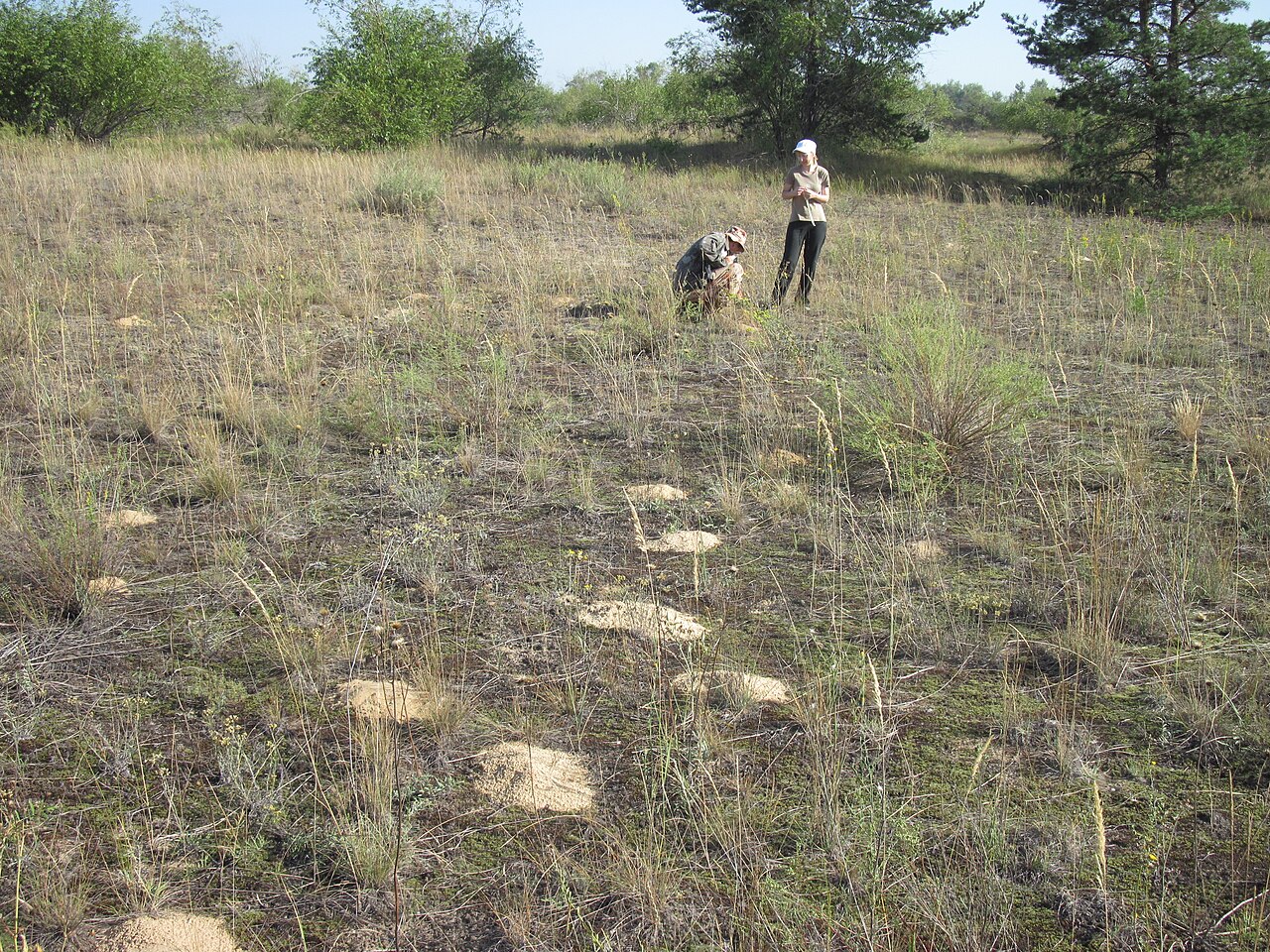
Because the animal itself is rarely seen, signs are the most important evidence for this species. It lives in a burrow system 5 to 6 centimetres across (mean 5.2), with feeding tunnels fifteen to twenty centimetres deep and nest chambers of about 11 by 11 by 9 centimetres, lying forty to sixty-five centimetres deep in the south and up to about four metres deep in the north. The entrances are always sealed, and the soil pushed out in doing so forms the mounds: oval, 13 to 68 cm long, 10 to 38 cm wide and 2 to 10 cm high. One family makes twenty to thirty-five, which together can cover twenty to twenty-three per cent of the ground. By this a colony can be recognised from two hundred metres: the steppe looks lightly disturbed, in winding lines. A family moves two to three cubic metres of soil a year. In digging, the front animal loosens the soil with its incisors, the animals behind push the soil out, and they change places regularly; the rate is about ten centimetres per minute. Feeding signs are found in the tunnel rather than outside: bitten roots and gnawed bulbs of iris and wild garlic, and at the surface, especially in autumn, small patches where the vegetation has been pulled down from below and only a small hole remains. The droppings are four to six millimetres, cylindrical, and lie in the tunnel. No food stores are made. Colonies lie two to three hundred metres apart; where one colony is found, there are usually more nearby.
Identification
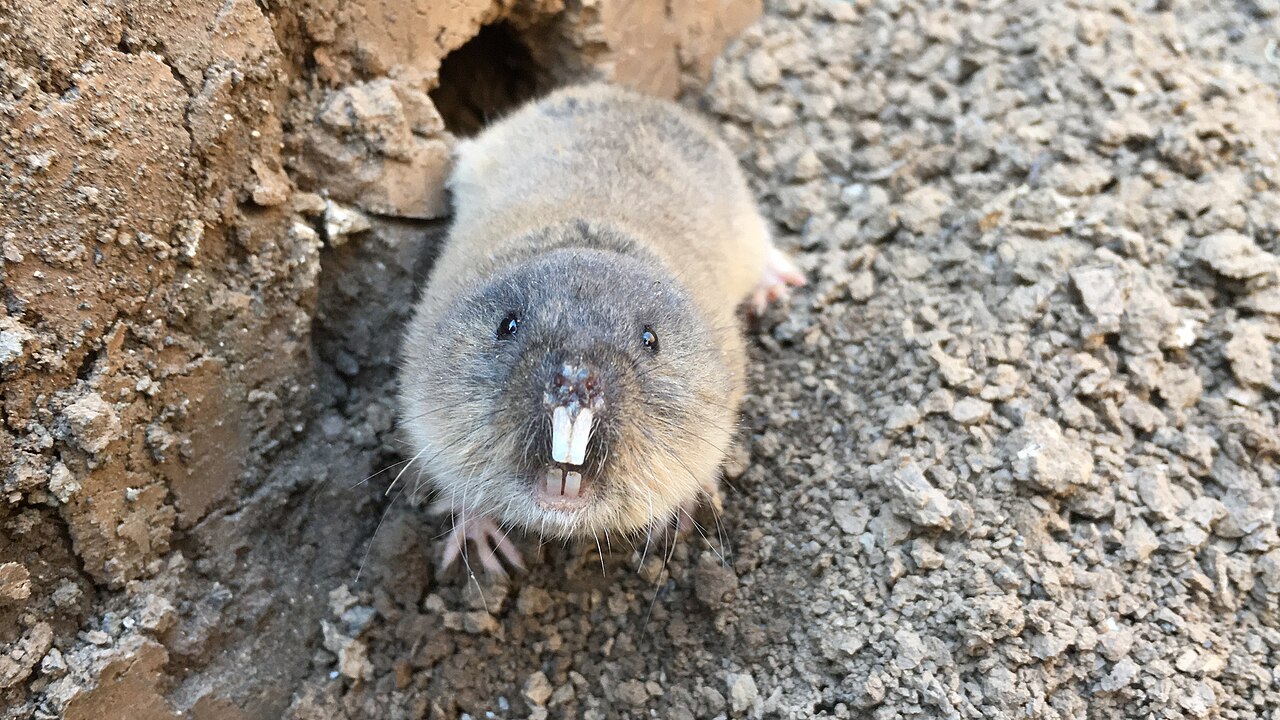
A cylindrical animal with a large, flat, blunt head, a short neck and a heavy chest, adapted to a burrowing life. Head-body length is 8.4 to 11.5 cm and weight 24 to 56 grams. The tail is 0.8 to 2.1 cm and thus shorter than the hind foot. The nose pad is large and bare, the ears are reduced to a fold of skin and the eyes are very small black points that are hard to find in the fur. The forefeet are heavier than the hind feet, and the thumb is less reduced than in most rodents. The fur is velvety and can be brushed in any direction, as in a mole, and the colour varies greatly: sandy, ochre-brown, grey-brown or almost black, with the belly always paler and the head darker than the back, usually with a black mask between nose and ears. Most conspicuous are the large, yellowish-white incisors, which protrude in front of the lips; this allows the animal to dig with its mouth closed without taking in soil.
Similar species
In Europe confusion is ruled out when the animal itself is seen: no other European rodent has protruding incisors, no ears and no visible eyes. The mounds, however, are often confused. The mole makes tall, conical heaps of clods, from a vertical shaft and without a tunnel opening; those of the mole vole are oval, flat and broadly spread. The blind mole rat (Nannospalax), which lives on the same steppe in southern Ukraine and in the Balkans, is much larger, also digs with its incisors and makes clearly larger mounds, often in arcs; in addition it has no visible eyes at all, a fold of skin over the eye position and a broad head with a stiff ridge of bristles on the snout. The water vole makes irregular heaps with the tunnel opening visible at one side, and lives near water. In the Asian part of the range other Ellobius species occur; in Europe this is the only one. Lines of flat, oval soil mounds on dry steppe, with families two to three hundred metres apart, point to this species.
Habitat
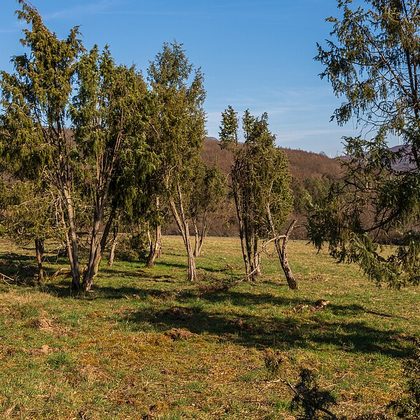
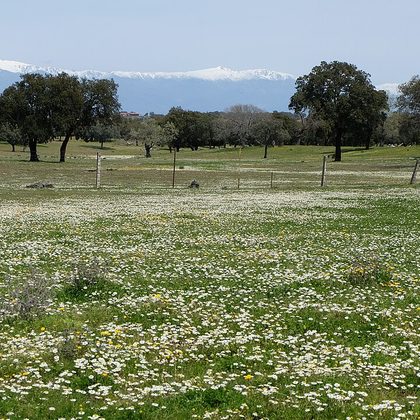
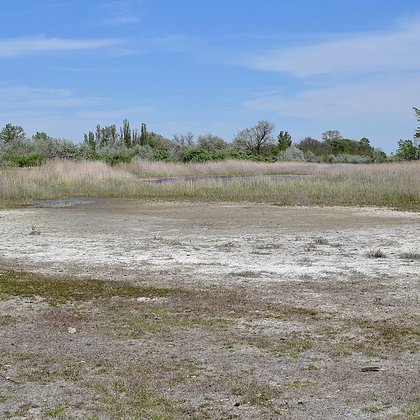
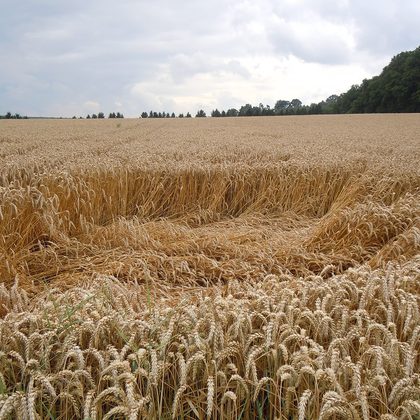
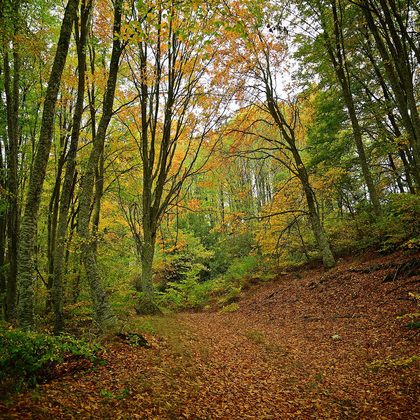
Forest steppe, steppe and semi-desert on chernozem, clay, sand and also on gravelly or stony ground. The species is sensitive to soil freezing and to a deep snow cover, which determines the northern limit of the range; in dry summers it moves into birch copses and hollows, where the ground stays moist. It also occurs on fallow land, along field margins and on old, unploughed plots. The species needs soil that can be dug all year and an underground supply of bulbs, tubers and thick rhizomes.
Where the animal is most at home, classified with EUNIS — the European standard for habitats.

Distribution
From south-eastern European Russia and Ukraine east through south-western Siberia and Kazakhstan to Turkmenistan, north-eastern Iran, Mongolia and north-western China. In Europe this concerns the steppes of south-eastern Ukraine and southern Russia: the left bank of the Dnieper, the Luhansk and Donetsk steppe and the area between the Don and the Volga. On the lower Dnieper the species has disappeared; in 2015 it was unexpectedly rediscovered on the west bank of that river. The species does not occur, and has never occurred, in central and western Europe, including the Low Countries, the British Isles and the Iberian Peninsula.
- Native
- dark = core range, pale = thinly spread
Way of life
Active by day and night, with peaks in the morning and evening; in drought and in winter activity declines and the animals become sluggish, but there is no hibernation. The species lives strictly underground and rarely comes to the surface, then usually at night, to remove soil or to move. The diet consists of underground plant parts (bulbs of iris and wild garlic, tubers and grass roots), of which tens of grams are eaten daily. No food stores are made. Breeding starts in late winter and peaks in February and March; gestation lasts thirty days, long for a vole, and a litter averages four young, with extremes of one to seven. A female has one or two litters a year and breeds only in her second year; life expectancy is about two years. The young open their eyes at twenty-one to twenty-eight days. The species lives in colonies of family groups of up to about ten animals, of which only one female breeds; this social organisation is known from the African mole rats and is virtually unknown among European rodents. Young animals disperse from March to May, travelling up to eight hundred metres.
Where and when to look
Search for the mounds rather than the animal; the chance of seeing a Northern Mole Vole above ground is very small, and most existing photographs were taken of dug-out or trapped animals. In April or May, before the grass is tall, go out onto the steppe in the Luhansk or Donetsk region or along the Don and scan the flat ground: a colony shows as a series of pale, oval patches in a winding line through the grass. That line follows the burrow system. Fresh, dark soil on the mounds indicates an occupied colony; overgrown mounds indicate an abandoned one. Sit half a metre from a fresh mound and wait: now and then fresh soil is pushed out from inside, which for most field workers is the closest approach to the animal. Digging is neither permitted nor useful: the burrow system runs metres deep and the animals are protected.
Conservation status
Least Concern globally (LC, 2017). This assessment mainly reflects the situation in Kazakhstan and Siberia and not that in Europe. On the western edge of the range the species is declining rapidly: the entire Ukrainian population is estimated at two to three thousand animals, the species is listed in the Red Data Book of Ukraine, and on the lower Dnieper it has disappeared. The cause is the loss of unploughed steppe, on which the species depends and which has almost disappeared in eastern Europe. Ploughing a plot means the end of the colonies on it, and because families have only one breeding female, which breeds only in her second year, the species recovers slowly. The rediscovery in 2015 on the west bank of the Dnieper, at a site where the species was considered lost, shows that caution is needed before declaring this hard-to-detect species extinct at a site.
Scientific name
Ellobius talpinus | (Pallas, 1770)
Pallas described the species in 1770 as Mus talpinus; because it was later moved to another genus, the author and year stand in brackets. Ellobius is Greek, but its origin is not certain: it is referred either to ellobion, 'earring', from lobos, 'earlobe', or to ellos, 'mute', and bios, 'life'. talpinus is Latin for 'mole-like', from talpa, 'mole', after its burrowing life and mole-like build. The specimen the first description was based on came from Russia.