All species › Even-toed ungulates › Bovids › Mountain gazelle
Mountain gazelle | Gazella gazella
Berggazelle | Gacela Idmi
The mountain gazelle (Gazella gazella) is a gazelle of the hills and plains of the Levant. Around 2024 about 6000 remained, about 5000 of them in Israel and the Palestinian territories and the rest mainly in Hatay Province in Turkey. Within the guide area it is the gazelle of the Mediterranean hill country, while the Dorcas gazelle inhabits the desert.
Tracks
Territorial males mark their territory with dung middens: fixed places where they repeatedly deposit droppings. Such heaps of small, shiny, pointed pellets along paths and on hilltops are the clearest sign of the species. The slot is small, narrow and pointed.
Identification
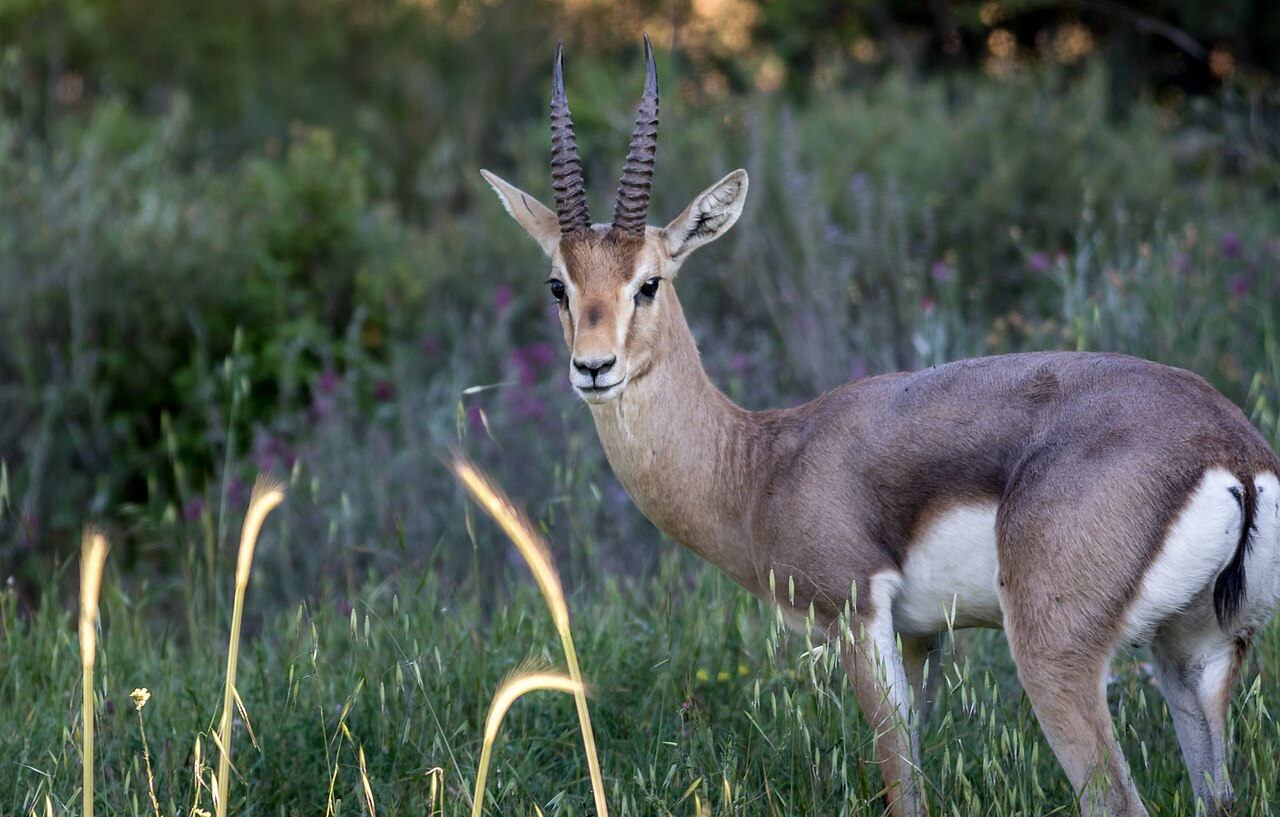
A slender gazelle with a proportionally long neck and long legs; males weigh 15 to 25 kg, females 13 to 20 kg. Head-body length, tail length and shoulder height have not been found in a reliable source for this species. The upperparts are dark brown, the underparts white, with a dark stripe at the boundary. The tail is short, bushy and black. Both sexes carry horns: in the male 22 to 29 cm, sturdy and clearly ringed, in the female 8 to 15 cm, thin, smooth and without rings.
Similar species
The Dorcas gazelle is paler, sandy to reddish beige, with larger ears and lyre- or S-shaped horns in the male; it lives in the Negev, the Arava and Sinai, in drier areas than the mountain gazelle. The Arabian gazelle (Gazella arabica) of the Arabian Peninsula was formerly included in the mountain gazelle and closely resembles it; the area decides the species. Females of the Persian fallow deer (Dama mesopotamica) in Galilee are much larger and spotted.
Habitat
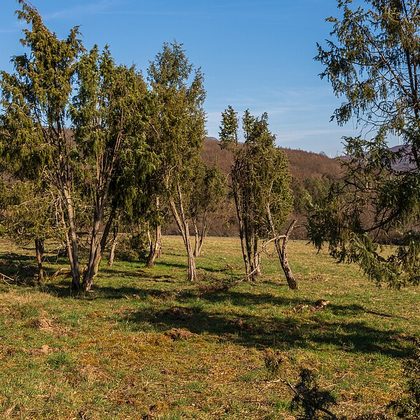
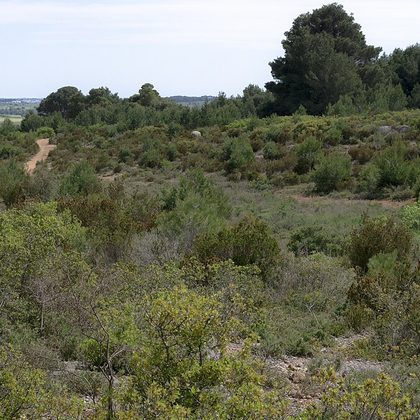
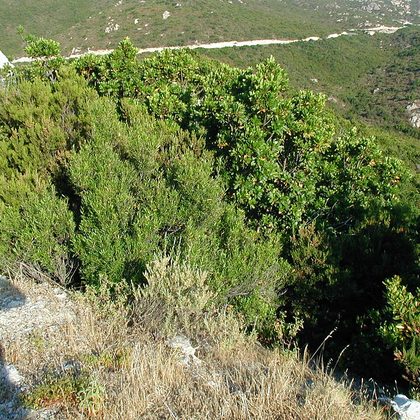
The flat tops and crests of hills and mountains and the valleys between them, open woodland, fields and rocky plateaus, in areas with 300 to 400 mm of rain per year. The animals also use fields and orchards at the edge of their range and in Israel live up to the edges of towns.
Where the animal is most at home, classified with EUNIS — the European standard for habitats.
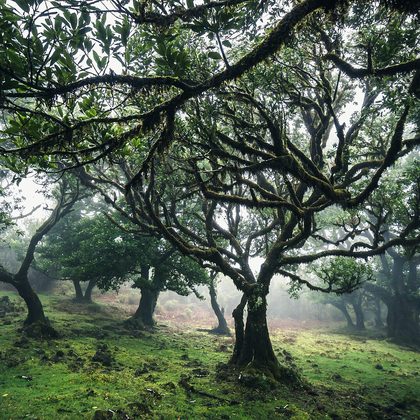
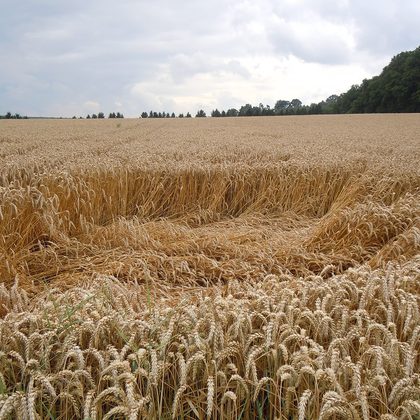
Distribution
The Levant: Israel, including the Golan, the Palestinian territories (the West Bank and in small numbers the Gaza Strip) and Hatay Province in southern Turkey, where numbers rose from about 150 animals in 2009 to 1331. In Jordan at most small numbers survive; the last confirmed sighting dates from 2015. In Lebanon its occurrence is uncertain. Around 2024 the total was estimated at about 6000 animals, about 5000 of them in Israel and the Palestinian territories.
- Native
- dark = core range, pale = thinly spread
Way of life
The mountain gazelle is mainly crepuscular. There are three kinds of group: females with young, groups of young males, and territorial males living alone. Groups usually number 3 to 8 animals. The gazelle prefers to graze, but also eats leaves of shrubs and young acacia shoots, and obtains moisture from succulent plants and dew. Mating peaks in early winter; after a gestation of about 180 days a single young is born in April or May. The young lies hidden for the first weeks and joins the mother's group after about three months. Females breed from 12 months, males from 18 months.
Where and when to look
In Israel the mountain gazelle can be seen in the Gazelle Valley nature park in Jerusalem, where a group lives in the middle of the city, and on open hills in Galilee and on the Golan. Early in the morning and late in the afternoon the animals are active and stand in open terrain. With gazelles in the Negev, check colour and horns: a Dorcas gazelle is more likely there.
Conservation status
Endangered (EN, 2017). Threats are poaching, estimated in 2019 at 300 to 1300 animals a year, road traffic, fragmentation and loss of habitat, and predation by feral dogs and golden jackals in disturbed areas. An outbreak of foot-and-mouth disease in the 1980s killed about 3500 animals. The West Bank barrier fragments the populations.
Scientific name
Gazella gazella | (Pallas, 1766)
Pallas described the species in 1766 as Antilope gazella; because it was later moved to another genus, the author and year stand in brackets. Gazella goes back through French and Spanish to Arabic ghazāl, 'gazelle'. The specific name repeats the genus name. The specimen the first description was based on came from Syria.