All species › Rodents › Voles and hamsters › Liechtenstein's Pine Vole
Liechtenstein's Pine Vole | Microtus liechtensteini
Microtus liechtensteini | Microtus liechtensteini
Microtus liechtensteini is a subterranean vole of the south-eastern Alps and the Dinarides with no vernacular name in common use. It lives largely under the turf and is rarely recorded; GBIF holds nine localities with coordinates worldwide. The Bavarian pine vole, a form that was not found again for decades after its description in 1962, is also placed in this species.
No photograph of a living wild animal of this species with a suitable Creative Commons licence exists. Do you have one that meets the rules? Send it in.
Tracks
The animal itself is rarely seen; signs are the main evidence. The species digs shallow tunnels just under the litter and moss layer of wood edges and clearings and plugs the entrances with soil; this plugging is characteristic. Where soil is pushed out lie small, low heaps of fine earth, much smaller than a molehill and set close together in a line along the tunnel. A molehill is tall, conical, built of clods and comes from a vertical shaft. A water vole's heap is larger and coarser, with the tunnel opening visible at one side. Under moss and leaf litter along wood edges lie swept runways three to four centimetres wide. Further signs are peeled and bitten-through roots and rhizomes of buttercups, pinks and heather, and in winter gnawed bark at the base of young spruce and mountain pine. Droppings are four to six millimetres long, cylindrical with blunt ends, in small latrines in the tunnel. The most reliable source is the pellet of Tawny Owl and Tengmalm's Owl. Microtus cheek teeth are flat, folded into sharp zigzag prisms and grow throughout life; which pine vole is involved is shown by the shape of the first lower molar under a lens.
The young
Identification
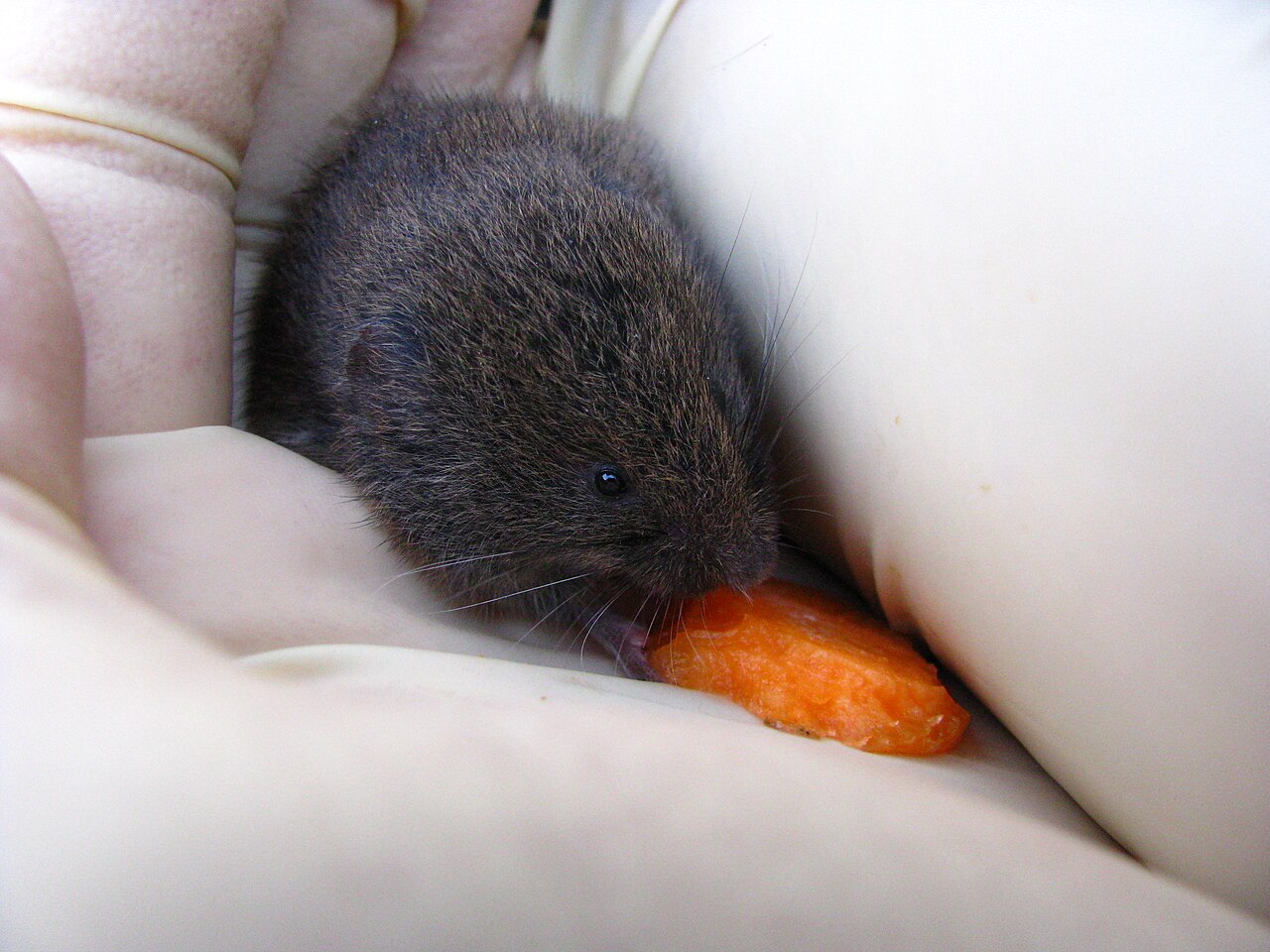
A small, thickset vole of the subterranean type: rounded head, very small eyes, short ears sunk in the fur and a short tail of 2.7 to 4 cm, roughly a third of head-body length. The fur is soft, dense and fairly long, dark brown above and grey below, without a sharp division on the flank. Females have four nipples in two inguinal pairs; most true grey voles have eight. The sole bears five pads. The skull is lightly built, with a relatively large braincase and no supraorbital ridges. The build is that of a burrowing vole.
Similar species
In the field this species cannot be separated from other pine voles. Its whole range overlaps with that of the Common Pine Vole (Microtus subterraneus), which is on average slightly smaller with a slightly shorter tail; the measurements overlap completely, however, and separation rests on cheek teeth and skull, i.e. on material in the hand or from owl pellets. West of about the Adige lives the Alpine Pine Vole (M. multiplex), with a longer tail of 4 to 4.4 cm, nearly forty per cent of head-body length; within this group that is the only external character that is sometimes usable. The Tatra Pine Vole of the Carpathians does not occur in the range. From the surface-living voles the species can be separated in the field: Common Vole and Field Vole have larger eyes and visible ears and use grass runways rather than tunnels; the Bank Vole has a reddish-brown back, large eyes, projecting ears and a tail about half the body length. A vole with very small eyes disappearing into a tunnel system in an Alpine wood is this species or the Common Pine Vole; further identification requires the teeth.
Habitat
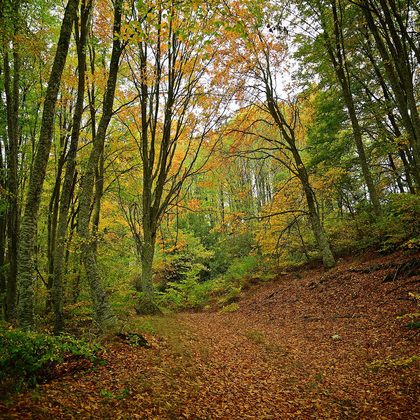
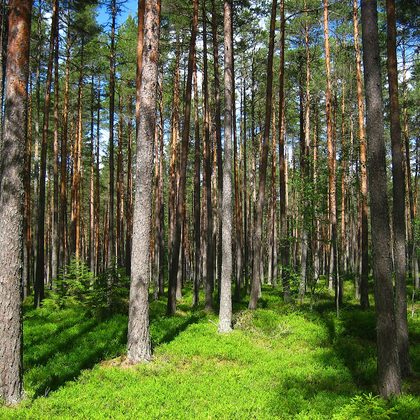
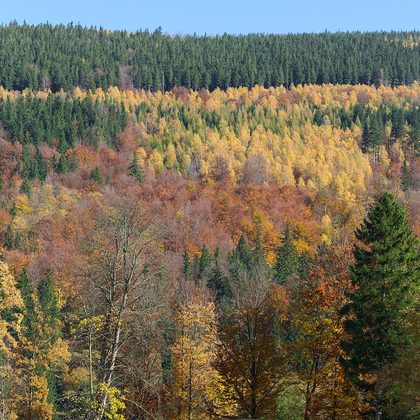
Early woodland stages: wood edges, clearfells, glades and young plantations with a dense herb layer and a light, damp soil that can be dug. The species is commonest in montane beech, spruce and larch forest and in the mountain pine zone, and occurs from sea level to about 1,960 m. The deciding factor is not the woodland type but loose, humus-rich soil under a closed herb layer. Close-grazed pasture, dark spruce stands without ground vegetation and rocky ground are avoided.
Where the animal is most at home, classified with EUNIS — the European standard for habitats.

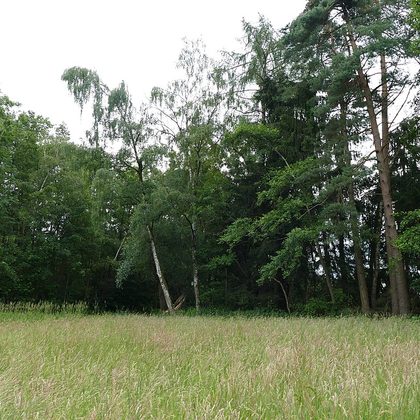
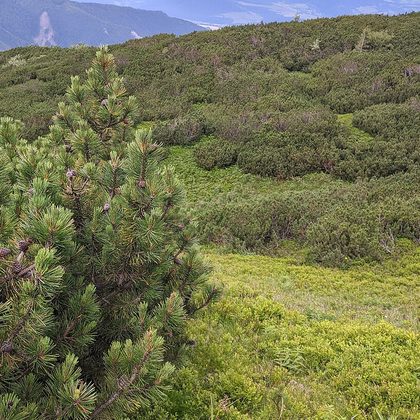
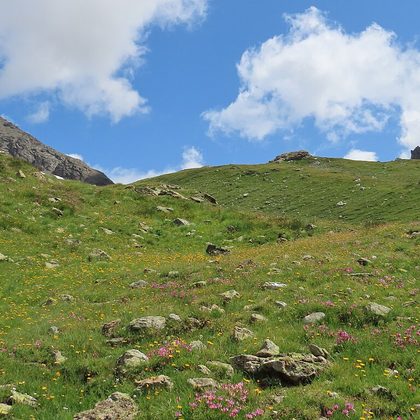
Distribution
The south-eastern Alps and the Dinarides: extreme southern Bavaria, western and southern Austria (North Tyrol, East Tyrol, Carinthia, Salzburg, Styria), north-eastern Italy, Slovenia, western Croatia as far as the Velebit range, where the type locality lies, western Bosnia and western Serbia. To the west the range of the Alpine Pine Vole adjoins. The Bavarian pine vole, described in 1962 from Garmisch-Partenkirchen and then not found for a long time, is placed in this species in the taxonomy followed here. Friederike Spitzenberger found it in a live trap in North Tyrol in 2000; in 2023 it was also recorded near Mittenwald on the German side. It lives in a small number of valleys around the Zugspitze, Wetterstein and Karwendel. This assignment is not universally accepted: genetically the Bavarian form constitutes a separate cluster, and several authors treat M. bavaricus as a distinct species. Outside the south-eastern Alps and the Dinarides the species does not occur.
Way of life
Crepuscular and nocturnal. The species digs tunnel systems with a nest chamber and a store chamber and seals the entrances. Grasses are not a main food. About half the diet consists of green parts of dicotyledons, chiefly buttercups, pinks, heathers and dogbanes; flowers, seeds, fruits, fungi and lichens together make up about a tenth. Because grasses are avoided, there is little food competition with the Common Vole. Pregnant females have been found from March to August, with two to four embryos (mean 2.6) and at least two litters a year; the Common Vole produces about ten times as many young in the same period. There is no winter dormancy; the species remains active under the snow.
Where and when to look
The chance of seeing the animal itself is very small. Signs offer more scope. In June or July, in montane forest in for example Carinthia or Slovenia, find a wood edge or clearfell with a dense herb layer, lift moss and leaf litter and follow the swept runways; small heaps of fine earth in a line indicate the tunnel system. Pellets of Tengmalm's Owl collected under a roost give more information on the small mammals of a valley than field observation. Records of the animal itself are almost only possible through trapping studies: all usable photographs of this species show trapped animals in the hand.
Conservation status
Least Concern (2024). The assessment rests mainly on the size of the range; almost nothing has been recorded on numbers, densities or trend, as the small number of georeferenced records also shows. The Bavarian form is listed as Critically Endangered in Austria and as Extinct in Germany and is among the most threatened mammals of central Europe. A captive-breeding programme has run in Innsbruck since 2024 and a cross-border conservation project in the Zugspitze–Wetterstein–Karwendel Euregio since 2025. Its rediscovery after almost forty years shows that an absence of records of subterranean voles is no proof of extinction.
Scientific name
Microtus liechtensteini | (Wettstein-Westersheim, 1927)
Wettstein-Westersheim described the species in 1927 as Pitymys liechtensteini; because it was later moved to another genus, the author and year stand in brackets. Microtus is Greek, from mikros, 'small', and ous, genitive ōtos, 'ear', after the small ears hidden in the fur. liechtensteini honours Prince Johann II of Liechtenstein (1840–1929), the patron to whom Wettstein dedicated his description. The specimen the first description was based on came from Croatia.