All species › Hedgehogs, shrews and moles › Shrews › Lesser white-toothed shrew
Lesser white-toothed shrew | Crocidura suaveolens
Tuinspitsmuis | Musaraña de Campo
The Lesser White-toothed Shrew is a white-toothed shrew whose range under the current classification is much smaller than before. For a century the name was applied to all small white-toothed shrews from Portugal to Mongolia; since the Mammal Diversity Database split off Crocidura gueldenstaedtii, C. fimbriata, C. iculisma and C. cypria, the species comprises only the animals of the eastern steppe: Ukraine, southern Russia and Central Asia. White-toothed shrews from western and southern Europe therefore do not belong to this species.

Tracks
The signs are those of the genus, with one distinctive feature. The nest is often built under driftwood or plant debris along water, in haystacks and similar places, and is a spherical nest of fine material rather than a hollow. In the semi-deserts of Central Asia the species also digs its own burrows: a tunnel about one centimetre across runs three to three and a half metres vertically down and ends in a nest chamber eighteen to twenty centimetres wide. This is unusual for a shrew and is the clearest sign of the species. Further: droppings two to four millimetres long, dark and glossy from chitin remains, at fixed places under planks and stones; runs half a centimetre to a centimetre and a half wide through litter and under turf; high, shrill squeaks during disputes. In autumn the number of animals in barns, houses, haystacks and stores increases every year; this is not true migration but a movement, and it is the best period to find the species in buildings.
Identification
Small to medium-sized and lightly built, with all the characters of the genus: white teeth without red-brown tips, a pointed, mobile snout, very small eyes, ears projecting above the fur and a tail with long, projecting tactile hairs. The coat is two-toned without a sharp boundary: the back varies from brownish grey to light grey in steppe animals, the belly from light grey to white. In winter the back becomes browner, the belly paler and the contrast between them greater; in few shrews is the season so clearly visible in the coat. The tail is rarely longer than half the head-body length and usually two-toned, sometimes uniformly dark grey or brownish grey. Head-body 4.7 to 8.0 cm, tail 2.5 to 4.0 cm, weight 6.5 to 9.4 grams; immature animals weigh 4.6 to 5 grams.
Similar species
Within its present range the species cannot be reliably separated in the field from its closest relatives. Where it occurs together with Crocidura gueldenstaedtii, in the Caucasus and along its northern edge, the only difference is that that species is larger on average and has a longer tail, 65 to 90 per cent of head-body length against less than half in this species; in a single animal that is not proof. With Crocidura fimbriata, whose range begins in western Ukraine, even that difference is lacking: the two can be separated only by DNA and locality, and along their boundary neither name can be assigned with certainty. Further east live C. sibirica and C. caspica, which are genetically close to this species but morphologically distinct. The Bicolored Shrew (Crocidura leucodon), which also occurs in the western part of this area, can be recognised: more heavily built and with a sharp boundary between dark back and white belly. The red-toothed shrews (Sorex) have red-brown tooth tips and ears sunk in the fur. In the field it can therefore be established whether the animal is a Bicolored Shrew, but not which small white-toothed shrew it is.
Habitat
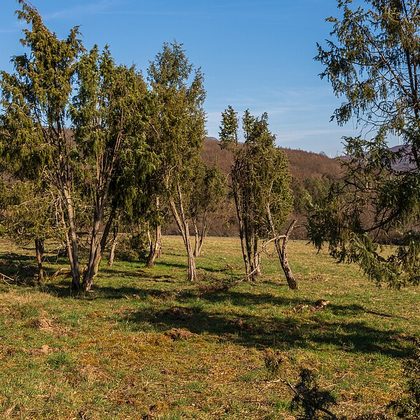
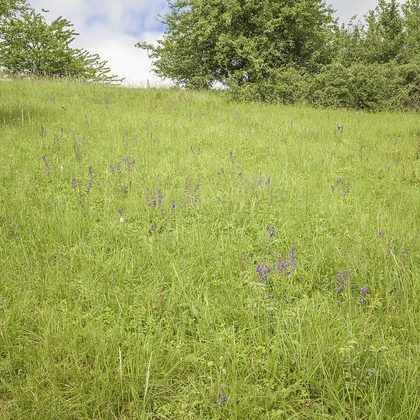
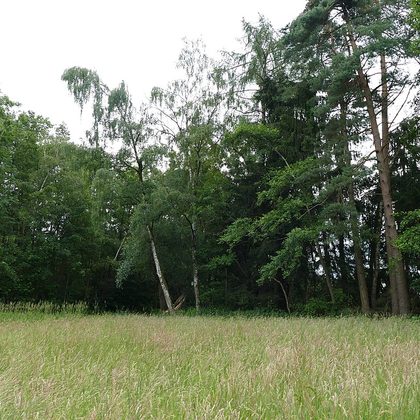
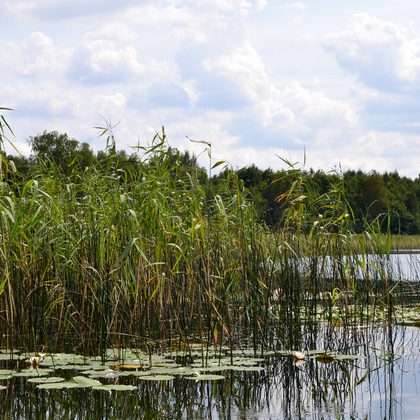
From desert to forest, provided there is cover. The species seeks bushes or tall, permanent grass vegetation, preferably along water, and the rank vegetation of abandoned farmsteads and fields; also riverbanks and riparian woodland, steppe with scrub and the semi-desert where it digs its own burrows. It is strikingly often found indoors: from yurts in the Gobi and farmhouses in European Russia to the Tian Shan, and even in high-rise flats in Moscow. In the Pamirs it reaches 3600 metres. The species is not tied to a particular landscape type, but to a dense vegetation layer in which it can move unseen.
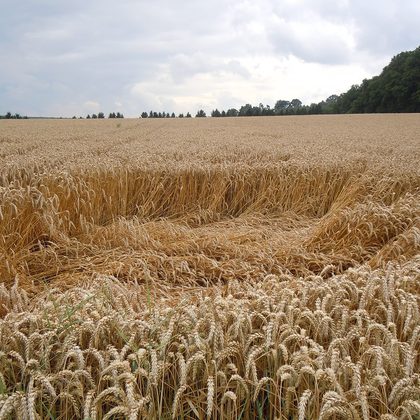
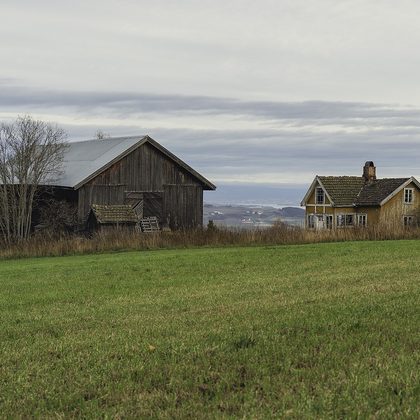
Where the animal is most at home, classified with EUNIS — the European standard for habitats.

Distribution
Southern Belarus, central and eastern Ukraine, Moldova and European Russia to the northern Caucasus and east to the southern Urals; further Kazakhstan, Uzbekistan, Turkmenistan, Kyrgyzstan, south-western Tajikistan, northern Iran, probably northern Afghanistan, Mongolia and north-western China. In Europe this chiefly concerns the Ukrainian and south Russian steppe with Crimea and the northern Caucasus. When checking records: everything reported before about 2018 from Germany, France, Iberia, Italy, the Balkans or the Mediterranean islands under the name Crocidura suaveolens belongs in the current classification to C. fimbriata, C. iculisma, C. gueldenstaedtii or C. cypria. The shrews of the Isles of Scilly, the Channel Islands and the Iberian Peninsula, long known under this name, are now also assigned to C. iculisma. No populations of this species are known from western Europe, including the British Isles and the Low Countries.
- Native
- dark = core range, pale = thinly spread
Way of life
Mainly nocturnal. In Turkmenistan ten to fourteen activity bouts were counted per dark period, on average twenty-four minutes and at most two and a half hours long. The diet consists mainly of small beetles, caterpillars, young bugs, mantids and cockroaches; darkling beetles and chafers are not eaten. The species digs insects out of the soil to a depth of two centimetres and jumps for geometrid caterpillars on grass blades. In captivity, with abundant food, it kills as much prey as possible and stores the rest, a form of caching that is rare in shrews. Daily food intake reaches 133 per cent of body weight; in Turkmenistan three times body weight has been measured. The breeding season can last seven to eight months: from early February in the riparian woodland of southern Tajikistan, from mid-March to late September in the North Caucasus and only from late March in the Pamirs. Gestation is 24 to 32 days, with on average four to five and a half embryos and extremes of one to ten. There is no hibernation; the skull shrinkage known in red-toothed shrews as Dehnel's phenomenon has not been established in white-toothed shrews; this genus saves energy with short torpor and shared nests. A population is completely renewed within a year and a half.
Where and when to look
The best chance of observing a live animal is in autumn and winter in barns, haystacks and storage sheds in the steppe zone, where the animals gather and audibly quarrel at night. Outdoors, waterside zones with dense rank vegetation or abandoned farmsteads are suitable, with a torch after sunset. The most reliable method remains the examination of pellets of Barn Owl, Little Owl or Long-eared Owl. Near the boundary with Crocidura fimbriata or C. gueldenstaedtii even a good observation yields no species name; record it as 'white-toothed shrew, small species' and note the exact locality.
Conservation status
Least Concern (2016). The species is spread over a very large range but is numerous almost nowhere: common in many regions, abundant in hardly any. In the north of the range, the forest belt of European Russia, it is rare; it is on the regional Red Lists of Mordovia, Chuvashia and Kaluga Oblast. A limitation of the assessment is the classification itself: the 2016 IUCN assessment still concerned the species in the broad sense, that is the whole area from Portugal to Mongolia, whereas the name now covers only part of it. The category therefore says little about the animals now included; the same applies to the distribution maps based on the old concept. A new assessment in the strict sense, with corresponding maps and density data, is still lacking for this species and the four split species.
Scientific name
Crocidura suaveolens | (Pallas, 1811)
Pallas described the species in 1811 as Sorex suaveolens; because it was later moved to another genus, the author and year stand in brackets. Crocidura is Greek, from krokys, genitive krokydos, 'flock of wool, nap', and oura, 'tail', after the long loose hairs standing out among the short ones on the tail. suaveolens is Latin for 'sweet-smelling', from suavis, 'sweet, pleasant', and olere, 'to smell', after the strong musky scent of the flank glands. The specimen the first description was based on came from Russia.