All species › Rodents › Birch mice › Hungarian Birch Mouse
Hungarian Birch Mouse | Sicista trizona
Sicista trizona | Sicista trizona
Sicista trizona, the Hungarian Birch Mouse, is a birch mouse endemic to the Carpathian Basin. It weighs on average less than eight grams and spends most of the year in hibernation. No living animal of the Hungarian form was seen for seventy years after 1936, until the species was found again in 2006 in a single protected steppe area.
Tracks
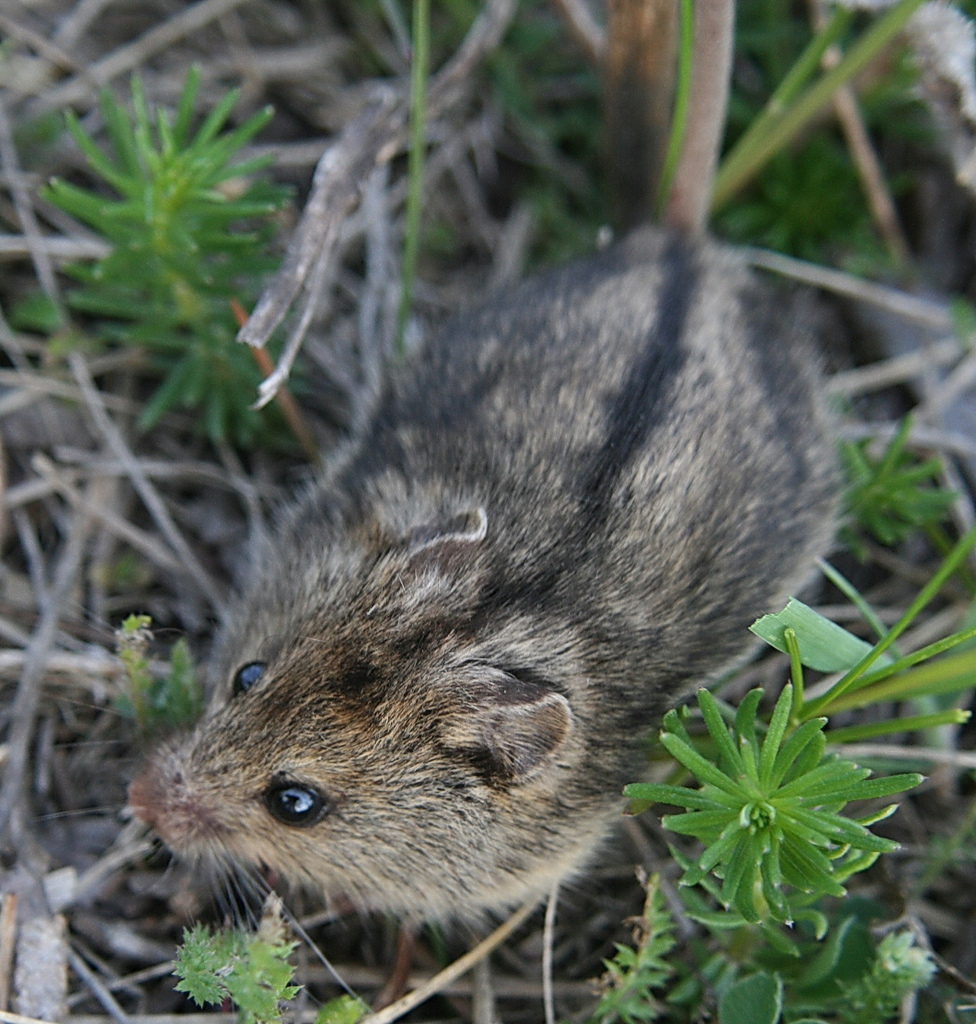
For an animal of about seven grams that climbs in thistle vegetation at night, no prints or droppings are known that can be identified. The methods by which the species is recorded in practice are, however, well documented. Hungarian monitoring has used pitfall traps for fifteen years, pots sunk to the rim in the ground, because birch mice walk past ordinary live traps, and for some years also ground-level trail cameras, which record the animals on their runs at night. The oldest evidence comes from pellets: the records from before the rediscovery consist almost entirely of jaws from owl pellets, and pellet analysis remains the least costly method of investigating a new area. In the field only behaviour is visible: a small animal climbing a thistle stem at night instead of running beneath it, holding on with its long tail. The summer nest is a small ball of fine grass underground or beneath a tussock; hibernation is spent in a self-dug burrow, curled with the tail round the body.
The young
Identification
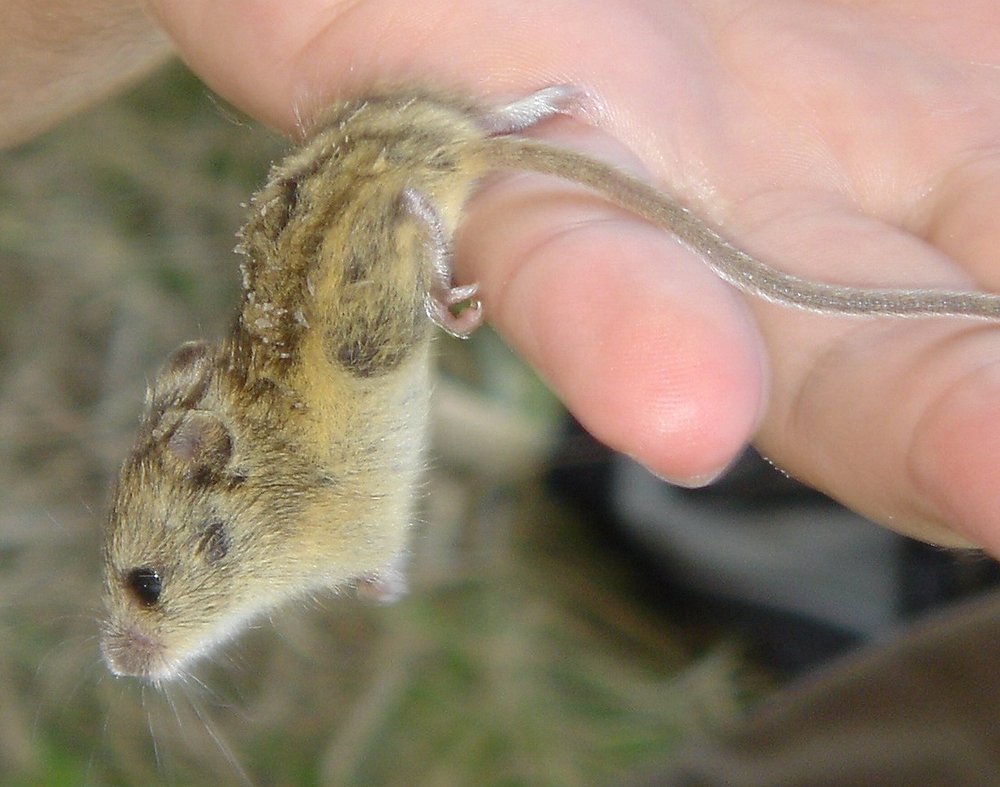
A very small rodent: head and body 4.9 to 6.1 cm, tail 5.6 to 7.6 cm and so always longer than the body, hind foot 13 to 16 mm, weight 3.5 to 14.6 grams with a mean below eight. The coat is yellowish or greyish brown without a chestnut tinge; young animals are a brighter yellow, especially on the flanks. Adults have one black dorsal stripe bounded on either side by a paler band; juveniles also have a second pair of black lateral stripes outside these, so that their pattern consists of five lines. The ears are hairy and bear a black spot. The eyes are large and black, the muzzle pointed, the tail thin and slightly prehensile.
Similar species
The species cannot be identified in the field. Until 2016 it was regarded as a subspecies of the Southern Birch Mouse, and externally it cannot be distinguished from the other striped birch mice: S. subtilis, S. loriger and S. severtzovi have the same measurements, the same build and the same three- to five-part dorsal pattern. The elevation to species rests on cytochrome b and IRBP sequences and population genetic structure, and historically on the shape of the penile spines, by which Méhelÿ distinguished the grassland population as a separate form. No character can be established with a hand lens or binoculars. The range, however, is sharply defined: the species occurs only in the Borsodi-Mezőség in north-eastern Hungary and on a few slopes in Cluj county, Romania. A striped birch mouse in Ukraine or in Romania east of the Carpathians is S. loriger; a striped birch mouse in the Carpathian Basin is this species. The Northern Birch Mouse (S. betulina) lives in the Slovak and Czech mountains to the north and lacks the pale flank bands.
Habitat
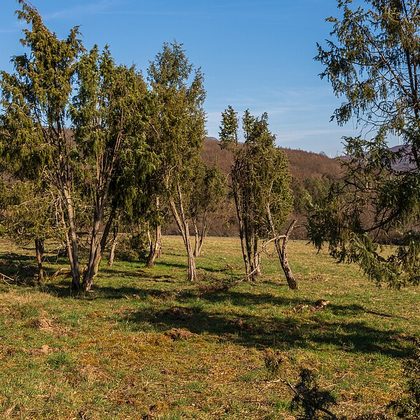
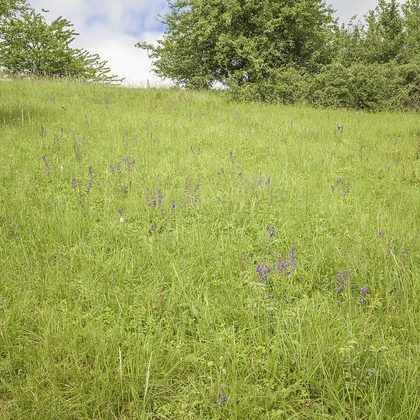
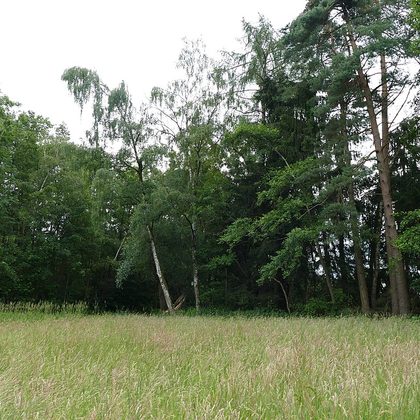
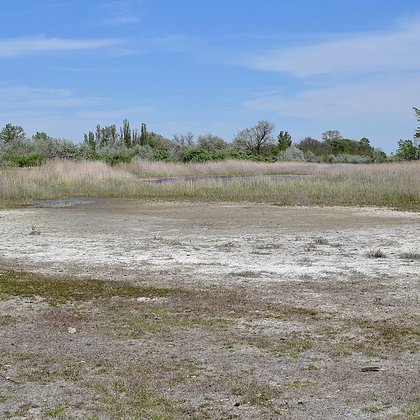
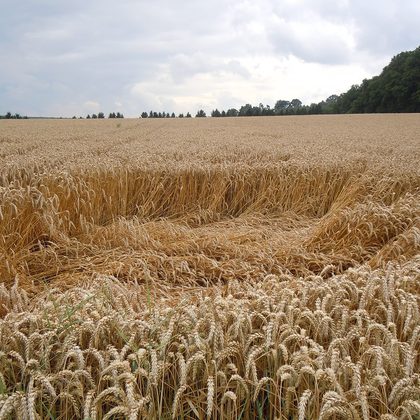
Steppe grassland of the Carpathian Basin, and within it the patches not taken into use. The Hungarian animals live in thistle stands (Carduetum acanthoidis), in pastures with scattered thistle patches that are otherwise grazed short, in saline grasslands and on abandoned fields; the Transylvanian form occupies grazed slopes becoming overgrown with shrubs. The species needs structure: tall, rough herbs to climb and hide in, next to open, closely grazed ground. Work in the Borsodi-Mezőség shows that it also persists in recently disturbed patches, provided the ground stays varied afterwards; an unmanaged thistle field is more suitable than a regularly mown meadow.
Where the animal is most at home, classified with EUNIS — the European standard for habitats.
Distribution
Endemic to the Carpathian Basin, with two subspecies. The Hungarian form now survives only in the Borsodi-Mezőség Protected Landscape Area in north-eastern Hungary, where it is known from eleven separate habitat patches within twelve one-kilometre squares. The Transylvanian form was rediscovered in 2014 in Cluj county, Romania; its distribution there has not yet been established. Historically the species covered much of the Pannonian plain, with records from Austria, Slovakia and Serbia; in all these countries it is now regarded as extinct. No birch mouse occurs in the British Isles or on the Iberian Peninsula.
- Native
- dark = core range, pale = thinly spread
Way of life
Mainly nocturnal, with some daytime records; the species climbs in the herb layer using its long tail for support. Hungarian monitoring shows that it is active above ground from April to September, with a peak in July; for the rest of the year it lies in hibernation in an underground burrow. Like all birch mice it eats mainly insects and other invertebrates, supplemented with seeds, berries and green plant material. Breeding takes place in the short summer, with one litter a year; life expectancy is one to two years. With a small number of animals spread over eleven patches, the population has little buffer against setbacks.
Where and when to look
The chance of seeing this animal is very small, and the sites where it occurs are strictly protected and not freely accessible. In the Borsodi-Mezőség you can, however, see the landscape on which the species depends: saline hollows, closely grazed pastures with thistle patches and abandoned field corners. Records of the animal itself are only possible through the Hungarian research, which works with pitfall traps and trail cameras; trapping requires a licence, and the species is strictly protected. Outside the area the species can only be encountered as jaws in owl pellets; for seventy years that was the only evidence of its survival.
Conservation status
Endangered (2019). The species is listed in Annex IV of the Habitats Directive and is strictly protected in Hungary, with a conservation value of one million forint per animal, one of the highest sums the country applies. It has been protected in Hungary since 1964, was known after 1936 for seventy years from owl pellets only, was rediscovered in 2006 and has been monitored continuously since. It is extinct in Austria, Slovakia and Serbia, and in Hungary confined to eleven habitat patches. The cause is the loss of the Pannonian steppe: ploughing and drainage, and also the abandonment of extensive grazing, after which the structure-rich, thistly pasture becomes overgrown with scrub or turns into uniform grassland. Management requires tailored measures over a few square kilometres, and one unfavourable year can lead to the loss of the species from a habitat patch.
Scientific name
Sicista trizona | (Frivaldszky, 1865)
Frivaldszky described the species in 1865 as Mus trizonus; because it was later moved to another genus, the author and year stand in brackets. Sicista is neither Latin nor Greek. Gray took the word over in 1827 without saying where from; it is generally referred to a vernacular name for the mouse in the Russian and Tatar language area, but which one is not settled. trizona means 'three-banded', from Greek tri-, 'three', and zōnē, 'belt, band', after the pattern of the back, where the black middle stripe is flanked on either side by a pale band. The specimen the first description was based on came from Hungary, Pest.