All species › Rodents › Mice and rats › Harvest mouse
Harvest mouse | Micromys minutus
Dwergmuis | Ratón Espiguero
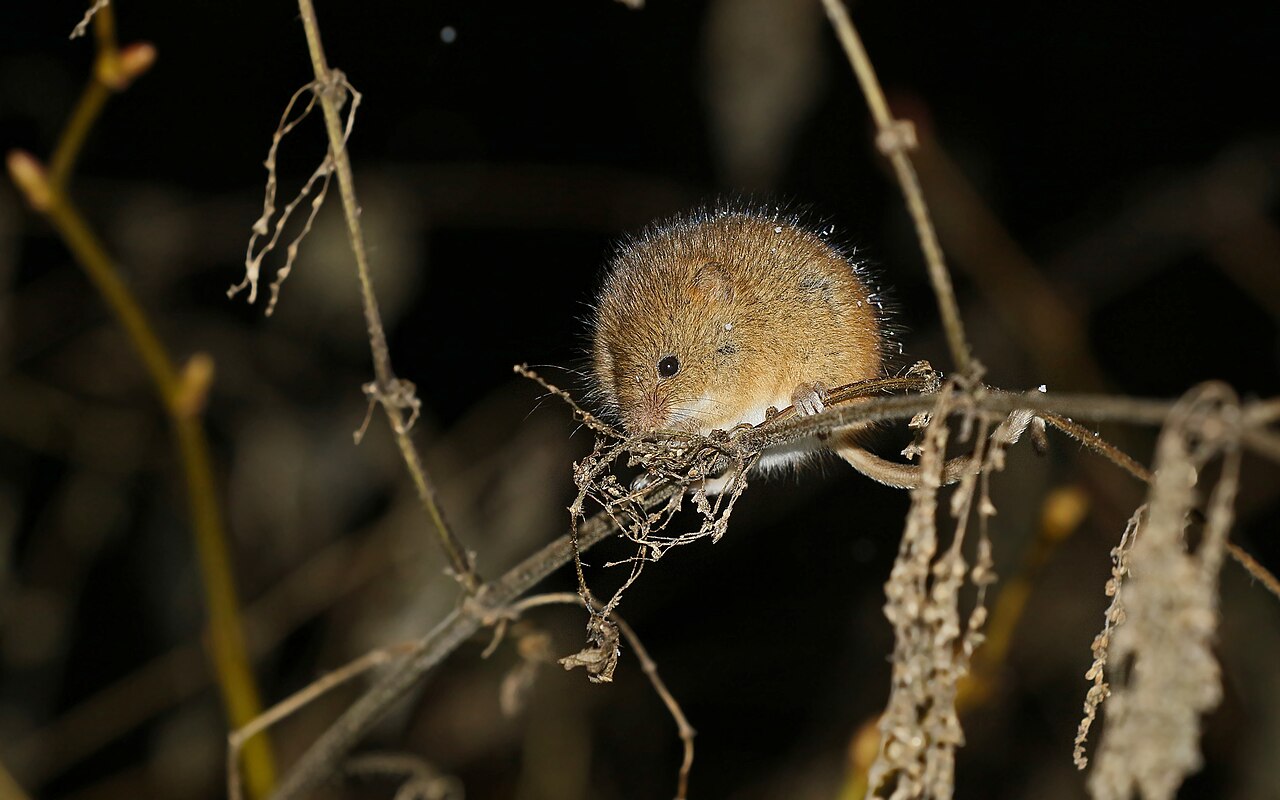
The harvest mouse (Micromys minutus) is the smallest rodent in Europe and the only one that weaves a spherical nest among standing stems above the ground. It weighs 4 to 12 g, climbs with the help of a prehensile tail and lives in tall, dense herbaceous vegetation. The animal itself is seldom seen; the species is mainly recorded from its nests and from owl pellets.
Tracks
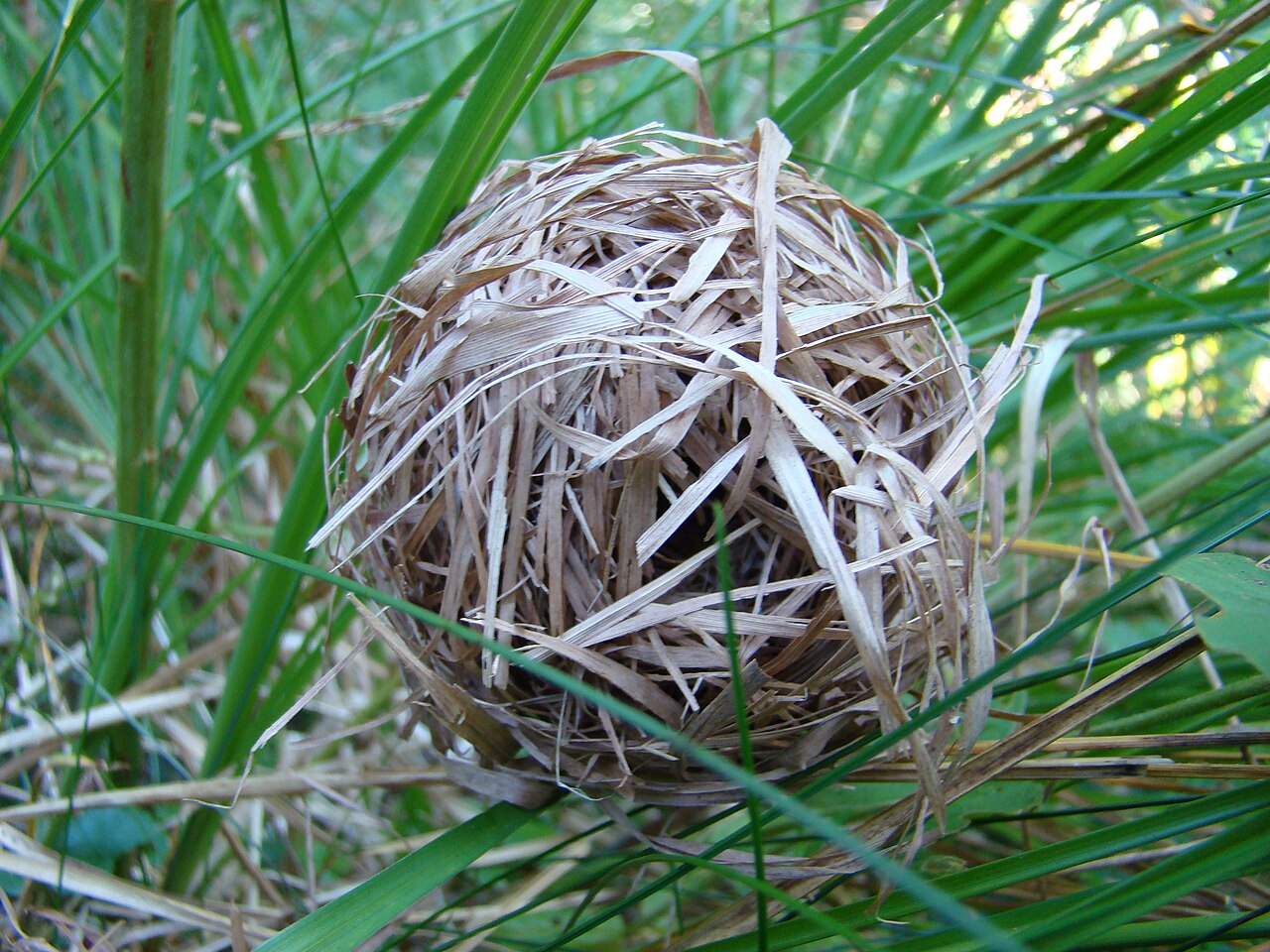
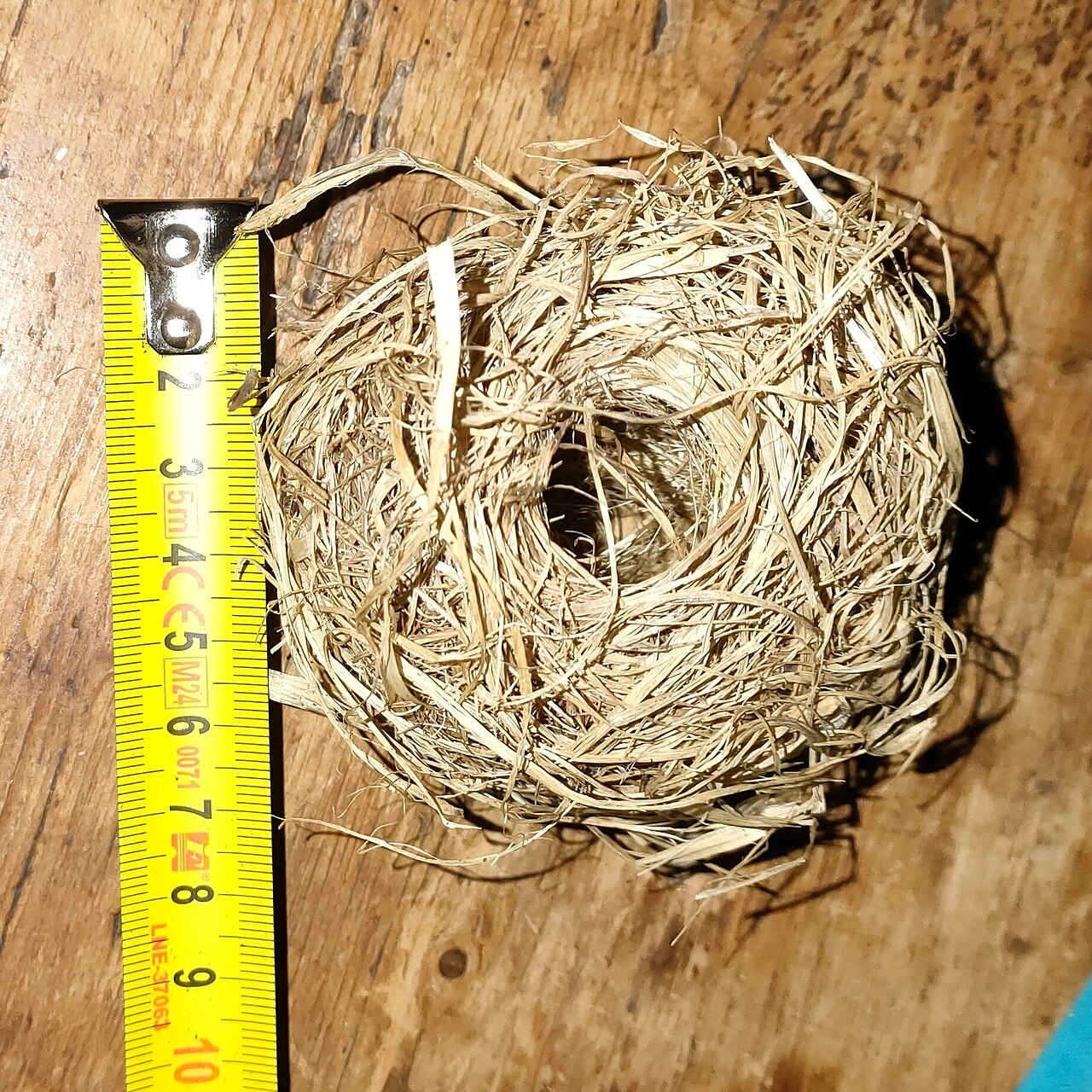
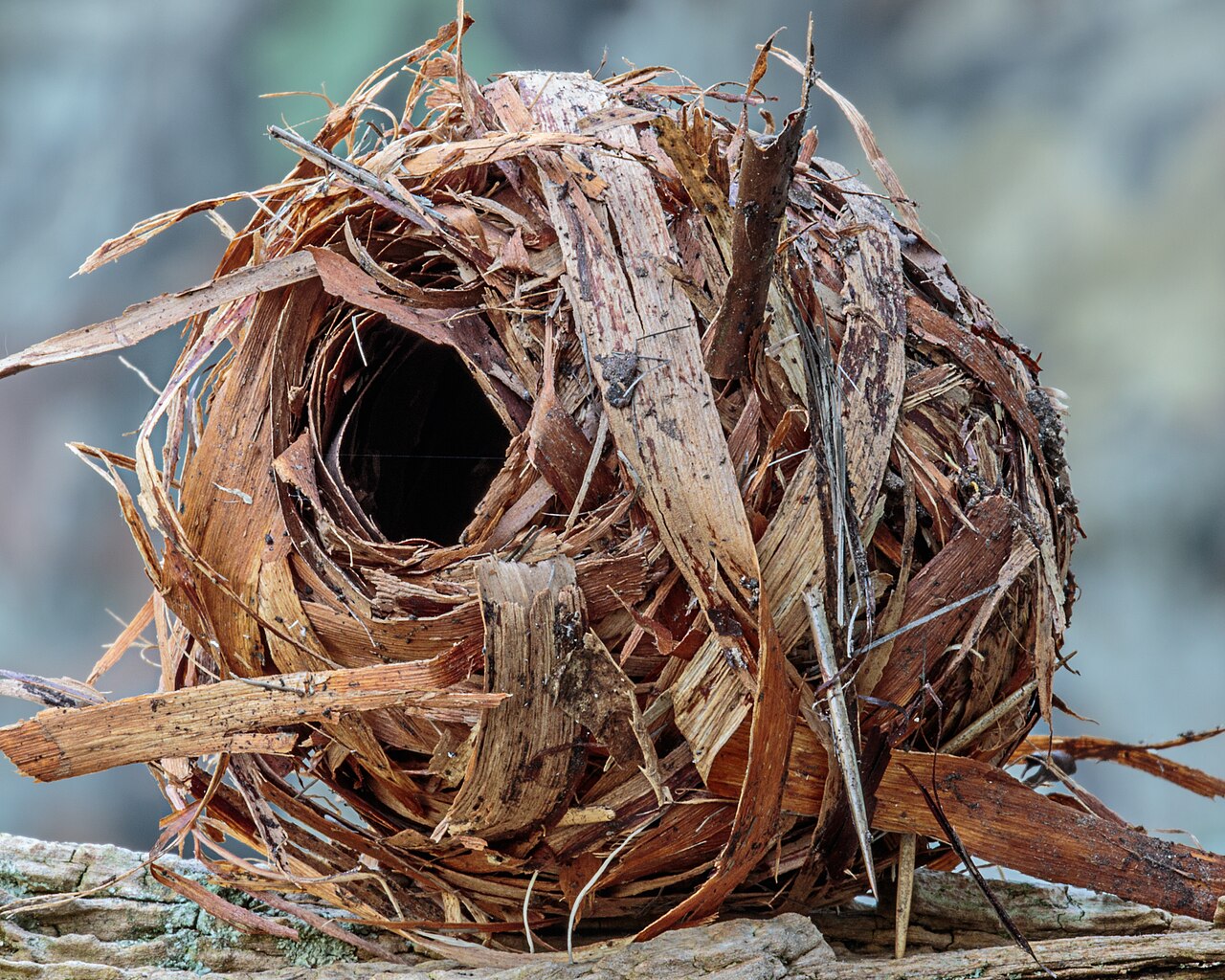
The main sign is the nest. The summer nest is a ball 6 to 10 cm across, 60 to 100 cm above the ground among the standing stems of reed, sedge, reed canary-grass or cereals. The mouse splits the still-living leaves lengthwise with its teeth and weaves them into a ball without detaching them from the plant, so that the nest hangs from green, still-growing leaves. A fresh summer nest is therefore partly green; an old nest bleaches to straw colour and falls apart in winter. There is no visible entrance: the animal pushes the wall aside, which then closes again. Winter nests lie lower, in a tussock or under a haycock, and are more loosely built. Nests are searched for in late autumn and winter, when the vegetation lies down and the balls become visible; across Europe this is the standard survey method for the species. The droppings are 2 to 3 mm, fine and crumbly, and are seldom found. Prints of an animal of this weight are visible only in fine silt or very fine dust. In pellets of barn owl and short-eared owl the species is reliably detected; in many areas pellets and nests are the only sources of records.
In its habitat
Head close-up
Identification
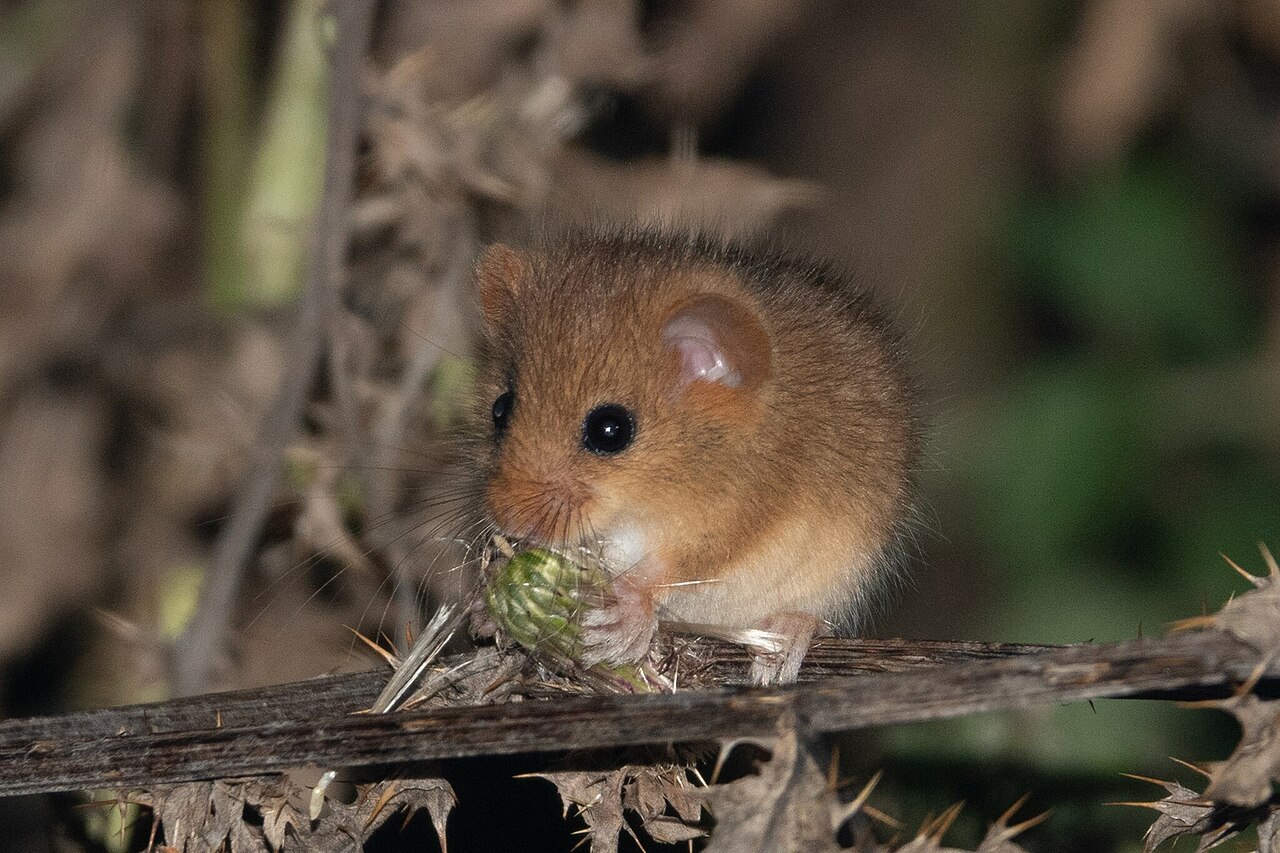
A mouse of 5 to 8 cm head-body length, about half the size of a house mouse. The back is warm orange-brown to russet, the belly pure white and sharply demarcated. The head differs from that of other mice: a blunt muzzle, small, thick, furred ears set deep in the coat and comparatively small eyes; the head therefore resembles that of a vole. The decisive character is the tail: as long as head and body, thin, and over its last few centimetres prehensile; the animal wraps it round a stem and holds on with it. The hind foot has a short, strongly divergent outer toe used to grip a stem. Young are drab grey-brown without orange; that colour appears with the first moult.
Similar species
Small size is the first character in the field. The house mouse is larger and drab, with a belly that grades into the back colour, large thin ears and no prehensile tail. The wood mouse is much larger, with large eyes and ears and long hind legs, and moves by bounding rather than climbing. Voles have the same blunt head but a much shorter tail, a stocky body and never a white belly. Juveniles of other mice are the most frequent source of confusion: they are small, but have proportionately large heads and feet, and lack the orange. In the hand the tail tip is decisive: only in the harvest mouse does it curl round a finger.
Habitat
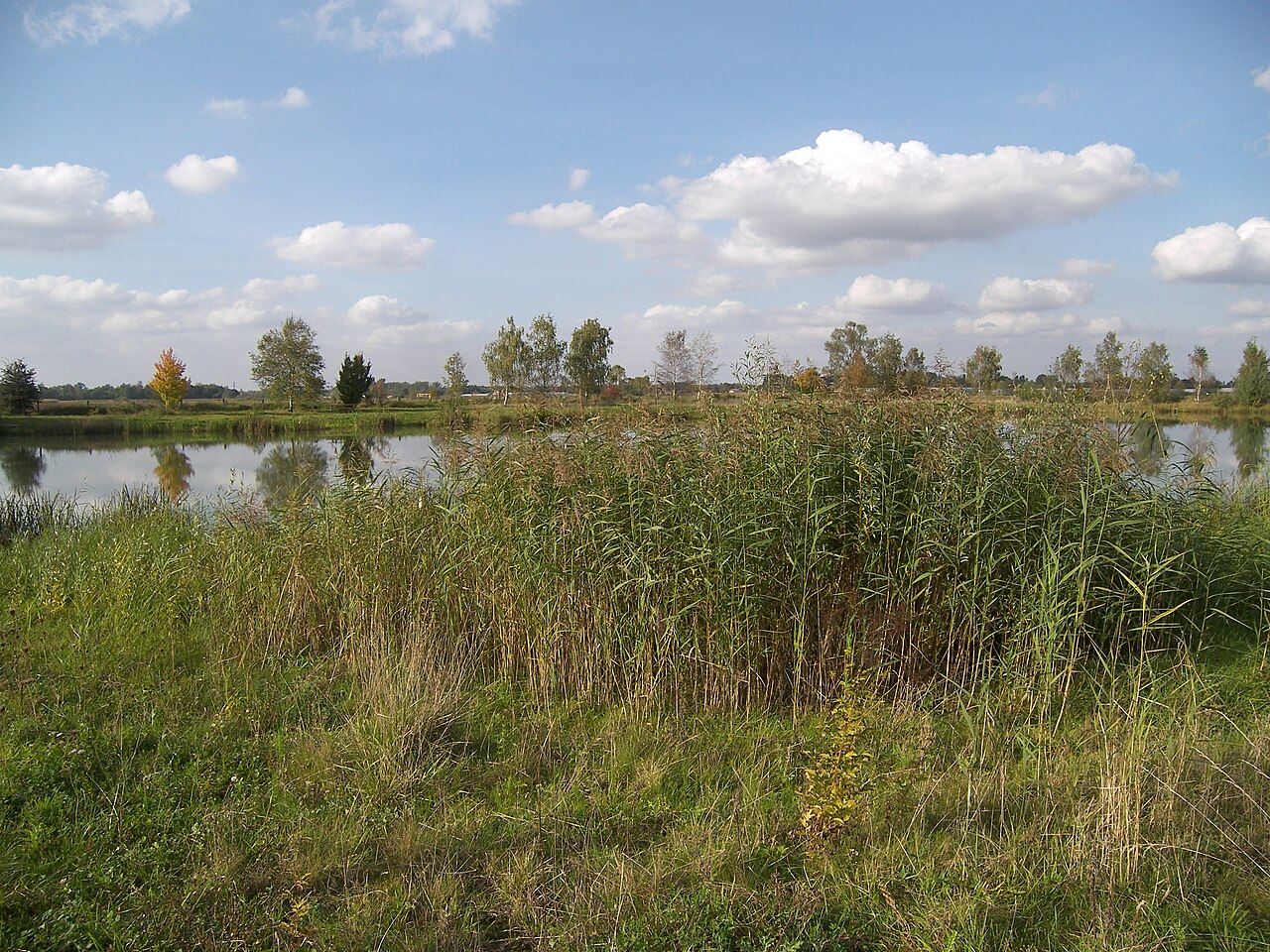
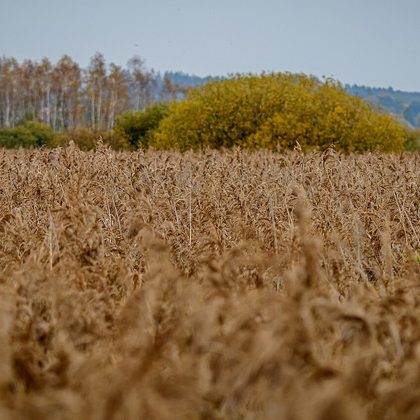
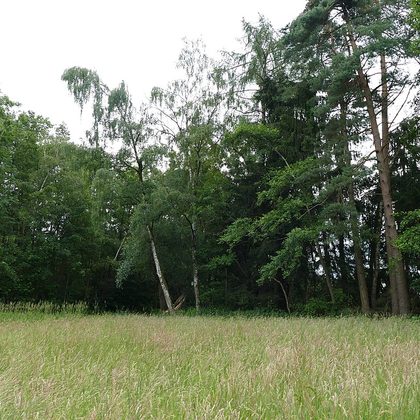
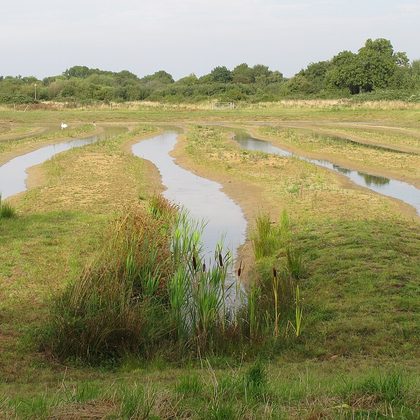
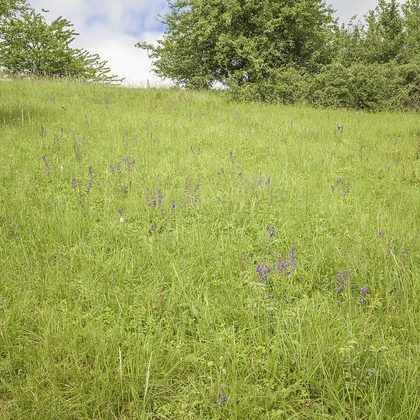
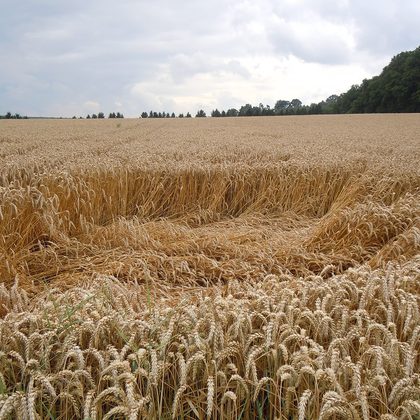
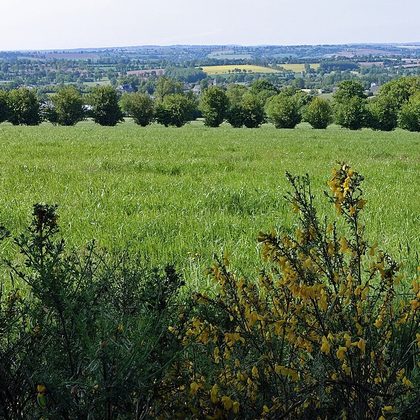
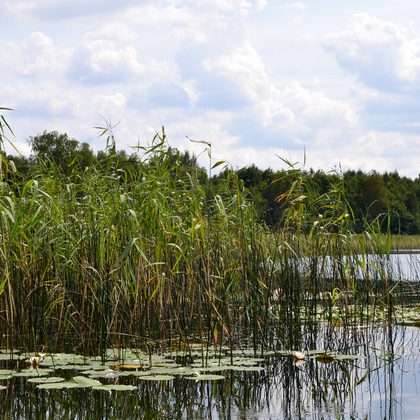
Tall, dense, upright vegetation that remains standing through the summer: reed and sedge fens, wet and damp tall-herb vegetation, reed fringes along ditches and pools, ditch banks and dykes mown late or not at all, verges with reed canary-grass, bramble scrub and field margins. Cereal fields were the classic habitat; the English name harvest mouse and a Dutch vernacular name refer to this. With the combine harvester and earlier harvesting, cereals have largely disappeared as habitat and permanent tall-herb vegetation has become more important. The species has no preference for wet or dry ground, but it does depend on vegetation structure: where all vegetation is mown short every year, it is absent. In the Iberian Peninsula it is associated with rush and reed vegetation, hay meadows and field margins.
Where the animal is most at home, classified with EUNIS — the European standard for habitats.
Distribution
From north-western Spain and Great Britain east through Europe and Russia to Mongolia, China, Korea and Japan, and south to north-eastern India and Vietnam; this is one of the largest ranges of any European mouse. In Europe the species is largely absent from the Mediterranean region south of the Alps and from Scandinavia north of the southern half. In the Iberian Peninsula it is confined to a northern strip: Galicia, the Cantabrian Mountains, the upper Ebro, the Pyrenees and their foothills; its distribution there is incompletely known. In Great Britain the stronghold is the south and east of England, north to the North York Moors; it is scarce in Wales, very local in Scotland and absent from Ireland. In the Netherlands and Flanders it occurs virtually throughout, concentrated in peat meadows, reed marshes, river floodplains and valley and marsh areas.
- Native
- dark = core range, pale = thinly spread
Way of life
Nocturnal, with short bouts of activity spread over the 24 hours; in dense vegetation it is also active by day. Omnivorous: seeds, grain, berries, shoots, moss, fungi and roots, as well as insects, caterpillars, grasshoppers and moths; the proportion of animal food increases in winter. It eats about a third of its own body weight a day. Outside the breeding season it is solitary. Breeding runs from April to October; after a gestation of about 21 days two to six young are born, five on average, which are weaned at 15 days and sexually mature within two months; four generations in one season occur regularly. There is no hibernation; in winter the species lives at ground level, in tussocks, molehills, haystacks and sheds. Winter mortality is high and most animals do not survive the winter. In the wild a harvest mouse seldom lives beyond 18 months.
Where and when to look
Search for nests. Walk a reed fringe, an unmown ditch bank or a rough dyke between November and March and look at knee to hip height for straw-coloured balls among the standing stems; in suitable habitat dozens of nests can be found per field. A ball of split, woven leaves without a visible entrance is made by no other animal in Europe. Leave nests in place: old nests are also reused. The living animal is most often first noticed on a calm evening in August, when a stem moves without wind; stand still and wait. Barn owl pellets also yield the species in areas without sightings.
Conservation status
Least Concern (LC, 2017) across its world range. In farmland the species depends entirely on vegetation that remains standing through the summer; ditch banks flailed twice a year, verges kept short and disappearing field margins mean loss of habitat. In Great Britain nest monitoring points to a decline; elsewhere in north-western Europe too, the loss of cereal fields as habitat has hardly been compensated by new tall-herb vegetation. On the Dutch Red List of 2020 the species is assessed as not currently threatened. In the Iberian Peninsula the small, fragmented range makes the species sensitive to the loss of rush vegetation and wet meadows. Measures that maintain habitat are rotational mowing, leaving part of the bankside vegetation standing through the winter and always leaving a strip uncleared when ditches are maintained.
Scientific name
Micromys minutus | (Pallas, 1771)
Pallas described the species in 1771 as Mus minutus; because it was later moved to another genus, the author and year stand in brackets. Micromys is Greek, from mikros, 'small', and mys, 'mouse'. minutus is Latin for 'very small', strictly the past participle of minuere, 'to make smaller': Europe's smallest rodent. The specimen the first description was based on came from Russia.