All species › Rodents › Mice and rats › Barbary Lemniscomys
Barbary Lemniscomys | Lemniscomys barbarus
Zebragrasmuis | Lemniscomys barbarus
The Barbary Striped Grass Mouse is an African rodent with a longitudinally striped coat, which means it cannot be confused with a wood mouse or any other mouse of Europe and North Africa. In the Mediterranean region it occurs only in the narrow coastal belt of the Maghreb: Morocco, Algeria and Tunisia north of the Atlas. Linnaeus described the species in 1767 from 'Barbaria'; today it is a common terrarium animal in Europe and little studied in the wild.

Tracks
The Barbary Striped Grass Mouse digs, and its signs are therefore easy to find. It excavates compound burrows with two or three chambers under bushes and in arable fields, with a regular entrance from which short flattened runs lead off into the grass; because it feeds mostly on plants and forages close to the burrow, those runs are short and easy to see. Along them lie bitten grass blades and nibbled stems at fixed feeding places, and at those places also the droppings: dark grains three to five millimetres long. Its feeding sign therefore differs from that of the wood mice: not opened nuts and stones but cut stems, seed heads and green plant material. In the dust of a path or a field margin it leaves the ordinary mouse bounding trail of four prints in a block, with a long tail line between them.
Identification
The Barbary Striped Grass Mouse is a large, slender grass mouse with head-body 10.1 to 12.1 cm, a tail of 11 to 14.5 cm, clearly longer than the rest of the animal, and a weight of 28 to 56 g. The pattern is diagnostic: the upperparts are buffy brown with a narrow dark mid-dorsal stripe and six or seven pale yellow stripes on each flank, alternating with dark bands, so that seen from above the animal is striped from end to end. The underparts are pure white and sharply set off. The ears are medium-sized and rounded, the eyes large and black, and the head pointed with a white chin. The tail is thin, bicoloured and sparsely haired. No other wild mammal of Europe and North Africa has this pattern.
Similar species
In Europe there are no confusion species. Every European mouse is plain brown, grey or buff; the only one carrying anything like a stripe is the Striped Field Mouse, and that has a single black line down the middle of the back and nothing else, is smaller and has a tail shorter than the body. In North Africa the Barbary Striped Grass Mouse lives alongside a series of desert and steppe rodents, none of them striped: gerbils and sand rats are plain sandy with a pale belly and often a tufted tail, the spiny mouse has a bristly grey back without pattern, and House Mouse and Black Rat are dull and plain. Confusion is possible mainly with animals from the trade: European terraria also hold the Four-striped Grass Mouse (Rhabdomys) and Heuglin's Striped Grass Mouse (Lemniscomys zebra), which are near identical. The latter was split off in 2005 and inhabits Africa south of the Sahara; anything running wild in the Maghreb is this species.
Habitat
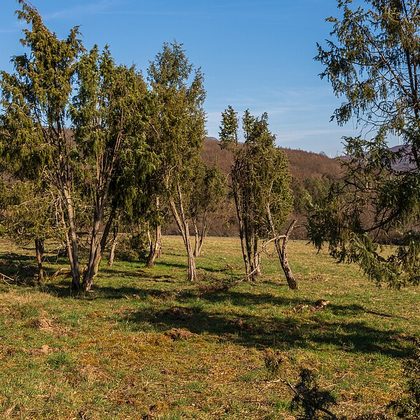
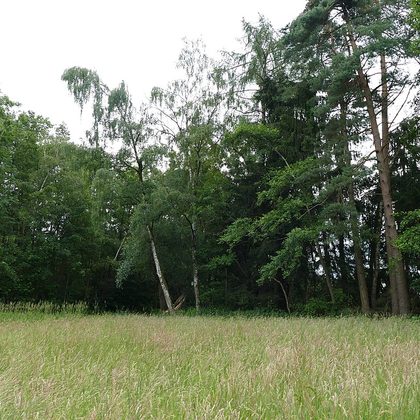
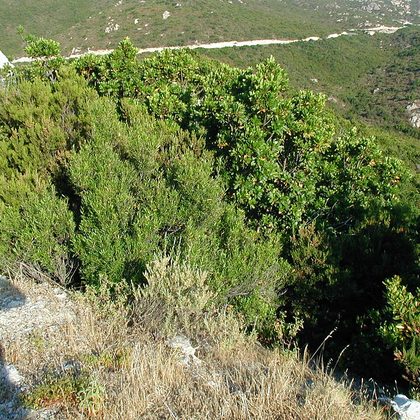
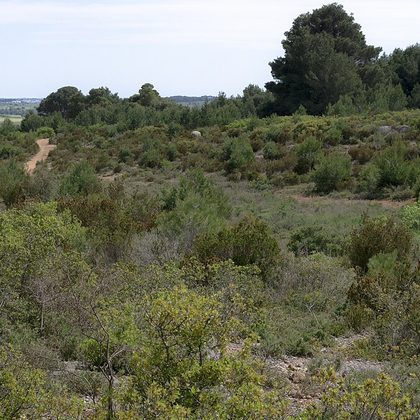
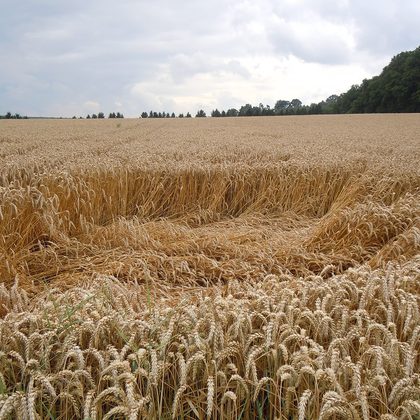
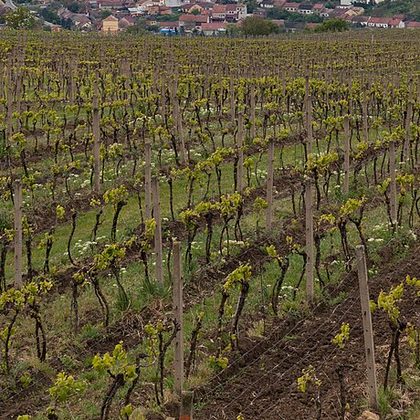
The Barbary Striped Grass Mouse lives on the humid coastal plain and the lowest hills of the Maghreb: bushes, grassy ground and arable fields. It is tied to grass with cover — cereal fields, fallow, thistle stands, matorral and the margins of olive and almond groves — and avoids both closed woodland and the bare steppe behind the Atlas. Where the summer drought lasts too long, the species is absent; this is why it does not occur south of the mountain chains.
Where the animal is most at home, classified with EUNIS — the European standard for habitats.
Distribution
The Barbary Striped Grass Mouse inhabits a narrow coastal strip in Morocco, Algeria and Tunisia, almost entirely north of the Atlas. That is its entire range: the species does not occur in Europe, nor on the Mediterranean islands, nor in Egypt or the Levant. The region south of the Sahara, formerly counted as part of its range, has since the turn of the century been assigned to Heuglin's Striped Grass Mouse, Lemniscomys zebra; this turned the species from a widespread African species into an endemic of north-west Africa. In European terraria and zoos it is common.
- Native
- dark = core range, pale = thinly spread
Way of life
The Barbary Striped Grass Mouse is nocturnal and crepuscular, with peaks just before sunrise, just after sunset and in the middle of the night; unlike many savanna relatives it is therefore no pronounced day animal in the wild. It is almost wholly herbivorous and forages close to the burrow: grasses, seeds, green plant material and sown grain. It does not hibernate. In Tunisia males are in breeding condition all year and females carry three to eleven embryos, a high number. The burrow serves as nest, store and refuge at once. Predators are owls, snakes, mongooses and foxes; in cereal fields in the Rif it is one of the most frequent prey items.
Where and when to look
Morocco or Tunisia is most suitable in spring, when the cereals stand high and the verges are in flower. At first light or just after sunset a striped animal can sometimes be seen darting along a run into the grass beside a field margin, a thistle stand or a neglected olive grove in the coastal belt; the pattern is recognisable in a fraction of a second. By day the burrow entrances under bushes and the short, grazed runs leading to them can be found. The species can be identified with certainty without a measuring rule, owl pellets or a trapping licence.
Conservation status
Least Concern (LC, 2016). It is common in the Maghreb coastal belt and tolerates arable land and disturbed ground well, and finds enough habitat as long as there are cereal fields and rough margins. Its entire world range, however, lies in one narrow strip, the most densely populated and fastest-built part of North Africa, and that is where it is vulnerable: coastal urbanisation, the enlargement of cereal farming and the loss of rough margins. Nobody counts it systematically. Through the taxonomic revision of 2005, which separated it from its African relative, it has become a species with a small range; that is a reason for better monitoring than takes place at present.
Scientific name
Lemniscomys barbarus | (Linnaeus, 1767)
Linnaeus described the species in 1767 as Mus barbarus; because it was later moved to another genus, the author and year stand in brackets. Lemniscomys is formed from Latin lemniscus, 'ribbon' (from Greek lēmniskos), and Greek mys, 'mouse', after the pale stripes running down the back. barbarus is Latin for 'foreign', from Greek barbaros; here in the sense 'of Barbary', the North African coast from which Linnaeus's animal came. The specimen the first description was based on came from Morocco.