All species › Bats › Vesper bats › David's Myotis
David's Myotis | Myotis davidii
Myotis davidii | Myotis davidii
David's Myotis is a small bat of the whiskered bat group, with a range from south-eastern Europe through Turkey and Central Asia to China and Korea. Peters described it in 1869 from Beijing. European and western Asian bats were long treated as M. aurascens (Kuzyakin, 1935), the Steppe Whiskered Bat; in 2012 Benda and colleagues placed that form in M. davidii on the basis of morphology and DNA. This merger is disputed, and the handbook regards the species in its current scope as a complex of two or three species. Forearm 31 to 37 mm.
No photograph of a living wild animal of this species with a suitable Creative Commons licence exists. Do you have one that meets the rules? Send it in.
Tracks
The species roosts in rock crevices, tree canopies, buildings and cracks in roofs; in Asia also in the banks of rice fields. It roosts in small groups of up to about 15 bats, both outside and during hibernation. In Europe it hibernates in caves. There are hardly any external signs.
Identification
Head-body 38 to 50 mm, tail 30 to 43 mm, ear 12 to 15 mm, hind foot 7 to 9 mm, forearm 31 to 37 mm. The dorsal fur is dark brown, in places reddish brown, with paler hair tips; the underparts are paler and greyer. The ears are small, with a shallow concavity in the posterior margin just below the rounded tip; the tragus is long and narrow and reaches half the ear height. The wing is attached at the base of the outer toe; the calcar is long. Chromosomes 2n = 44 or 46. The call is a steep FM sweep; the only published measurements in the handbook come from South Korea: start 81.1 to 110.6 kHz, end 27.3 to 34.8 kHz, peak frequency 42.3 to 55.4 kHz, duration 1.7 to 5.9 milliseconds. Whether these values apply to European populations has not been studied.
Similar species
The species closely resembles the Whiskered Bat (M. mystacinus), with overlapping measurements; the sources consulted name no external character that reliably separates the two. In south-eastern Europe and Anatolia both species occur, and Alcathoe Myotis (M. alcathoe) and, in the north, Brandt's Bat (M. brandtii) are also possible. A further complication is that mitochondrial DNA has been exchanged between the species: Çoraman and colleagues showed in 2020 that in the contact zone in the Balkans and Anatolia native Whiskered Bats hybridised with expanding M. davidii, with mitochondrial DNA of the former passing into the latter. Identification by mitochondrial DNA alone (barcoding) can therefore mislead there; nuclear markers are needed. According to the handbook the respective ranges of this species and the Whiskered Bat in the Middle East have also not been clarified. The small Myotis species cannot be reliably separated from each other by their calls.
Habitat
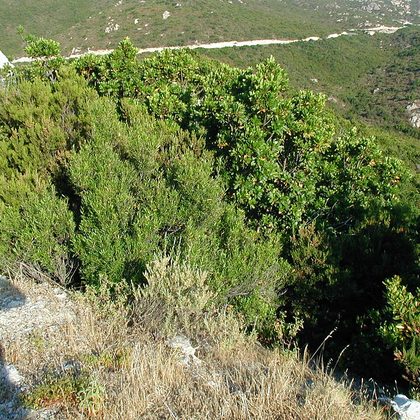
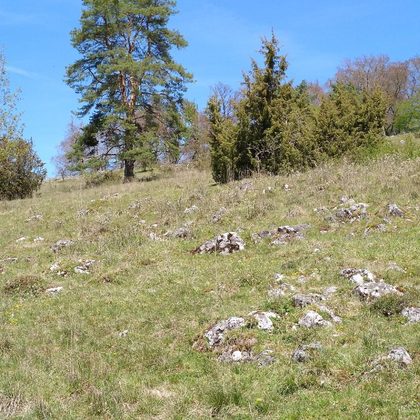
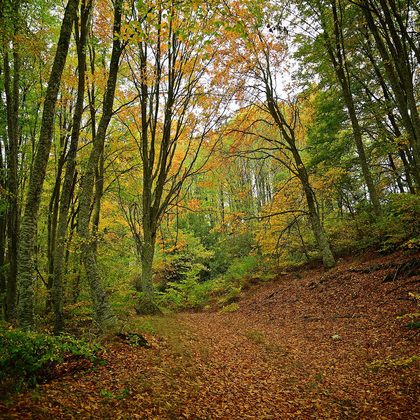
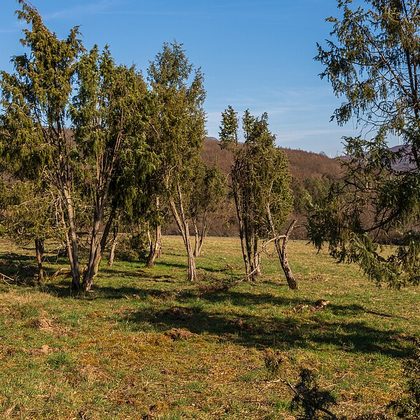
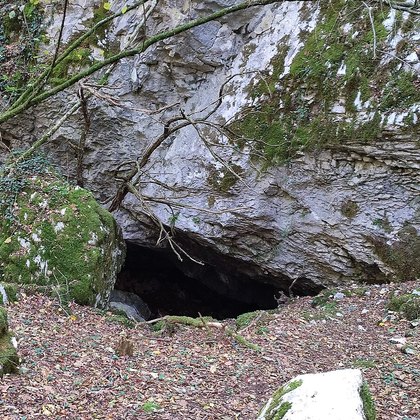
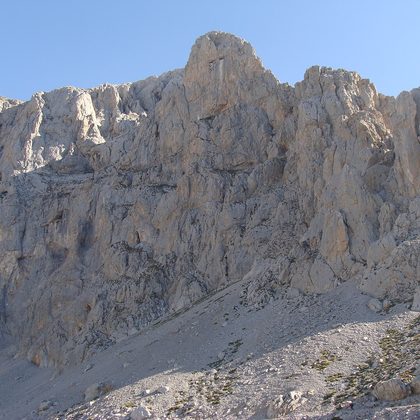
In Europe and the Middle East forest and scrub, including Mediterranean scrubland; in Central and South Asia also arid montane forest, shrubland, grassland and desert, and rural gardens and towns. The species is often found near water, from sea level to 3015 m. The handbook calls it ecologically flexible, with the caveat that this picture may change once the complex is split taxonomically.
Where the animal is most at home, classified with EUNIS — the European standard for habitats.

Distribution
South-eastern Europe from Albania and Greece, including Crete, north to southern Ukraine and southern Russia, the Caucasus, Turkey and northern Iran, and on through Central Asia to western Mongolia, northern, eastern and central China and the Himalayas; isolated populations in southern Croatia and Korea. Within the guide area therefore only the western part of the range falls, that of the former M. aurascens. Specimens from south-western Syria may be juvenile Geoffroy's Bats or a different form. The boundary with the Whiskered Bat in south-eastern Europe is incompletely known.
- Native
- dark = core range, pale = thinly spread
Way of life
The bats leave the roost in the evening and forage through the night. The diet consists of flying insects; in Turkey mainly flies (Diptera). In the north of the range, and possibly throughout, the species hibernates; in Europe in caves. In Korea the home ranges of radio-tagged bats averaged 8.4, 89.3 or 106.5 ha depending on the method of analysis, and overlapped little. No data on reproduction have been published; the ecology of the European populations has hardly been studied separately.
Where and when to look
A small whiskered bat in Greece, Bulgaria, Crimea or Turkey may be this species or the Whiskered Bat; without nuclear DNA the identification remains open. Record the locality precisely: the course of the contact zone between the two species is still unknown. Capturing and handling bats requires a licence in the European Union.
Conservation status
Least Concern (LC) on the global Red List, assessed in 2019; that assessment covers the whole range as far as eastern Asia. The handbook notes that the taxonomy needs clarification before an adequate assessment is possible. For Europe, habitat loss and disturbance of underground roosts are named as possible threats. In the European Union it falls, like all bats, under Annex IV of the Habitats Directive.
Scientific name
Myotis davidii | (W. C. H. Peters, 1869)
W. C. H. Peters described the species in 1869 as Vespertilio Davidii; because it was later moved to another genus, the author and year stand in brackets. Myotis is Greek, from mys, genitive myos, 'mouse', and ous, genitive ōtos, 'ear': 'mouse-ear'. davidii honours the French Lazarist priest Armand David (1826–1900), who as a missionary in China collected hundreds of animals and plants for the Paris museum. The specimen the first description was based on came from China, Peking.