All species › Lagomorphs › Hares and rabbits › Cape Hare
Cape Hare | Lepus capensis
Kaapse haas | Liebre Del Cabo
The Cape Hare is a hare of desert margins and dry, open country. The name refers to the Cape of Good Hope, where the specimen described by Linnaeus in 1758 came from. The range extends from South Africa through East Africa and Arabia into the Levant. In the Negev, the Arava and the Judean Desert it is the common hare: pale, with very long ears, and found at night with a lamp on the open plains.
Tracks
In the desert, signs are well preserved because only the wind erases them. The form is a shallow scrape under a saltbush, an acacia or an overhanging stone, always in shade and with the open end away from the wind; in the hot months it is dug deeper, so that the ground temperature is a few degrees lower. The droppings are flattened spheres of 15 to 20 mm, hard, pale yellow-brown and coarsely fibrous, scattered singly over the plain and along wadi floors, not in heaps. The print is that of a hare: long, narrow, four toes, with a blurred edge from the furred sole. In fine desert sand the group of prints from a bound is sharply defined: the two long hind feet in front, the small forefeet behind and usually one behind the other in a line, with bounds of a metre or more. Search early in the morning on smooth sand flats and along the edges of the hamada, before the wind rises; the tracks of the whole night are then still there. Also the browsing: clean, oblique cuts on shoots of saltbush and acacia, and in farmland bitten-off alfalfa and young cereals.
In its habitat
Identification
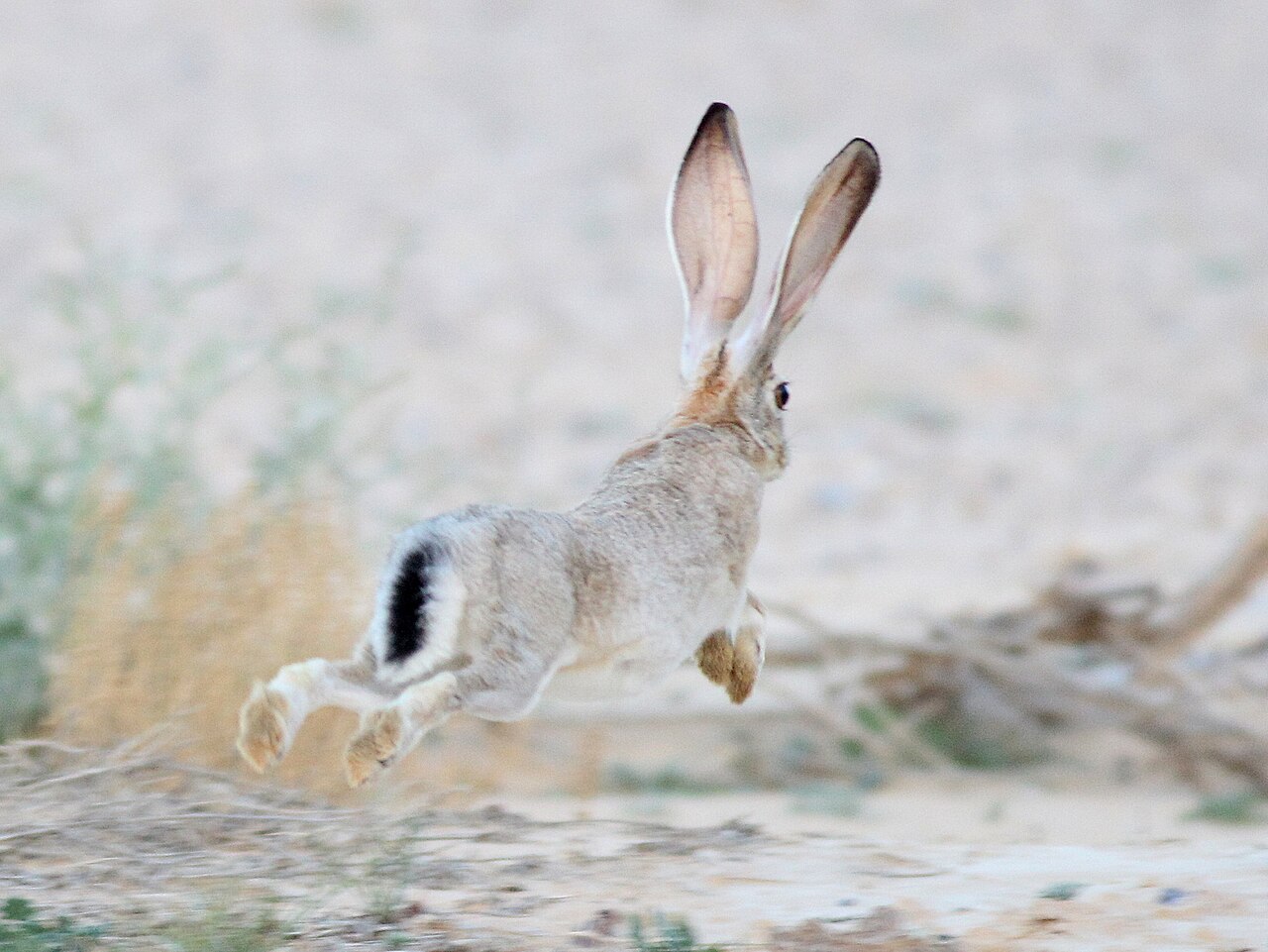
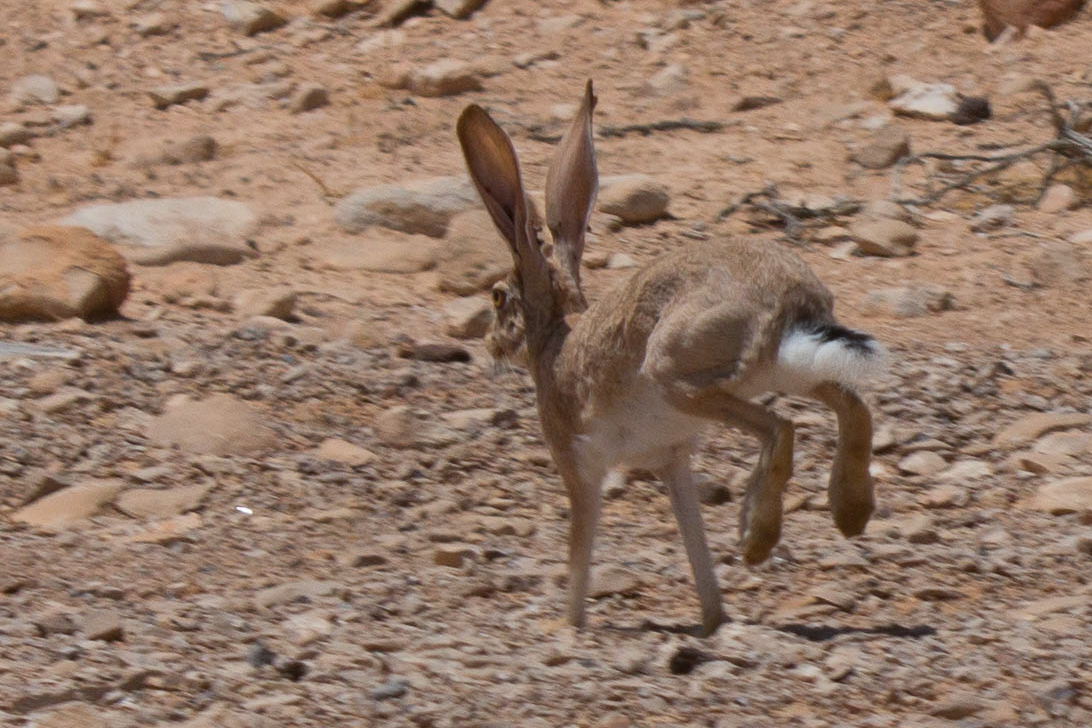
A medium-sized, pale hare of 50 to 55 cm head-body and 1.5 to 2.5 kg, clearly lighter than the Brown Hare (3 to 5 kg). The coat is sandy to pale greyish brown, finely flecked with black, with a white belly and a cream to ochre nape; animals from true desert are the palest, those from the coastal strip and the north darker and redder. The ears are very long, longer than the head, with a narrow black tip on the back; they are thin and translucent and serve for heat loss as well as hearing. The eyes are large and set high and far to the side. The tail is black above and white below and is carried down when fleeing. The legs are long and ochre; the animal is more slender and longer-built than the Brown Hare.
Similar species
In most of its Levantine range there is little to confuse it with; the question is mainly where the range of the Cape Hare ends and that of the Brown Hare begins. In the northern Levant, in Syria and southern Turkey, the Brown Hare (Lepus europaeus) occurs, and where the boundary between the two species lies has not been established: the Mammal Diversity Database lists Syria for both species, whereas the Israeli literature assigns all the country's hares to the Cape Hare, with a series of subspecies grading from a pale desert form in the south to a larger, darker form in the north. In practice: the further south and drier, the more certain the Cape Hare; for a hare on the Golan or in northern Syria the species is uncertain. The MDD also lists Cyprus for this species, but GBIF holds no records from Cyprus, and the Cypriot hare is usually assigned to the Brown Hare; this is an unresolved point. In North Africa the hares of the Maghreb are treated in the MDD as Lepus mediterraneus. In the desert part of the range the Rabbit is absent, so the confusion most frequent in Europe does not arise.
Habitat
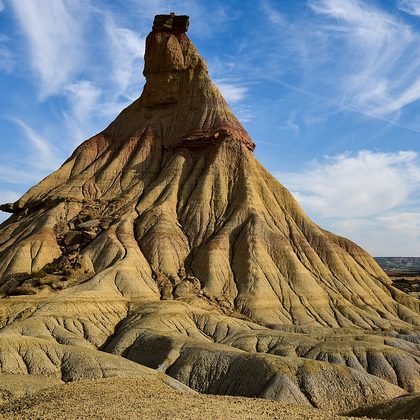
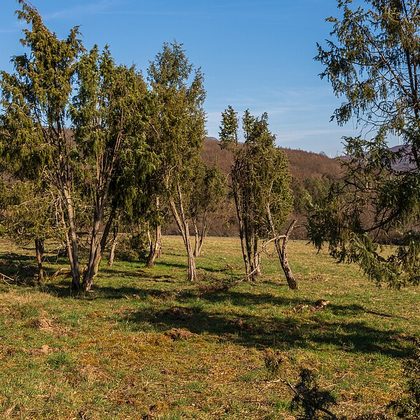
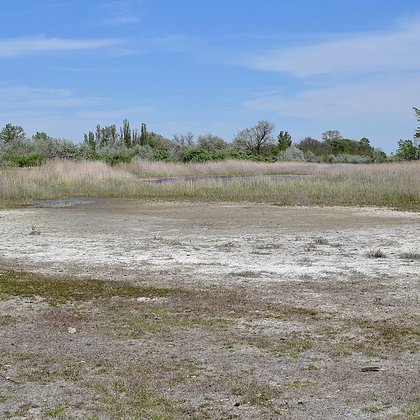
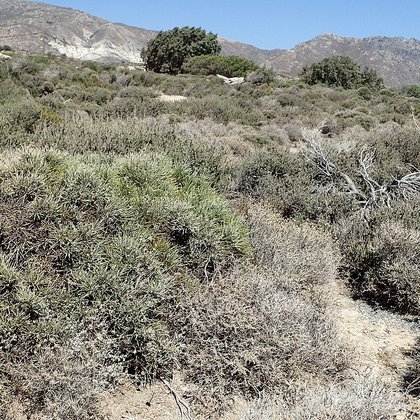
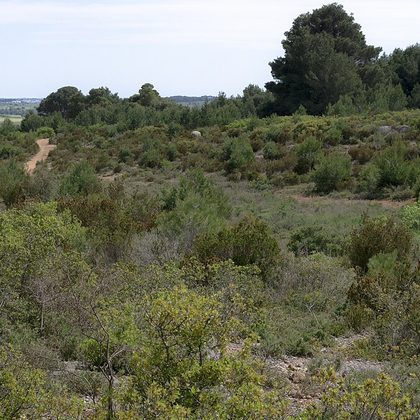
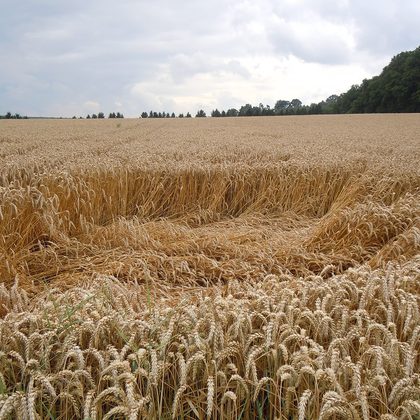
Dry, open and largely treeless ground: desert and semi-desert, stony desert (hamada) and sand plain, wadi floors with acacia and saltbush, salt steppe around the Dead Sea, dry grassland and phrygana in the hills, and fields, alfalfa and kibbutz margins where irrigation provides green food all year. In Israel the highest hare densities occur in these farmed areas; unlike in western Europe, agriculture here has led to more hares. Woodland and dense scrub are avoided.
Where the animal is most at home, classified with EUNIS — the European standard for habitats.
Distribution
From South Africa through the Sahel and East Africa to Arabia, Iran and Pakistan. In the Levant and north-east Africa the range includes Israel, the Palestinian territories, Jordan, Syria and Egypt with Sinai. By far the most records come from Israel: GBIF holds more than eighteen thousand there, against a few tens or hundreds from the surrounding countries, which mainly reflects the difference in numbers of observers. The species does not occur on the European mainland.
- Native
- dark = core range, pale = thinly spread
Way of life
Nocturnal, in the hot months almost exclusively: by day the animal lies flat in its form in shade, with the ears along the back, and emerges only when the ground has cooled. The diet consists of grass, herbs, saltbush and acacia shoots, and in farmland alfalfa, young cereals and vegetables. The species drinks little or nothing and obtains moisture from its food; like all hares it re-ingests the soft caecal pellets. Solitary, with pair formation during the rut. In the warm part of the range breeding occurs almost all year, with peaks after rain: two to four litters a year of one to six young after a gestation of about 42 days. The young weigh about a hundred grams at birth, are furred and have open eyes; they lie separately in the open and are suckled for a few minutes once every twenty-four hours, shortly after sunset. There is no winter rest.
Where and when to look
After dark, drive slowly along a desert road or farm track in the Negev or the Arava and look for eyeshine on the verges; around Sde Boker, Ezuz and Nitzana and along the fields of the Arava the species is common on a good night. In the Judean Desert and by the Dead Sea it can also still be seen on the plain in the last minutes before sunrise. By day, look for signs rather than the animal: on a smooth sand flat after a windless night the bounding tracks of a hare are easy to see.
Conservation status
Least Concern (LC, 2019). The Cape Hare is one of the most widely distributed lagomorphs: the range extends from the Cape to Pakistan, and the species occurs in desert, steppe and farmland. In Israel and the Jordan valley it benefits from irrigated agriculture, which provides food where the desert does not; there it is locally regarded as an agricultural pest. It is hunted and poached and there are traffic casualties, but neither threatens numbers. There is, however, taxonomic uncertainty: Lepus capensis in the broad sense is a species complex, and with every molecular study part of the range is assigned to another species, as happened in 2019 with the hares of the Maghreb and Sardinia. Which populations in the Levant fall under this name may still change in the coming years.
Scientific name
Lepus capensis | Linnaeus, 1758
Linnaeus described the species in 1758 and placed it straight away in the genus where it still stands. Lepus is the Latin word for 'hare'. capensis means 'of the Cape', after the type locality at the Cape of Good Hope. The specimen the first description was based on came from South Africa, Cape of Good Hope.