All species › Lagomorphs › Hares and rabbits › Brown Hare
Brown Hare | Lepus europaeus
Haas | Liebre Europea
The Brown Hare spends its entire life above ground. It digs no burrow and builds no nest; it rests in a shallow scrape in open terrain, the form. The long hind legs, the eyes set high and wide apart on the head, and the large ears are adaptations to this life. When disturbed a hare stays lying still for a long time and flees only when a person or predator is close. The species occurs from northern Spain to beyond the Urals.
Tracks
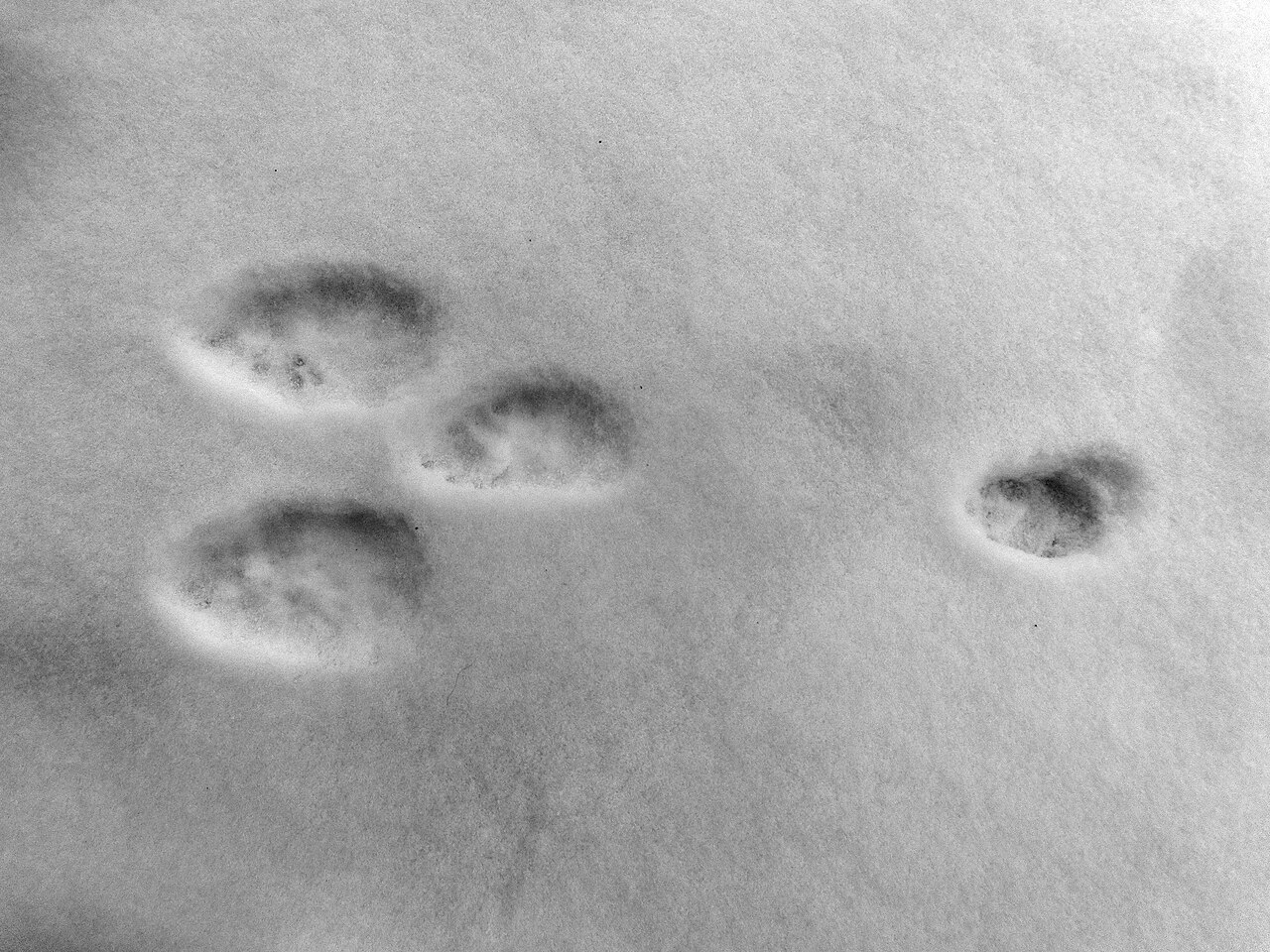
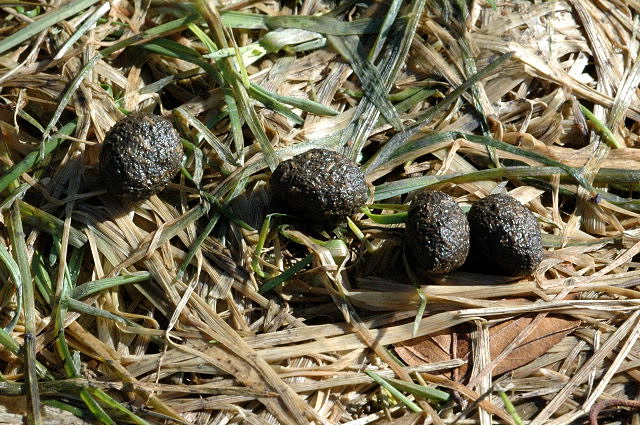
Because the hare does not dig, all its signs are on the surface. The form is a shallow oval scrape about 30 by 15 cm, worn bare and matched to the size of the animal, with the open end usually away from the wind; forms lie in arable land, in rough grass along a ditch or under a tussock, and one animal uses several. The droppings are flattened spheres 15 to 20 mm across, yellow-brown, hard and visibly fibrous; they lie scattered singly across the field and not in heaps. This is the most useful difference from the rabbit, which deposits its droppings in latrines. The print is long and narrow, with four toes; the furred soles blur the outline. In a bound the two long hind feet land ahead of the small forefeet, and the forefeet then usually lie one behind the other in a single line, whereas a rabbit places them side by side. In snow this group of four prints, with bounds of a metre or more, is unambiguous. The feeding sign is also characteristic: a hare bites off twigs with a clean, oblique cut of about 45 degrees, whereas a deer leaves a torn, pulled-off end. In winter the hare strips bark from young trees and shrubs up to about 60 cm, slightly higher than a rabbit can reach. In March flattened rings and runs can be seen in winter cereals where hares chased each other and boxed the night before.
In its habitat
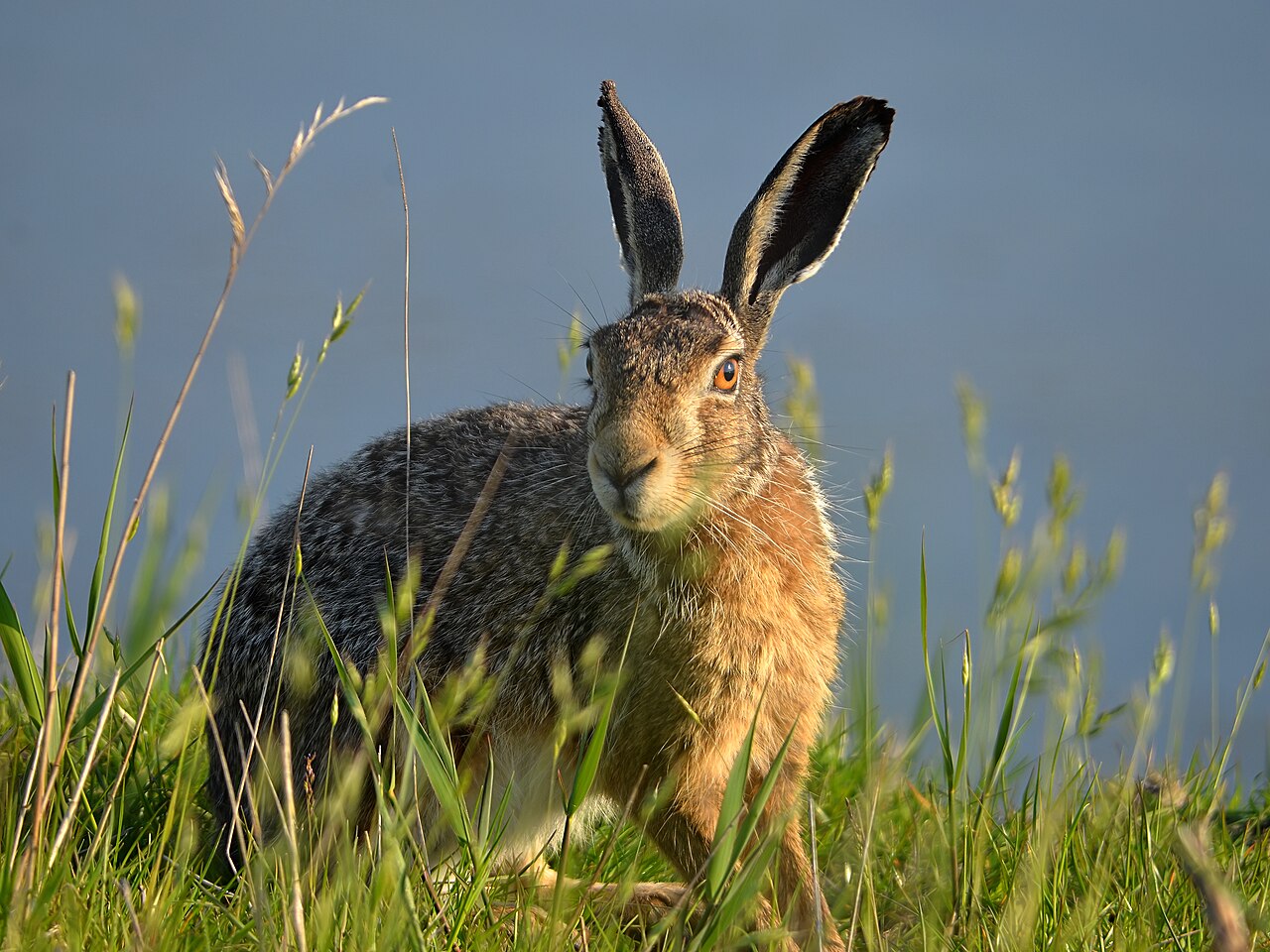
Head close-up
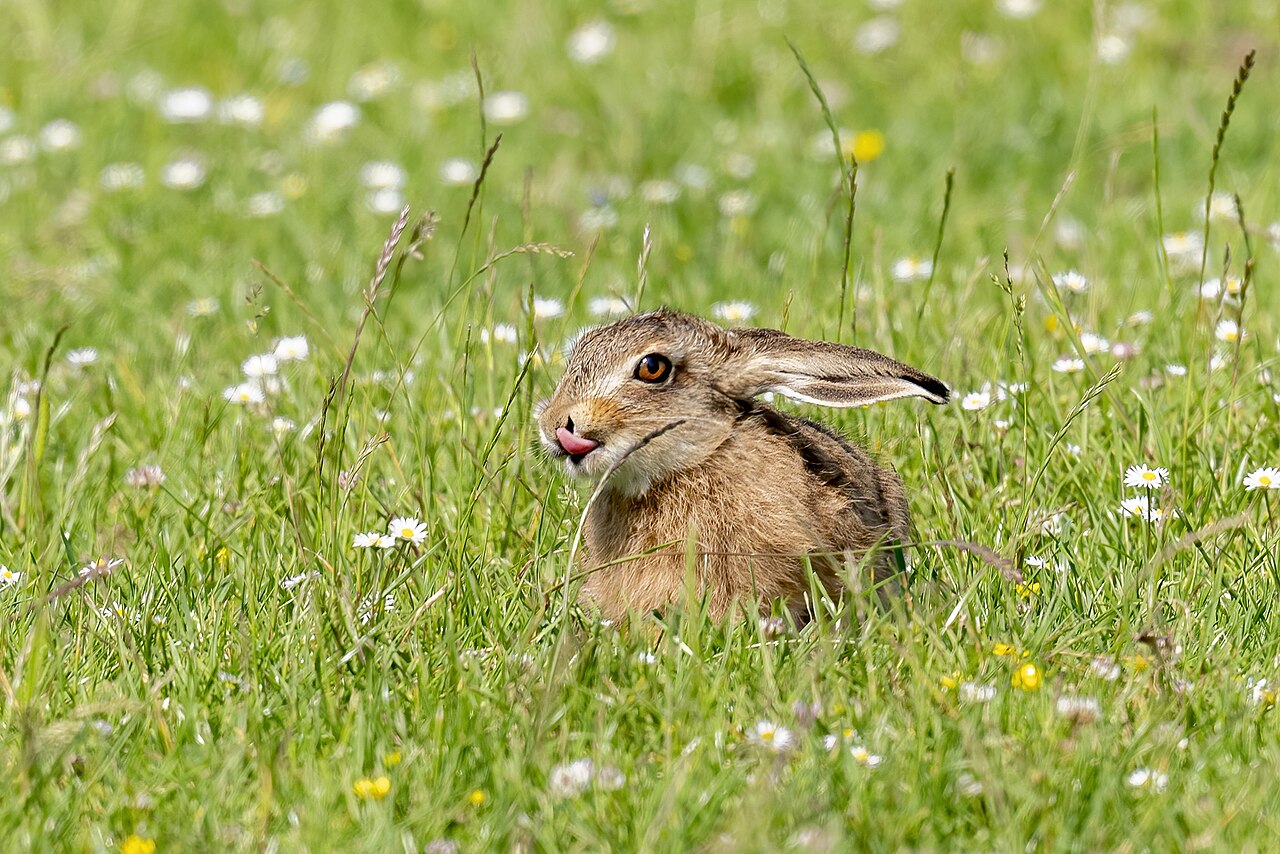
The young
Identification
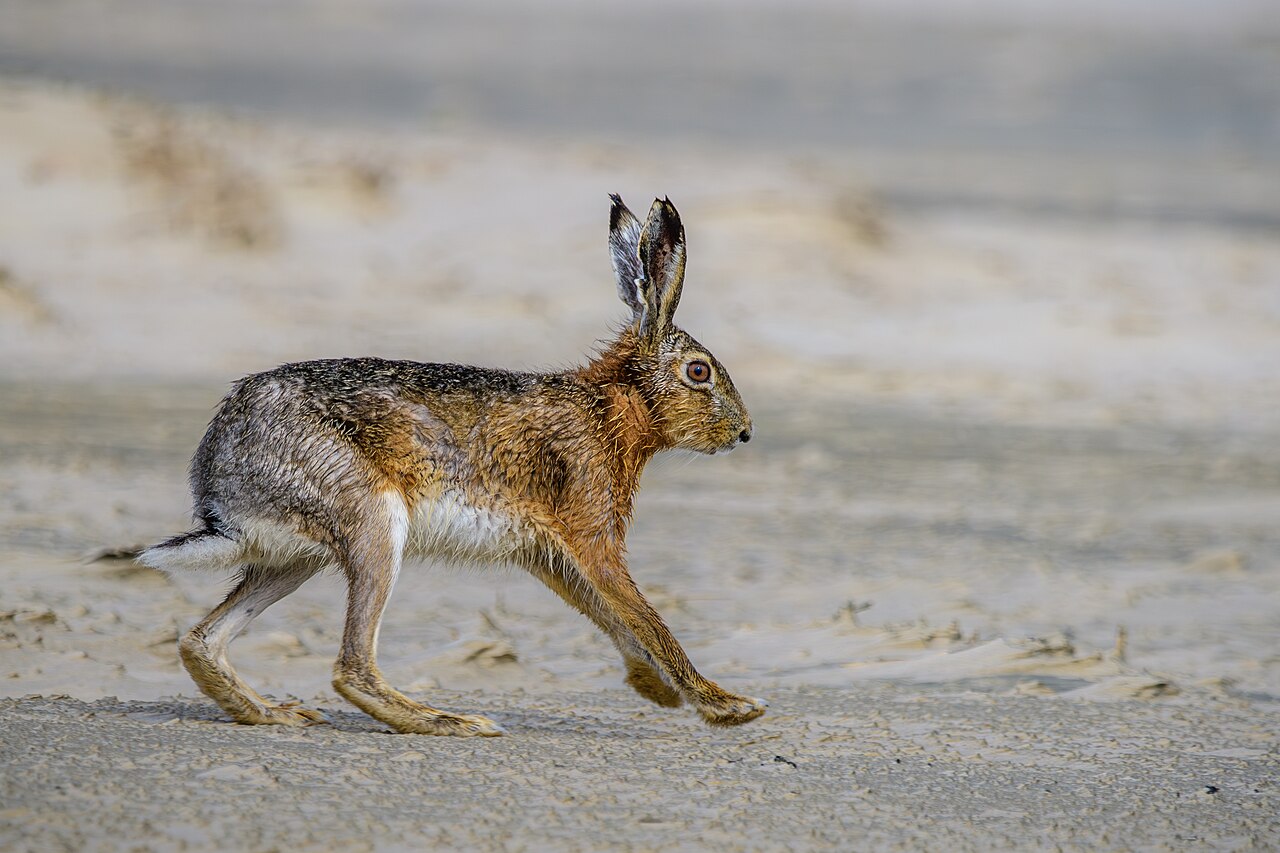
A large, long-legged lagomorph of open country, head-body 55 to 75 cm and 3 to 5 kg, one and a half to two times the weight of a rabbit; in the Iberian Peninsula the largest hare. The ears are longer than the head and have a clear black tip on the back. The eyes are large, protruding and golden brown and are set so far to the side that the field of view extends almost all round. The coat is tawny to russet with black flecking; chin, belly and the underside of the tail are white. The tail is black above and white below and is held down when fleeing, so that the black shows from behind. The hind legs are clearly longer than the forelegs; at a trot the hare moves high and rolling, when fleeing it stretches out and reaches sixty kilometres an hour, with sharp sideways turns. The winter coat is greyer and denser, the summer coat redder; the Brown Hare never turns white.
Similar species
The Rabbit can be distinguished without doubt in good light. It is much smaller (head-body 36 to 50 cm, 1.5 to 3 kg), greyish brown rather than tawny red, and its ears are shorter than the head and lack the black tip. It carries the tail raised when fleeing, so that the white is what shows, moves in short hops with an arched back, and escapes into a burrow, which a hare never does. A rabbit also stays close to cover, whereas a hare lies in the middle of a bare field. The Mountain Hare overlaps in the Alps, Scandinavia, the Scottish Highlands and Ireland: shorter ears with little or no black, a shorter, entirely white tail and, in the north, a white winter coat; the Irish Hare, a subspecies of the Mountain Hare, stays brown in winter. In the Iberian Peninsula two other hares occur: the Granada Hare, slightly smaller and with more white on the flank and hindquarters, which occupies almost the whole peninsula, and the Broom Hare, dark and short-eared, in the Cantabrian Mountains. Where the three species meet in northern Spain, locality is more reliable than appearance.
Habitat
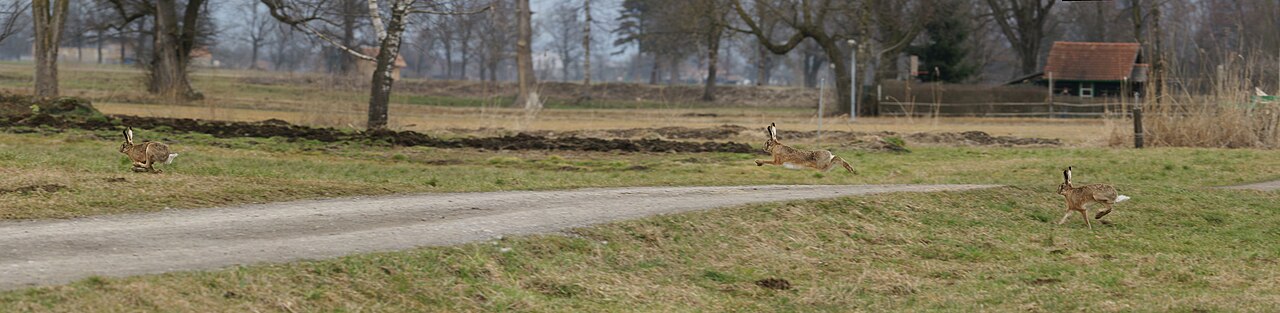
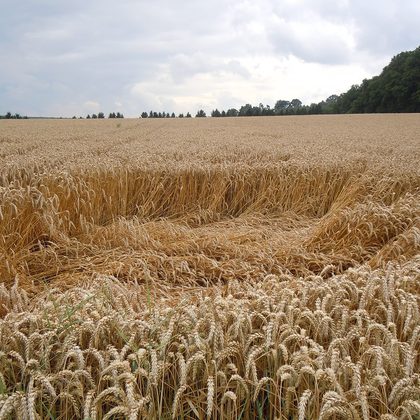
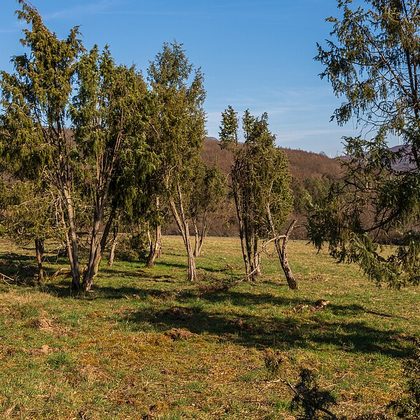
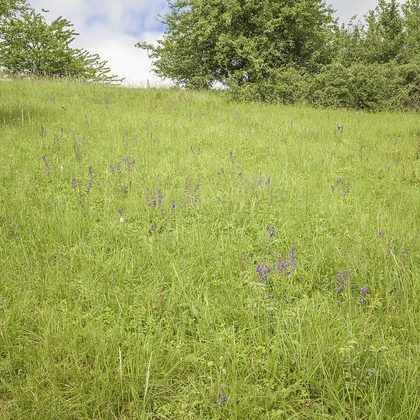
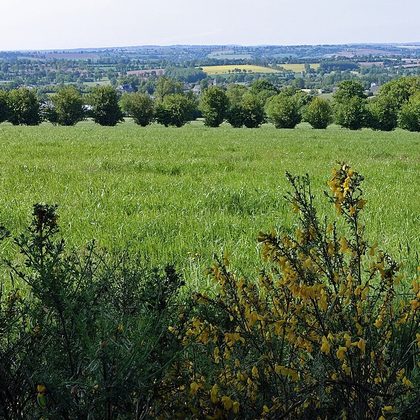
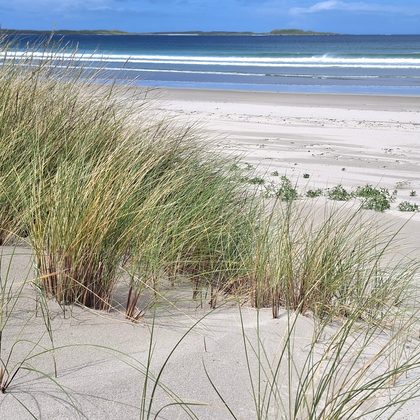
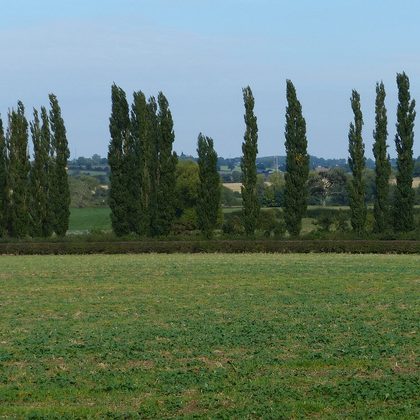
Open, small-scale farmland: arable fields with cereals and root crops, hay meadows and pasture, and the herb-rich margins, banks, verges and hedgerows between them. Also dunes and saltmarsh, young plantations and clear-fells, and in the south dry steppe grassland. The species needs a combination of crops that provide cover and food and herb-rich strips where food is available all year; large, bare, uniform arable fields offer less than they appear to. Woodland is avoided, except the edge.
Where the animal is most at home, classified with EUNIS — the European standard for habitats.
Distribution
From northern Spain to beyond the Urals and from Ireland to northern Iran; north to southern Sweden and southern Finland, where the Brown Hare is gradually displacing the Mountain Hare. In the lowlands of central and western Europe the species occurs almost everywhere in open farmland; in the Netherlands, for example, from the dunes and Wadden islands to the Peel and the clay polders, with the highest densities on open arable land in Zeeland, the Flevopolders and northern Groningen, and in Belgium mainly in the loam region, the polders, Hesbaye and the Condroz. In Britain the Brown Hare is not native: it was probably introduced in the Iron Age, between about 500 and 300 BCE, and is now widespread in lowland England, scarcer in Wales and the south-west, and largely absent from the Scottish Highlands, where the Mountain Hare occurs. In Ireland it is introduced and confined mainly to mid-Ulster, where it hybridises with and displaces the native Irish Hare; there it is treated as an invasive species. In Spain the Brown Hare occupies only the north-eastern quadrant: from the Catalan coast north of the Ebro to central Asturias, and from southern Aragon and the uplands of Burgos and Palencia to the French border and the Cantabrian coast. Elsewhere in the Iberian Peninsula and on the Balearics the Granada Hare occurs, and in the Cantabrian Mountains the Broom Hare; the Brown Hare is absent from Portugal. Outside its natural range the species has been released in South America, Australia, New Zealand, Canada and the north-eastern United States.
- Native
- dark = core range, pale = thinly spread
Way of life
Nocturnal, with most activity in the first hours after sunset and again around sunrise; by day the hare lies in its form and leaves it only when disturbed. In March and April it is also active by day: hares then chase one another and rear up on their hind legs to strike at each other with the forefeet. This boxing is usually not a fight between males but a female fending off an insistent male. The diet consists of grass, herbs, young cereals, roots and in winter bark and twigs. Food is digested twice: the soft caecal pellets are eaten again, so that the food passes through the gut a second time. Gestation is 30 to 42 days; a female can have three to four litters a year of usually two to four young. Through superfoetation she can conceive again while still pregnant. The leverets are born fully furred and with open eyes and can move almost immediately; they lie hidden separately in the field, and the mother visits once every twenty-four hours, shortly after sunset, to suckle them for a few minutes. There is no hibernation or winter rest; the hare is active all year.
Where and when to look
In March and April, watch in the last hour before dark along a field margin or from a bank with a telescope; that is when hares chase and box. Move slowly and search with binoculars for ears and eyes above the furrow; of a lying hare often only the black ear tips are visible. After fresh snow the bounding trails from the form to the feeding place and back can be followed. Anyone who finds a hand-sized leveret in the grass in June should leave it: it is not abandoned, and the mother returns after sunset.
Conservation status
Least Concern globally (LC, 2023). In western Europe, however, numbers have declined sharply since the 1960s. In Britain the population is estimated to have fallen by more than three-quarters over the last century, and the hare is a priority species for conservation; in the Netherlands, Belgium, Germany and France numbers have fallen steadily since the 1960s, in some regions by more than half. In the Netherlands the hare has been on the Red List since 2020 and hunting has been closed in some provinces. The causes lie in the landscape: field enlargement, the loss of herb-rich field margins and odd corners, early and frequent mowing that kills leverets, and the replacement of mixed arable land by large blocks of maize and rye-grass. In addition there is European brown hare syndrome, a viral disease that locally wipes out whole populations, predation by foxes, and traffic. Illegal hare coursing is a problem in parts of England and Ireland. In Spain, at the southern edge of the range, the situation is less unfavourable: the hare is a regulated small-game species there, and densities depend mainly on dry cereal farming and hunting pressure; restocking releases lead to mixing of hares from elsewhere with local populations. The decline is not due to loss of range but to a decline in habitat quality.
Scientific name
Lepus europaeus | Pallas, 1778
Pallas described the species in 1778 and placed it straight away in the genus where it still stands. Lepus is the Latin word for 'hare'. europaeus is Latin for 'European'. The specimen the first description was based on came from Poland.