All species › Passerines › Wagtails and pipits › Yellow-Throated Longclaw
Yellow-Throated Longclaw | Macronyx croceus
Geelkeellangklauw | Bisbita Gorjigualdo
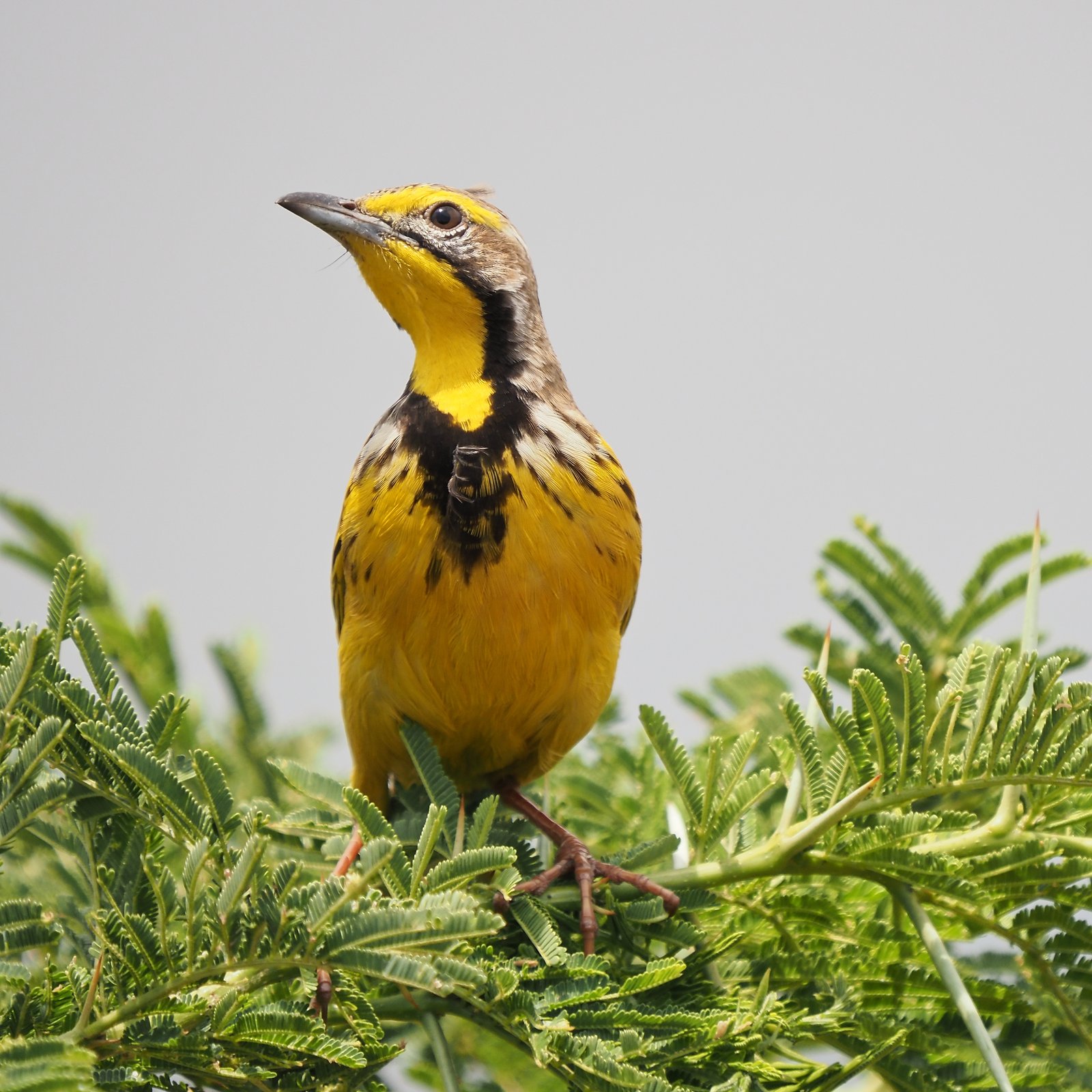
The Yellow-Throated Longclaw is the most widespread longclaw in Africa: a robust, pipit-like bird with bright yellow underparts and a black necklace. Unlike Cape Longclaw it likes to perch high in trees and bushes, from where it whistles loudly.
Voice
A loud, clear, melodious whistled tchoo-wee-oo or a series of tui-tui-tui, often kept up for long periods from a treetop or tall bush. Also a vigorous tchoo-weet in song flight, and when disturbed a dry, sharp tsit or a mewing note.
Recording: isaac kilusu — CC BY-NC-SA 4.0 · converted to mono · xeno-canto
Identification
A large longclaw of 20 to 22 cm with a heavy bill, long legs and a long hind claw. The upperparts are brown with bold dark streaks. Throat, breast and belly are bright lemon-yellow; a broad black necklace runs from the base of the bill down the sides of the throat and across the breast, and the flanks are streaked black. The tail is dark with white corners. The sexes are nearly alike, the female slightly duller with a narrower necklace. Juveniles are paler yellow, with a necklace of loose dark spots. In flight stiff, fluttering wingbeats alternate with short glides.
Confusion species
Cape Longclaw (Macronyx capensis) has an orange throat and rarely perches in trees. Fülleborn's Longclaw (Macronyx fuelleborni) of Angola and Zambia is duller, with more ochre-yellow underparts, brownish flanks and a narrower necklace, and lives on higher, drier grassland plateaus. A young Yellow-Throated Longclaw can suggest Yellow-Breasted Pipit (Hemimacronyx chloris), but that is smaller and has a scaly back. The rare Golden Pipit (Tmetothylacus tenellus) is much smaller and has golden-yellow wings.
Habitat
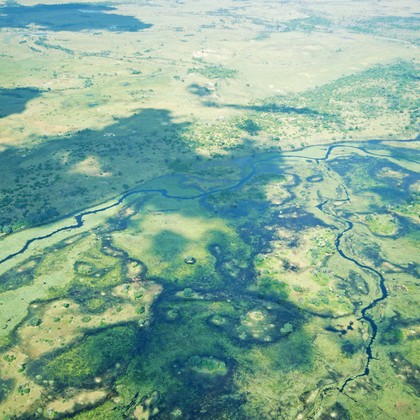
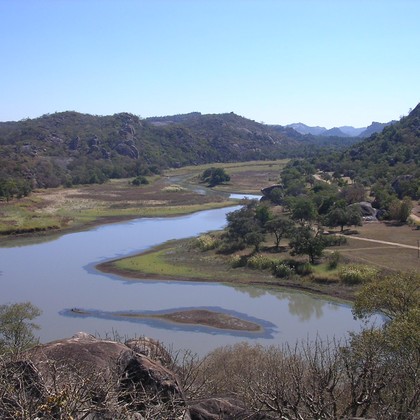
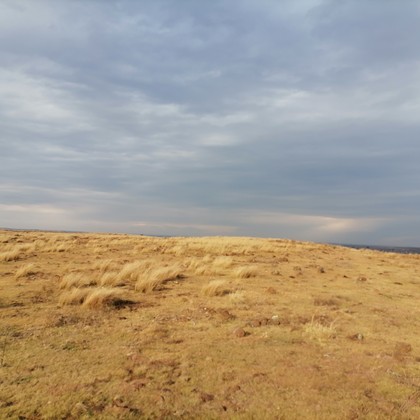
Moist to wet grassland with scattered trees and bushes, the edges of vleis and floodplains, coastal grassland and open savanna with tall grass, from sea level to about 2000 m. It forages on the ground for insects, but uses trees and bushes as song posts and lookouts, and when disturbed often flies up into a tree.
Where the bird is most at home, classified by the vegetation units of southern Africa.
Range and movements
Widespread in the north and east of the region: Angola, Zambia, Malawi, Mozambique, central, northern and eastern Zimbabwe, northern Botswana (Okavango Delta and Chobe), the Caprivi Strip in Namibia, Eswatini and, in South Africa, eastern Limpopo, Mpumalanga, KwaZulu-Natal and the north-eastern Eastern Cape. Beyond the region from Senegal to Ethiopia and south through East Africa.
- Resident
- Summer visitor (c. Oct–Mar)
- Passage (Mar–Apr, Oct–Nov)
- dark = core range, pale = thinly spread
How and when to look
Listen in the eastern lowlands and in wet savanna for loud whistling from a treetop; the singing bird turns its yellow breast towards you and is then clearly visible. In KwaZulu-Natal and Mpumalanga it can be found alongside Cape Longclaw: note the throat colour and the behaviour, since Yellow-Throated Longclaw escapes into a tree, Cape Longclaw into the grass.
Conservation status
Not threatened. The species is common across a very large range. Numbers decline locally through drainage of vleis, agricultural intensification and conversion of coastal grassland to sugar cane or timber plantations.
Scientific name
Macronyx croceus | (Vieillot, 1816)
Vieillot described the species in 1816 as Alauda crocea; because it was later moved to another genus, the author and year stand in brackets. The genus Macronyx was introduced in 1827 by Swainson. Macronyx comes from the Greek makros, 'long', and onux, 'claw' — for the very long hind claw of these birds. croceus is Latin for 'saffron-yellow', from crocus, 'saffron' — for the bright yellow throat and breast. The specimen the first description was based on came from Senegal (originally given in error as 'Java').