All species › Passerines › Weavers › White-Winged Widowbird
White-Winged Widowbird | Euplectes albonotatus
Spiegelwidavink | Obispo Aliblanco
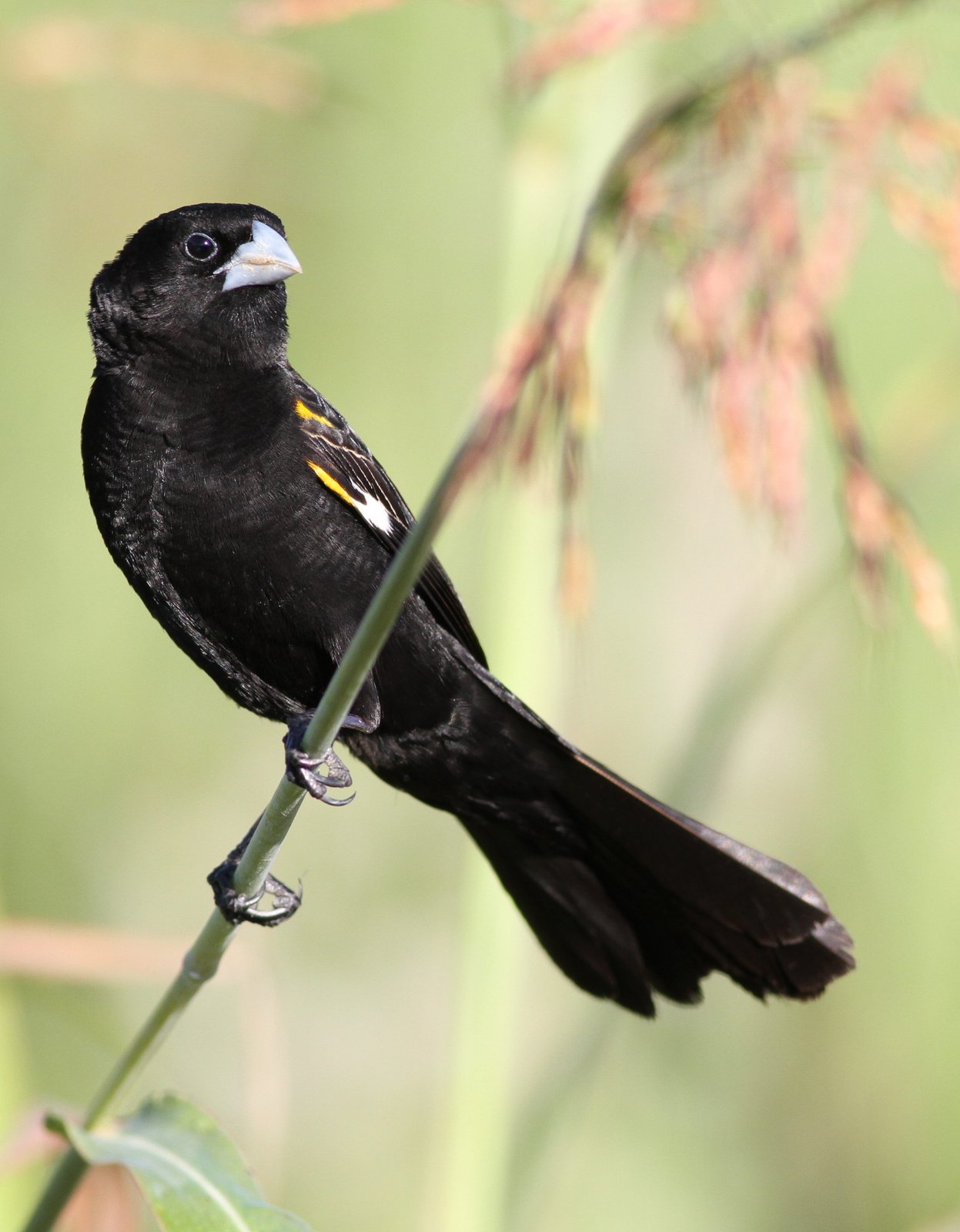
The White-Winged Widowbird is a black widowbird with a moderately long tail, a yellow-and-buff shoulder patch and a white wing patch that flashes like a mirror in flight. It is the commonest widowbird of rank grass in the savanna zone.
Voice
A varied song of chirping and sizzling notes, chip-chip-chip-zzzee, mixed with rattling and buzzing sounds, from a grass stem or in display flight, in which the male flies over the grass with spread tail and slow wingbeats. The contact call is a soft chip.
Recording: Rory Nefdt — CC BY-NC-SA 4.0 · converted to mono · xeno-canto
Identification
The breeding male measures 15–19 cm including the tail and about 13 cm without; the broad, slightly rounded tail is 7–9 cm long. Outside the breeding season and in the female 13–14 cm. The breeding male is glossy black with a yellow shoulder patch on the lesser coverts, a cinnamon-buff band below it, and white primary bases forming a white wing patch; the bill is pale blue-grey. Outside the breeding season the male is streaky brown but keeps the yellow and cinnamon shoulder and the white wing patch. The female is tawny and streaked, with a pale supercilium, a faintly streaked pale breast and a small yellow edge at the shoulder.
Confusion species
Yellow Bishop (Euplectes capensis) has a short tail, a yellow rump, a black bill and no white wing patch. Yellow-Mantled Widowbird (Euplectes macroura) has a yellow mantle and no white in the wing. Fan-Tailed Widowbird (Euplectes axillaris) has an orange-red shoulder patch. Long-Tailed Widowbird (Euplectes progne) is much larger, with a red-and-white shoulder and a very long tail. The white wing patch rules out all other black widowbirds in any male plumage.
Habitat
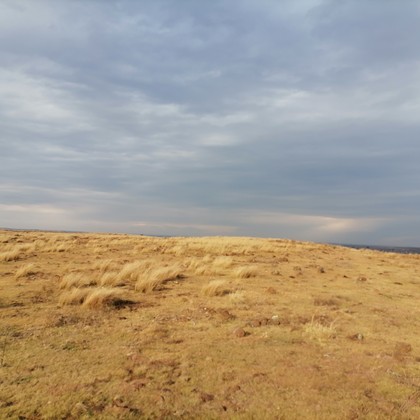
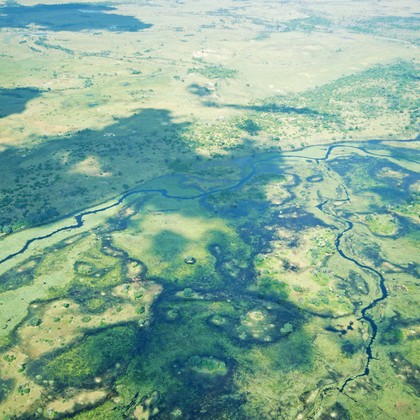
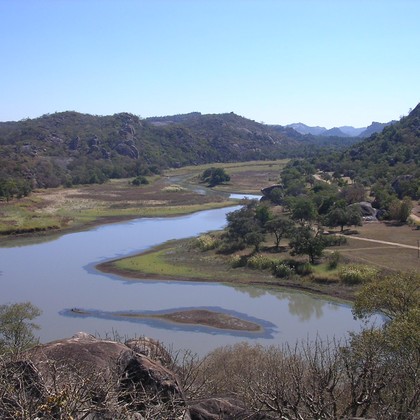
Tall rank grass in savanna and woodland, often near water, vlei margins, riverside tangles, neglected fields and sugarcane. The male holds a territory in an open area with scattered bushes or tall stems. Outside the breeding season it forms large flocks, often with bishops and other weavers.
Where the bird is most at home, classified by the vegetation units of southern Africa.
Range and movements
Within the region in eastern South Africa (Eastern Cape, KwaZulu-Natal, Mpumalanga, Limpopo, Gauteng and North West), Eswatini, eastern and northern Botswana, north-eastern Namibia (Caprivi and Kavango), Zimbabwe, Mozambique, Malawi, Zambia and Angola. Beyond the region through East and Central Africa to Ethiopia, South Sudan and Gabon.
- Resident
- Summer visitor (c. Oct–Mar)
- Winter visitor (c. Apr–Sep)
- Passage (Mar–Apr, Oct–Nov)
- dark = core range, pale = thinly spread
How and when to look
January to March in rank grass along vleis or in tall grass around camps in the Kruger region and the Zimbabwe highveld. Watch the flight: the flashing white in the wing is often the first thing noticed, even in non-breeding males in a mixed flock.
Conservation status
Not threatened; common and widespread. It benefits from rank growth along fields and irrigation schemes.
Scientific name
Euplectes albonotatus | (Cassin, 1848)
Cassin described the species in 1848 as Vidua albonotata; because it was later moved to another genus, the author and year stand in brackets. The genus Euplectes was introduced in 1829 by Swainson. Euplectes joins Greek eu 'fine, good' to New Latin plectes 'weaver'. albonotatus comes from the Latin albus, 'white', and notatus, 'marked' — for the male's white wing patch. The specimen the first description was based on came from Durban, KwaZulu-Natal, South Africa.