All species › Swifts › Swifts › White-Rumped Swift
White-Rumped Swift | Apus caffer
Pijlstaartgierzwaluw | Vencejo Cafre
The White-Rumped Swift is a slim, glossy black swift with a narrow white rump band and a long, deeply forked tail that is usually closed into a thin spike. It breeds almost exclusively in mud nests commandeered from swallows.

Voice
Rather quiet for a swift. A soft, low twittering and a short, drawn-out shreee around the nest, less high and less given to chorus than Little Swift.
Recording: Lynette Rudman — CC BY-NC-SA 4.0 · converted to mono · xeno-canto
Identification
About 14 cm. The plumage is black with a faint blue gloss, with a bright white throat patch and a narrow, U-shaped white band across the rump. The secondaries are thinly tipped pale, giving a pale trailing edge to the wing from below. The tail is long and deeply forked but is often held closed, looking pointed and needle-like; the fork opens briefly when the bird turns. The wings are narrow and strongly curved. Flight is fast and agile. The sexes are alike.
Confusion species
Horus Swift (Apus horus) is stockier, with a broader white rump band that extends onto the flanks and a less deeply forked tail. Little Swift (Apus affinis) has a broad, square white rump patch and a square-cut tail. African Palm Swift (Cypsiurus parvus) also has a spike tail but is uniform grey-brown without a white rump.
Habitat
Very varied: open country, grassland, woodland, mountains and especially villages and towns, as long as suitable swallow nests are present under bridges, culverts, rock overhangs and eaves. It takes over the retort-shaped mud nests of Lesser Striped Swallow (Cecropis abyssinica), Greater Striped Swallow (Cecropis cucullata) and Red-Breasted Swallow (Cecropis semirufa), often evicting the owners, and lines them with feathers. It hunts flying insects, often low over water.
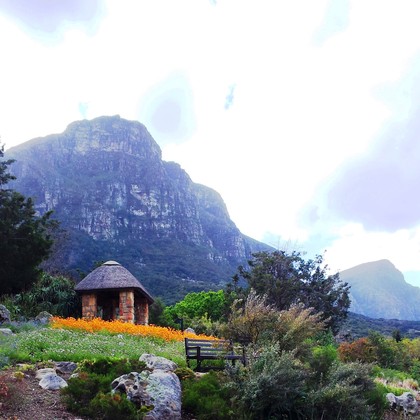
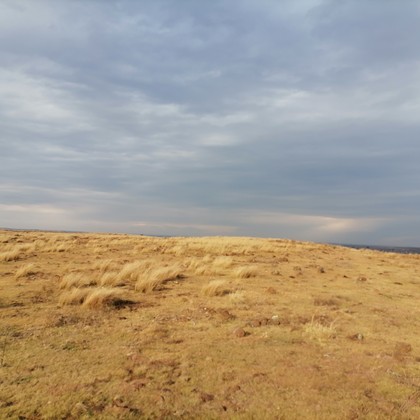
Where the bird is most at home, classified by the vegetation units of southern Africa.

Range and movements
In summer distributed over almost the entire region, from the Cape to Angola, Zambia and Malawi, except the barren core of the Namib and the parts of the Kalahari that lack nest sites. In winter most birds move north, but a few remain in Zimbabwe, Mozambique and the north of the region. Beyond the region across almost all of sub-Saharan Africa, and locally as a breeder in Morocco and southern Spain.
- Resident
- Summer visitor (c. Oct–Mar)
- Winter visitor (c. Apr–Sep)
- Passage (Mar–Apr, Oct–Nov)
- dark = core range, pale = thinly spread
How and when to look
In summer, check swallow nests under concrete bridges and culverts: a slim black swift disappearing into a Lesser Striped Swallow nest is almost certainly this species. With a good view of the tail, the long closed spike and the narrow white U on the rump are decisive.
Conservation status
Not threatened and common. The species has benefited from bridges, buildings and culverts under which swallows nest, and has increased and spread markedly since the early twentieth century.
Scientific name
Apus caffer | (Lichtenstein, 1823)
Lichtenstein described the species in 1823 as Cypselus Caffer; because it was later moved to another genus, the author and year stand in brackets. The genus Apus was introduced in 1777 by Scopoli. Apus is Latin for a swift, from Greek a- 'without' and pous 'foot', the ancients taking it for a kind of swallow without feet. caffer is modern Latin for 'of South Africa', after the Cape region where the type specimen was collected. The specimen the first description was based on came from the eastern Cape Province.