All species › Waders, gulls and terns › Pratincoles and coursers › Temminck's Courser
Temminck's Courser | Cursorius temminckii
Temmincks renvogel | Corredor Etiópico
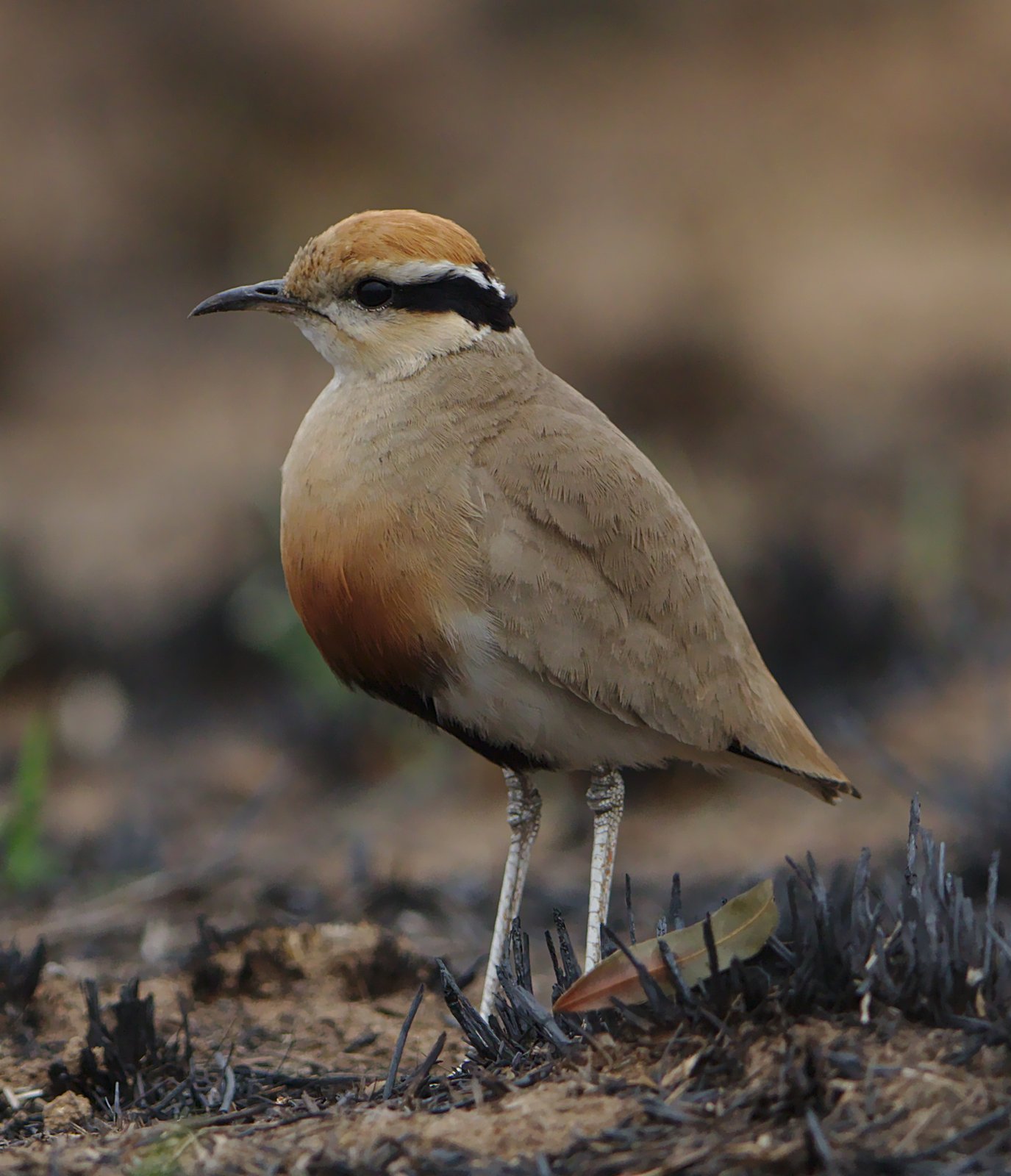
Temminck's Courser is a small, upright courser of short grassland and freshly burnt ground, with a rufous crown, a black-and-white stripe behind the eye and a black patch on the belly. It is active by day and runs in short sprints across bare ground, alternating with sudden stops.
Voice
A grating, metallic kerr-kerr or err-err, mainly in flight, and a soft cheek on take-off.
Recording: Andrew Spencer — CC BY-NC-SA 4.0 · converted to mono · xeno-canto
Identification
19–21 cm. The crown is warm rufous, with a white supercilium and a black eye stripe below it that meet on the nape in a V. The upperparts are plain grey-brown, the throat white, the breast and flanks warm cinnamon, merging into a large black patch in the centre of the belly; the lower belly and undertail coverts are white. The short bill is black and slightly decurved, and the long legs are whitish. In flight the primaries and underwings are black, with no white in the wing. The sexes are alike; juveniles are paler, with fine pale scaling on the back and a faint belly patch.
Confusion species
Burchell's Courser Cursorius rufus is slightly larger and paler, with a blue-grey hindcrown, a narrow black-and-white bar on the belly instead of a black patch and a white trailing edge to the secondaries in flight; it lives mainly in the dry west. Double-Banded Courser Smutsornis africanus has a scaly back and two narrow black breast bands.
Habitat
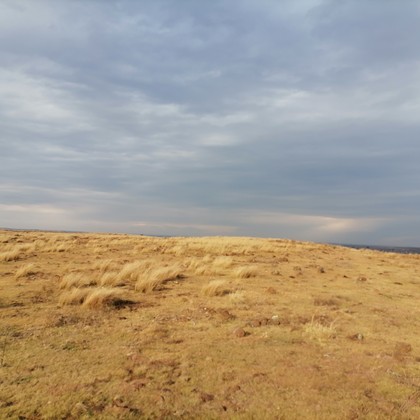
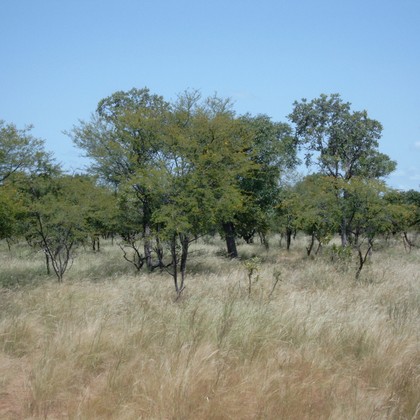
Short, dry grassland, open savanna with bare patches, overgrazed pasture, airfields, fallow fields and above all freshly burnt ground, where small groups often appear within a few days of a fire. It eats beetles, termites, grasshoppers and other insects, picked up after a short sprint. The two eggs lie on bare ground, often among charred debris or droppings.
Where the bird is most at home, classified by the vegetation units of southern Africa.

Range and movements
Distributed over most of the region: Angola, Zambia, Malawi, Mozambique, Zimbabwe, Botswana, northern and eastern Namibia, Eswatini and in South Africa mainly in the north and east, from Limpopo and Mpumalanga to KwaZulu-Natal, the Free State, North West and the Eastern Cape; scarce in the Northern Cape and absent from the Western Cape. Beyond the region across much of sub-Saharan Africa, from Senegal to Ethiopia and Kenya.
- Resident
- Summer visitor (c. Oct–Mar)
- Winter visitor (c. Apr–Sep)
- Passage (Mar–Apr, Oct–Nov)
- dark = core range, pale = thinly spread
How and when to look
In late winter and early spring look for freshly burnt patches of grassland or savanna, for example in the Kruger National Park or the highveld reserves; the birds often appear there the day after a fire. Drive slowly along the edge and watch for small, upright birds that suddenly run off and stop again.
Conservation status
Not threatened and fairly common over most of its range, but strongly nomadic and therefore locally unpredictable. Loss of grassland to agriculture and development plays a role locally; management with fire and grazing in fact creates suitable habitat.
Scientific name
Cursorius temminckii | Swainson, 1822
Swainson described the species in 1822 and placed it straight away in the genus where it still stands. The genus Cursorius was introduced in 1790 by Latham. Cursorius comes from Latin cursor 'runner', from currere 'to run', after the habit of chasing insects on foot across dry open ground. temminckii honours the Dutch zoologist Coenraad Jacob Temminck (1778–1858), first director of the National Museum of Natural History in Leiden. The specimen the first description was based on came from Senegal (assumed; not stated).