All species › Passerines › Finches › Southern Citril
Southern Citril | Crithagra hyposticta
Gestreepte dunbekkanarie | Serín Africano
The Southern Citril is the citril of the East African mountains; in the region it inhabits the highlands of Malawi, north-eastern Zambia, northern Mozambique and, according to the southern African literature, the eastern highlands of Zimbabwe. The pointed bill and the heavily streaked female separate it from the other yellow canaries.

Voice
A lively, high, fast song of trills and clear whistles, tsee-wee-cherree-tsee-cheew, like that of Yellow-Fronted Canary but thinner. The call is a rising sweep or tsooee.
Recording: isaac kilusu — CC BY-NC-SA 4.0 · converted to mono · xeno-canto
Identification
11–12 cm, with a fairly long, pointed, horn-coloured bill. The male is olive-green above with dark streaks, has a yellow eyebrow, a dark green cheek, a narrow dark surround to the bill base and bright yellow underparts, often finely streaked on the flanks. The female is duller greenish yellow with a weakly marked head and distinct dark streaks on throat, breast and flanks. The rump is greenish yellow, the tail dark without white tips.
Confusion species
Yellow-Fronted Canary (Crithagra mozambica) has a shorter, blunt bill, a sharp black malar stripe, a bright yellow rump and white tail tips; its female is unstreaked. Black-Faced Canary (Crithagra capistrata) of Angola and north-western Zambia has a sharply defined black mask and an unstreaked female. Yellow-Browed Seedeater (Crithagra whytii) of the Malawi and Zambia highlands is browner, with a long yellow eyebrow and a streaked brown back. African Citril (Crithagra citrinelloides) of north-east Africa is virtually identical but does not occur in the region.
Habitat
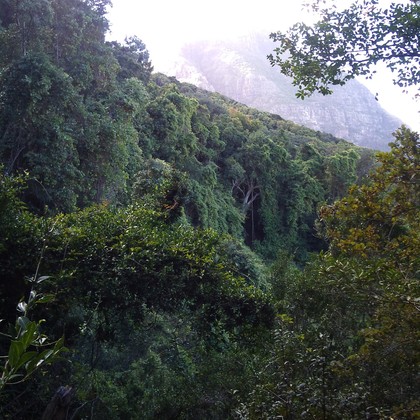
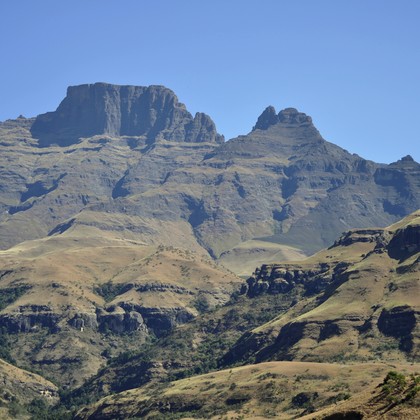
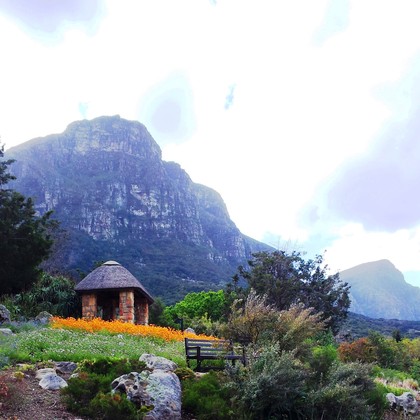
Montane forest edges, clearings with bracken and bramble, grassland with shrubs, eucalyptus and pine plantations, cultivation and gardens at middle and high altitudes, roughly between 700 and 2400 m. It feeds in pairs or small groups on seeds of herbs and composites, low in the vegetation and on the ground.
Where the bird is most at home, classified by the vegetation units of southern Africa.
Range and movements
In the region in the highlands of Malawi (Nyika, Viphya, Zomba, Mulanje), north-eastern Zambia (Nyika, Mafinga) and northern Mozambique; according to the southern African atlases also in the eastern highlands of Zimbabwe (Nyanga, Vumba, Chimanimani) and adjacent Mozambique, where these birds were formerly treated as African Citril. Beyond the region from Tanzania and southern Kenya to Uganda, eastern Congo and South Sudan.
- Resident
- Summer visitor (c. Oct–Mar)
- Winter visitor (c. Apr–Sep)
- Passage (Mar–Apr, Oct–Nov)
- dark = core range, pale = thinly spread
How and when to look
In the highlands search forest edges with brambles and bracken and the gardens of mountain lodges; the birds readily come to thistles and composite seed heads. Note the bill shape: pointed and longer than in Yellow-Fronted Canary, which shares the same gardens. The streaked female is the best feature against Black-Faced Canary.
Conservation status
Not threatened. Locally common in the mountains and tolerant of the conversion of forest edge to fields and plantations.
Scientific name
Crithagra hyposticta | (Reichenow, 1904)
Reichenow described the species in 1904 as Spinus citrinelloides hypostictus; because it was later moved to another genus, the author and year stand in brackets. The genus Crithagra was introduced in 1827 by Swainson. Crithagra comes from the Greek krithē, 'barley', and agra, 'hunting' — a 'barley hunter', for the seed-eating diet of these canaries and seedeaters. hyposticta comes from the Greek hupo, 'below', and stiktos, 'spotted' — for the fine streaking on the underparts. The specimen the first description was based on came from Moshi, Kilimanjaro, Tanzania.