All species › Passerines › Monarch flycatchers › Rufous-Vented Paradise Flycatcher
Rufous-Vented Paradise Flycatcher | Terpsiphone rufocinerea
Gabonparadijsmonarch | Monarca del Congo
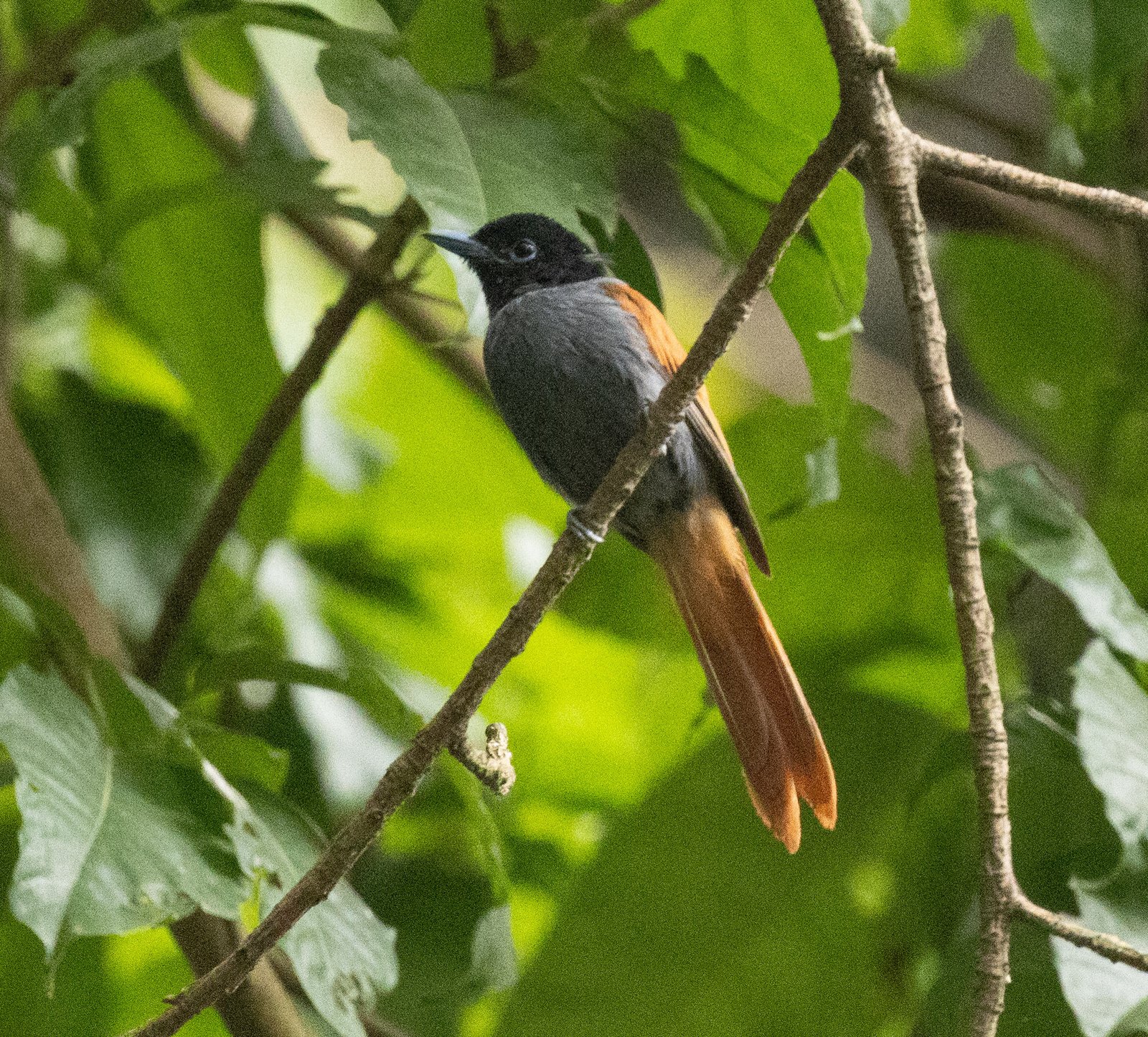
The Rufous-Vented Paradise Flycatcher is a paradise flycatcher of forest edges and riverine growth in Central Africa, within our region confined to north-western Angola. It closely resembles African Paradise Flycatcher, but the male has grey underparts with conspicuous rufous undertail coverts.
Voice
A rasping, nasal scold, zwee-zwerr, and as song a fast series of clear whistles, similar to that of African Paradise Flycatcher.
Recording: Paulina Meller — CC BY-NC-SA 4.0 · converted to mono · xeno-canto
Identification
17–18 cm; in the male the elongated central tail feathers bring the total to over 25 cm. Head, crest and throat are glossy blue-black, with a cobalt-blue eye-ring and a blue bill; the black of the throat grades into the slate-grey breast and the paler grey belly. The back, rump and tail are warm chestnut, the undertail coverts rufous. The wings are dark with chestnut edges and no white wing patch. The female is duller, with a shorter tail without streamers. Juveniles are browner and lack the gloss.
Confusion species
African Paradise Flycatcher Terpsiphone viridis is very similar but has grey or white undertail coverts, often a white wing patch, and also occurs in a white morph. Red-Bellied Paradise Flycatcher Terpsiphone rufiventer is entirely rufous-orange below. Hybrids between these species occur and cannot always be recognised in the field; check the colour of the undertail coverts and the wing.
Habitat
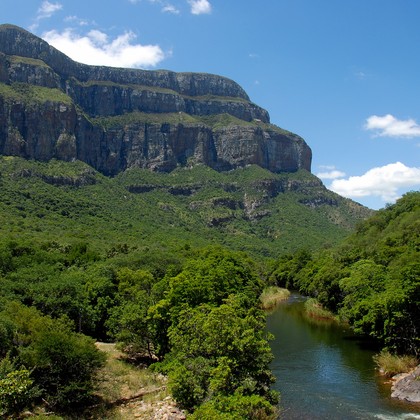
Forest edge, gallery forest and dense riverine growth, secondary forest, swamp forest and rank thicket near water, also in old plantations and around villages with many trees. It catches insects in short sallies from a perch in the lower and middle strata and joins mixed bird parties.
Where the bird is most at home, classified by the vegetation units of southern Africa.

Range and movements
Within the region only in north-western Angola: Cabinda, the lower Congo River and the north-western interior to the escarpment zone. Outside the region from southern Cameroon and Gabon through Congo-Brazzaville to central and eastern DR Congo.
- Resident
- dark = core range, pale = thinly spread
How and when to look
Year-round at forest edges and in gallery forest in north-western Angola. Listen for the nasal scold and try to see the bird from below: rufous undertail coverts beneath a grey belly and no white in the wing point to this species.
Conservation status
Not threatened; fairly common in its Central African range and tolerant of disturbed, secondary growth. In Angola its range is small and depends on forest edges and riverine growth in the north-west.
Scientific name
Terpsiphone rufocinerea | Cabanis, 1875
Cabanis described the species in 1875 and placed it straight away in the genus where it still stands. The genus Terpsiphone was introduced in 1827 by Gloger. Terpsiphone comes from the Greek terpsis, 'delight', and phōnē, 'voice' — for the pleasant song of paradise flycatchers. rufocinerea is Latin for 'rufous and ash-grey', from rufus and cinereus — for the rufous back and grey underparts. The specimen the first description was based on came from Chinchoxo, Cabinda, Angola.