All species › Passerines › Swallows and martins › Red-Breasted Swallow
Red-Breasted Swallow | Cecropis semirufa
Roodborstzwaluw | Golondrina Pechirrufa
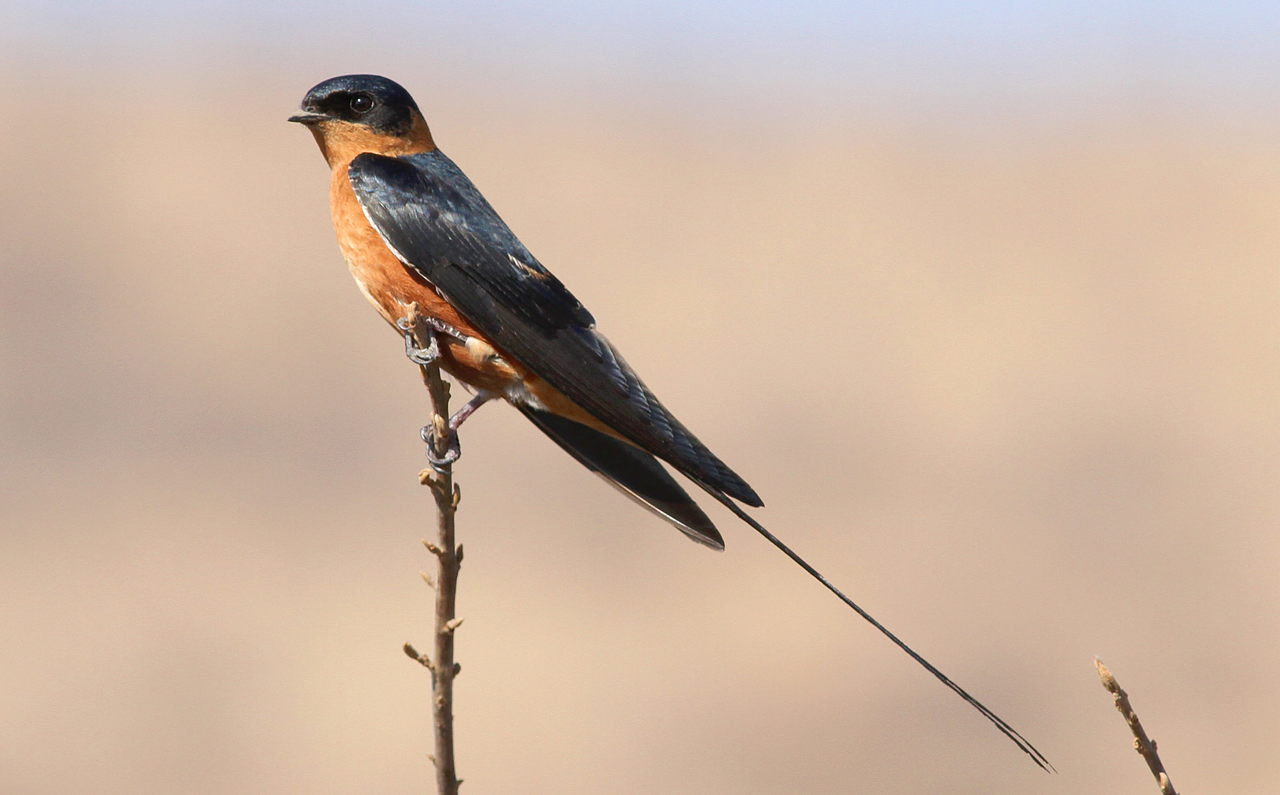
The Red-Breasted Swallow is a large, dark swallow with a blue-black cap, deep rufous underparts and very long tail streamers. It is a bird of open grassland and savanna, building its retort-shaped nest mainly in culverts under roads and in holes in the ground.
Voice
The song is a soft, gurgling and twittering warble, more musical than that of most swallows. The call is a short cherp or a soft trilling chrrr, often heard at the nest.
Recording: Paul Lenrumé — CC BY-NC-SA 4.0 · converted to mono · xeno-canto
Identification
20–24 cm, including the long outer tail feathers. The upperparts are deep glossy blue-black; the blue cap extends below the eye and encloses the cheek, so that the rufous starts only on the throat. Throat, breast and belly are uniform deep rufous, without streaks; the rump is also rufous. The undertail coverts are black, giving a dark block in front of the tail in flight. The underwing coverts are rufous to buff and contrast little with the flight feathers. Juveniles are duller, with paler, buffier underparts and shorter streamers. It flies with floating, slow beats, often low over grassland.
Confusion species
The Mosque Swallow Cecropis senegalensis is slightly larger still, with white cheeks and throat, paler rufous underparts and above all bright white underwing coverts that contrast strongly with the dark flight feathers. The Lesser Striped Swallow Cecropis abyssinica and the Greater Striped Swallow Cecropis cucullata have a rufous head and streaked white underparts. The Eastern Red-Rumped Swallow Cecropis daurica is smaller, with pale, finely streaked underparts. The Black-and-Rufous Swallow Hirundo nigrorufa is also blue-black with rufous underparts, but is smaller, has a blue-black instead of rufous rump and occurs only in moist grassland in Angola and northern Zambia.
Habitat
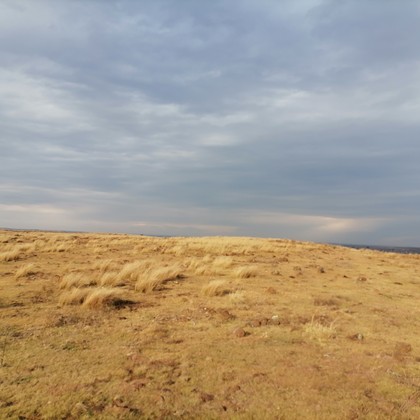
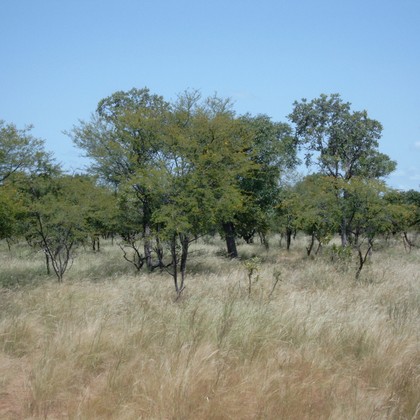
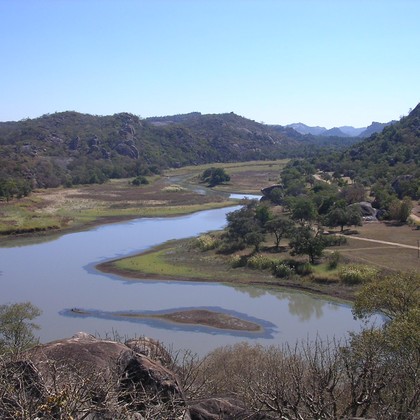
Open grassland, open savanna and woodland with large clearings, often near vleis or water; also farmland with scattered trees. It builds a large, retort-shaped mud nest with a long entrance tube against the ceiling of culverts under roads, under bridges and traditionally in disused aardvark burrows and hollowed termite mounds. It hunts flying insects low down.
Where the bird is most at home, classified by the vegetation units of southern Africa.
Range and movements
In the region in Angola, Zambia, Malawi, Zimbabwe, western Mozambique, northern and eastern Botswana and northern Namibia; in South Africa in Limpopo, North West, Gauteng, Mpumalanga, the northern Free State and KwaZulu-Natal, and in Eswatini. In the south a breeding visitor from August to April that then moves north; partly resident in the north. Beyond the region from Senegal east to Kenya and south through central Africa.
- Resident
- Summer visitor (c. Oct–Mar)
- Winter visitor (c. Apr–Sep)
- Passage (Mar–Apr, Oct–Nov)
- dark = core range, pale = thinly spread
How and when to look
From September to March; in open grassland and savanna look for culverts under dirt and tarred roads, as in the Pilanesberg, around Nylsvley or in the Marakele area: a bird flying low across the road into a culvert is often a Red-Breasted Swallow. With a large rufous swallow in flight, check the colour of the underwing and throat to separate it from the Mosque Swallow.
Conservation status
Not threatened. The species has expanded with the building of roads and culverts, which provide many nest sites; nests are lost locally during culvert maintenance and floods.
Scientific name
Cecropis semirufa | (Sundevall, 1850)
Sundevall described the species in 1850 as Hirundo semirufa; because it was later moved to another genus, the author and year stand in brackets. The genus Cecropis was introduced in 1826 by Boie. Cecropis is from Ancient Greek Kekropis, 'Athenian woman'. semirufa comes from the Latin semi, 'half', and rufus, 'red' — for the rufous underparts below the dark blue upperparts. The specimen the first description was based on came from Magaliesberg, South Africa.