All species › Birds of prey › Hawks, eagles and kites › Pallid Harrier
Pallid Harrier | Circus macrourus
Steppekiekendief | Aguilucho Papialbo
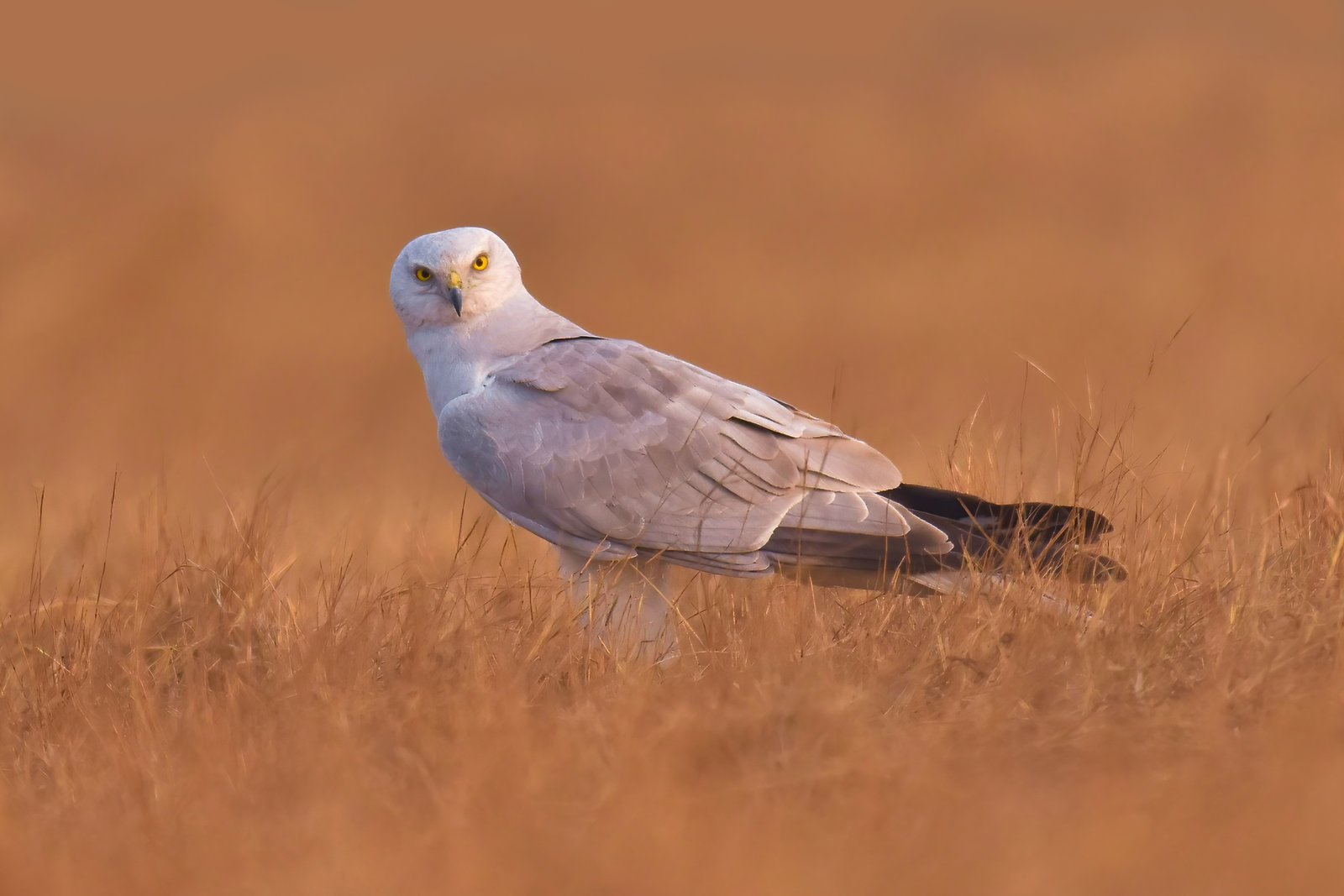
The Pallid Harrier is a slender, pointed-winged harrier that breeds on the steppes of Russia and Kazakhstan and is thinly spread over the grasslands and open savannas of southern Africa during the austral summer. The pale male is among the lightest-coloured raptors of the region.
Voice
Almost always silent in the non-breeding range. On the breeding grounds a high chattering kre-kre-kre and a squealing pee-e from the female.
Recording: Jan Studecky — CC BY-NC-SA 4.0 · converted to mono · xeno-canto
Identification
40–48 cm, wingspan 95–120 cm. The adult male is pale silver-grey above and almost white below, with a white head and breast lacking a grey ‘bib’; the wingtip shows only a narrow, sharply defined black wedge on the central primaries. The female is brown with a white rump (a ‘ringtail’), a barred tail and a striking head pattern: a dark ear patch framed by a pale collar and a pale supercilium. Below, the secondaries are dark with narrow pale bands that fade towards the body, and the primaries lack a dark base. Juveniles are plain warm ochre below, unstreaked, with a broad pale collar behind the dark ear patch. It flies low with the wings in a shallow V, rocking slightly; the wings appear narrower and more pointed than those of Montagu's Harrier.
Confusion species
Montagu's Harrier Circus pygargus is the main pitfall. The male is darker grey, with a black bar across the upper secondaries, two black bars below, a much larger black wingtip and rufous streaks on belly and underwing. Female Montagu's Harriers have a less contrasting head without an obvious collar and evenly barred secondaries below; juveniles have a darker face without a pale collar. Black-Winged Kite Elanus caeruleus is smaller, with black shoulders and a short white tail, and hovers. Females of African Marsh Harrier Circus ranivorus lack a white rump.
Habitat
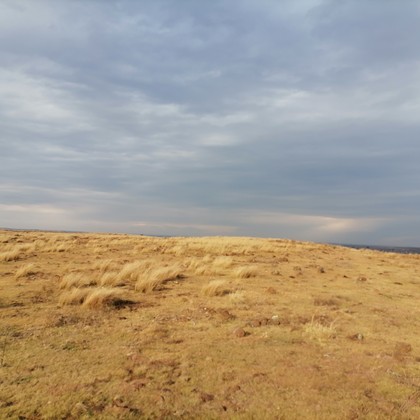
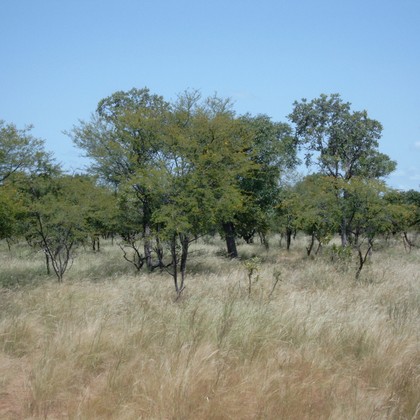
Open grassland, dry plains, fallow fields and open acacia savanna, also recently burnt ground and floodplains as they dry out. It quarters low over the grass for mice, small birds such as larks and quails, and grasshoppers, often where Montagu's Harriers and Lesser Kestrels also hunt. It roosts on the ground in tall grass, sometimes with other harriers.
Where the bird is most at home, classified by the vegetation units of southern Africa.

Range and movements
Scarce and irregular across the north and centre of the region: Zambia, Malawi, Zimbabwe, Botswana, northern and central Namibia, southern Angola and, in South Africa, mainly the highveld of the Free State, North West, Gauteng and Mpumalanga, rarely further south to the Eastern Cape. It breeds on the steppes from Ukraine and Russia to western China; it winters in sub-Saharan Africa and India, and increasingly in southern Europe.
- Summer visitor (c. Oct–Mar)
- Passage (Mar–Apr, Oct–Nov)
- dark = core range, pale = thinly spread
How and when to look
From November to February search the highveld or the Kalahari for low-hunting harriers over open grassland; most records involve females and juveniles. Look for the pale collar around the dark ear patch and the plain ochre underparts of juveniles. Adult males are recognisable at a glance by their ‘ghostly’ whiteness with the narrow black wedge in the wingtip.
Conservation status
Near Threatened. The population declined sharply during the twentieth century through the ploughing of the steppes and agricultural intensification; recently the species seems to be recovering and spreading west. On the wintering grounds conversion of grassland to cropland and pesticides against locusts and queleas are risks.
Scientific name
Circus macrourus | (Gmelin, 1770)
Gmelin described the species in 1770 as Accipiter macrourus; because it was later moved to another genus, the author and year stand in brackets. The genus Circus was introduced in 1799 by De Lacépède. Circus comes from the Greek kirkos, a partly mythical hawk named for its circling flight (from kirkos, 'circle'). macrourus is Greek for 'long-tailed', from makros 'long' and -ouros '-tailed'. The specimen the first description was based on came from Voronezh, southern Russia.