All species › Passerines › Bulbuls › Little Grey Greenbul
Little Grey Greenbul | Eurillas gracilis
Dwergbuulbuul | Bulbul Grácil
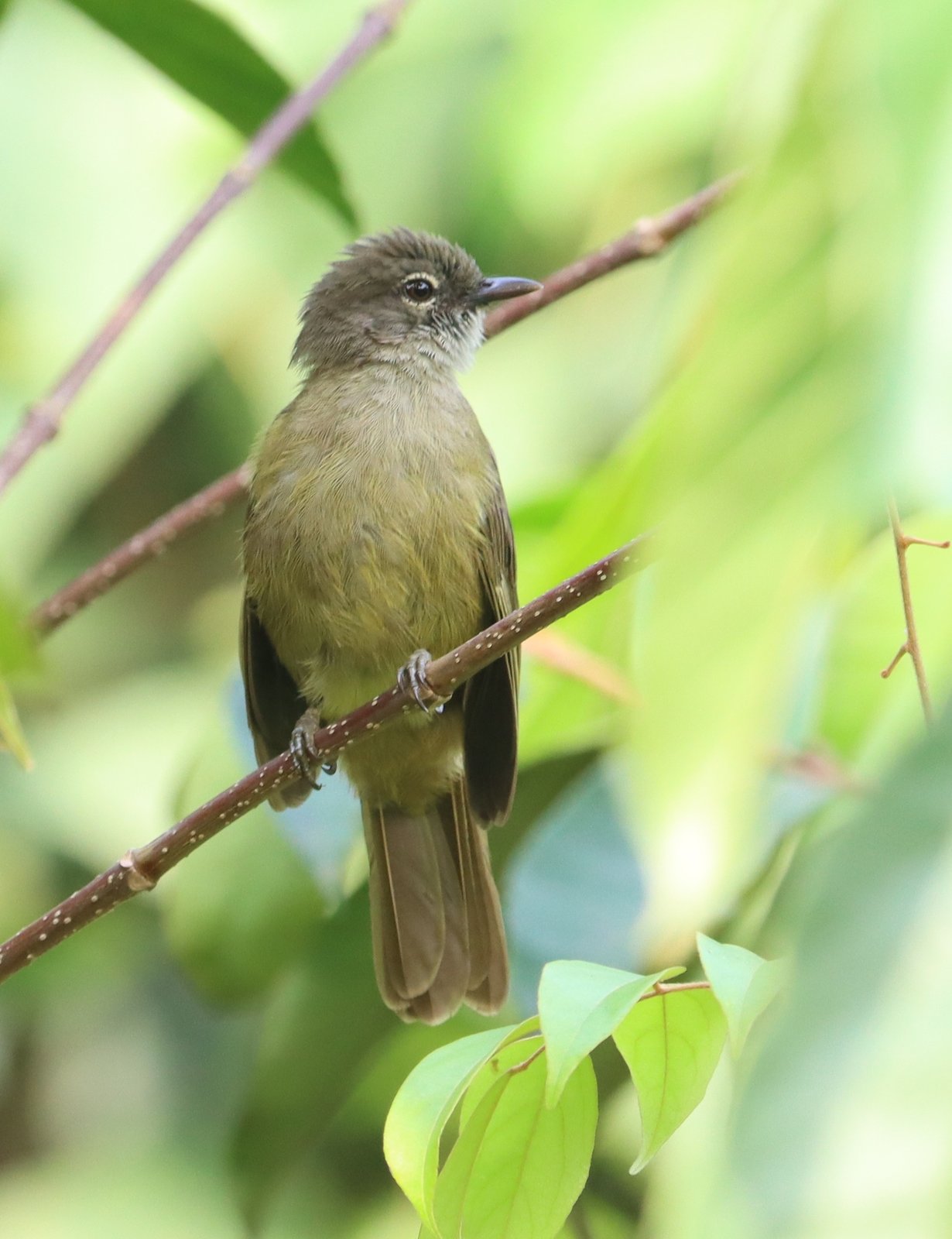
Little Grey Greenbul is a small, slight greenbul of the canopy and upper strata of humid lowland forest in West and Central Africa. In the region it is known only from a few sites in northern Angola. With its size, grey head and active foraging high in the trees it is more reminiscent of a warbler than of a greenbul.
Voice
The song is a short, fast phrase of high, somewhat squeaky notes, tsiu-tsiu-tsiweet, often repeated from the canopy. The call is a dry chrr and a thin tsip.
Recording: Jonathan Onongo — CC BY-NC-SA 4.0 · converted to mono · xeno-canto
Identification
14–15 cm. The smallest Eurillas, slim and short-billed. Head and nape are grey, the back and rump olive-green, wings and tail olive-brown. A distinct white eye-ring. The throat is pale grey, the breast grey with an olive wash, the belly and undertail-coverts pale yellow. The eye is dark, the bill blackish, the legs grey. The sexes are alike; juveniles are duller and less grey on the head.
Confusion species
Plain Greenbul Eurillas curvirostris is larger and browner, with a longer bill, and keeps lower down. Little Greenbul Eurillas virens is larger, plain olive-green without a grey head, and lives in the understorey. Green Hylia Hylia prasina is greener, with a long pale supercilium and no white eye-ring. Slender-Billed Greenbul Stelgidillas gracilirostris also lives in the canopy, but is larger, with a long thin bill and plain grey underparts.
Habitat
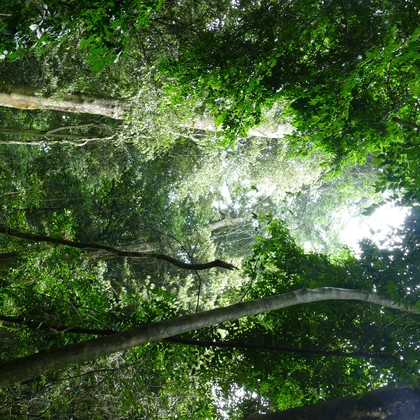
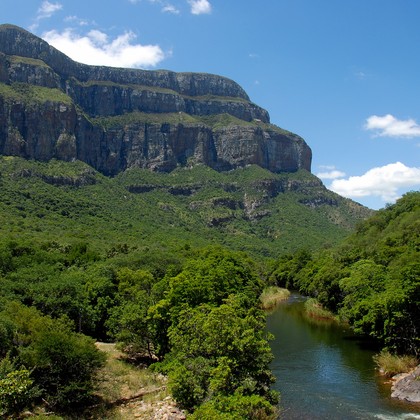
Canopy and upper strata of humid lowland and gallery forest, also tall forest edge and older secondary forest. It forages actively and warbler-like among the leaves, often in mixed flocks with other greenbuls and warblers, and eats insects and small fruits.
Where the bird is most at home, classified by the vegetation units of southern Africa.
Range and movements
In the region known only from a few sites in northern Angola: Cabinda, Uíge, Cuanza Norte and especially the gallery forests of Lunda Norte. Beyond the region from Guinea east to Uganda and western Kenya and south to DR Congo and north-western Tanzania.
How and when to look
All year. A rarely observed species: in northern Angola, especially in the gallery forests of Lunda Norte, search mixed flocks high in the canopy. Look for a small greenbul with a grey head, white eye-ring and yellow belly moving among the leaves like a warbler.
Conservation status
Not threatened; fairly common over most of its range. In Angola rarely recorded and dependent on tall, closed forest, which is affected by logging.
Scientific name
Eurillas gracilis | (Cabanis, 1880)
Cabanis described the species in 1880 as Andropadus gracilis; because it was later moved to another genus, the author and year stand in brackets. The genus Eurillas was introduced in 1899 by Oberholser. Eurillas comes from the Greek eurus, 'broad', and illas, 'thrush' — probably for the rather broad bill of some species. gracilis is Latin for 'slender, slight' — for the small, slim build. The specimen the first description was based on came from Angola (not specified further).