All species › Falcons › Falcons › Eurasian Hobby
Eurasian Hobby | Falco subbuteo
Boomvalk | Alcotán Europeo
The Eurasian Hobby is a Palearctic migrant that is widespread over much of southern Africa in the austral summer. With its sickle-shaped wings it recalls a large swift in flight, and it catches flying termites and swallows with the same agility.

Voice
Mostly silent in its winter quarters; occasionally a high, repeated kew-kew-kew.
Recording: Lars Edenius — CC BY-NC-SA 4.0 · converted to mono · xeno-canto
Identification
About 33 cm, with long, narrow, pointed wings and a medium-length tail. The upperparts are dark slate-grey, the head darker with a narrow, sharp black moustache against white cheeks and throat. The underparts are white to cream with heavy black streaks; the trousers and undertail coverts are rufous. Cere, eye-ring and legs are yellow. The juvenile is browner with pale fringes above and has cream rather than rufous trousers.
Confusion species
African Hobby (Falco cuvierii) has rufous cheeks and entirely rufous underparts. The juvenile Sooty Falcon (Falco concolor) is larger and darker, with longer wings and tail. The female Amur Falcon (Falco amurensis) is spotted rather than streaked, with a grey crown and red legs. Peregrine Falcon (Falco peregrinus) is larger and heavier, with a broad moustache and barred underparts.
Habitat
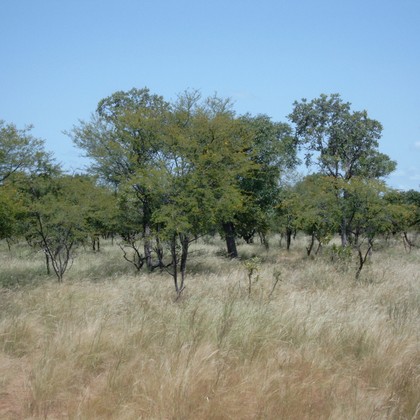
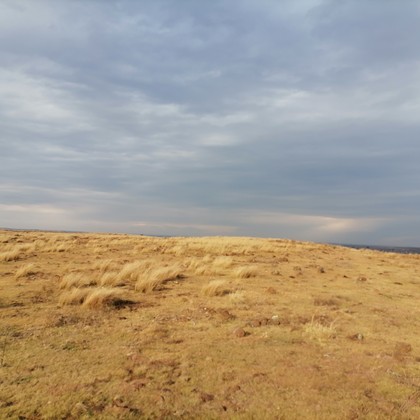
Savanna and woodland of all kinds, open grassland with trees, farmland and the edges of towns, often near water. It hunts mainly in the late afternoon and at dusk in fast, high flight for flying termites, dragonflies and beetles, which it eats from its feet on the wing, and for swallows and swifts. It sometimes roosts with Amur Falcons.
Where the bird is most at home, classified by the vegetation units of southern Africa.

Range and movements
Commonest in the north and east: Zambia, Malawi, Zimbabwe, Mozambique, northern Botswana and Namibia, Angola and north-eastern South Africa (Limpopo, Mpumalanga, Gauteng, KwaZulu-Natal); scarcer further south and west. Breeds in Europe and Asia, from Portugal to Japan.
- Summer visitor (c. Oct–Mar)
- Passage (Mar–Apr, Oct–Nov)
- dark = core range, pale = thinly spread
How and when to look
After a thunderstorm, watch for falcons over emerging termites; among Amur Falcons the Eurasian Hobby stands out by its swift-like silhouette, white throat and rufous trousers. Mainly from December to March.
Conservation status
Not threatened, with a large breeding population that is increasing in parts of Europe. In the wintering range insecticides and the loss of savanna are potential threats.
Scientific name
Falco subbuteo | Linnaeus, 1758
Linnaeus described the species in 1758 and placed it straight away in the genus where it still stands. He introduced the genus Falco in that same work. Falco is the Latin word for 'falcon', possibly related to falx, 'sickle', for the curved shape of the claws or wings. subbuteo is Latin sub 'below, less than' and buteo 'buzzard'. The specimen the first description was based on came from Sweden.