All species › Passerines › Swallows and martins › Barn Swallow
Barn Swallow | Hirundo rustica
Boerenzwaluw | Golondrina Común
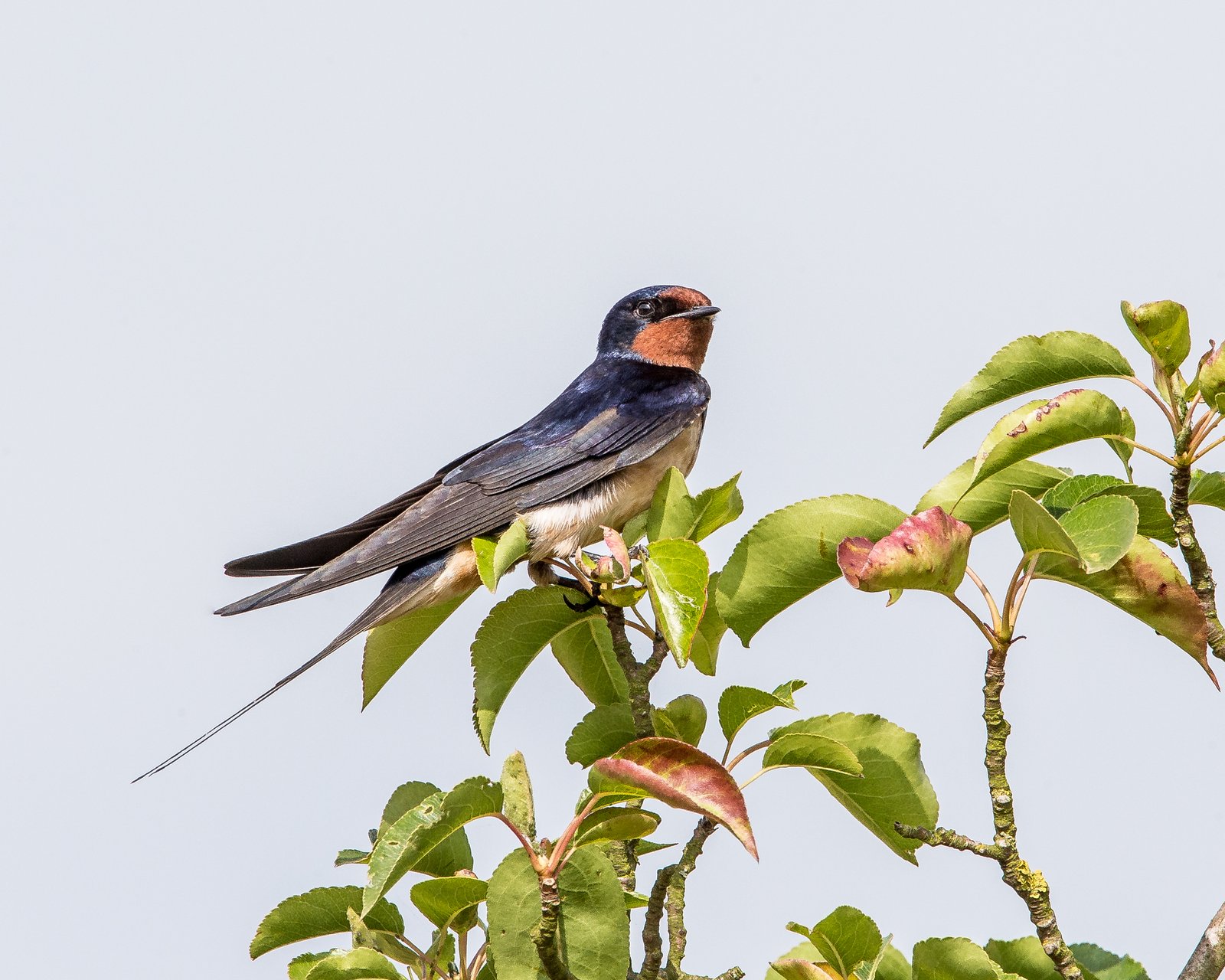
The Barn Swallow is the most numerous Palearctic migrant in southern Africa: millions of birds from Europe and western Asia spend October to April in the region. Many are in moult during this period, so long tail streamers are not always visible and the species appears in all sorts of intermediate plumages.
Voice
Most often heard is the call, a clear vit or vit-vit, and at roosts the continuous twittering of thousands of birds. The song, a fast twittering chatter ending in a dry rattle, is heard in Africa mainly in February and March, before the northward migration. Alarm call a sharp siflitt.
Recording: João Ferreira Tomás — CC BY-NC-SA 4.0 · shortened to the first 60 s, mono · xeno-canto
Identification
15–18 cm, of which the long outer tail feathers of adult males may project up to 7 cm beyond the rest of the tail; in females and young birds they are shorter. The upperparts are glossy dark blue, the forehead and throat rufous, separated from the underparts by a blue-black breast band. The underparts vary from white to warm cream. The tail shows a row of white spots. Juveniles, which make up most of the birds in the southern summer, are duller: forehead and throat pale buff to dull orange, the band brownish and the tail shallowly forked without long streamers. Because of moult from January to March many adults look ragged. The flight is fast and agile, low over grassland and water.
Confusion species
The White-Throated Swallow Hirundo albigularis has a pure white throat and a broader, complete black breast band. The Angola Swallow Hirundo angolensis has a rufous throat that extends further onto the breast, a narrow broken band and grey-brown underparts. The Wire-Tailed Swallow Hirundo smithii has a rufous crown, wholly white underparts without a band and wire-like tail streamers. The Pearl-Breasted Swallow Hirundo dimidiata lacks rufous on the head and throat. At a distance, short-tailed young Barn Swallows can suggest the Western House Martin Delichon urbicum, which however has a white rump.
Habitat
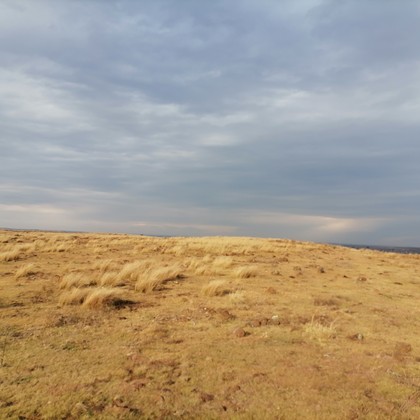
Almost any open landscape: grassland, farmland, pastures, savanna, vleis and the margins of dams and lakes, and also over villages and towns. It hunts flying insects low down, often behind livestock or over water. It roosts in flocks of thousands to millions of birds in reedbeds, and sometimes in sugar cane or trees. A small number breed in South Africa in an open mud nest under shelters.
Where the bird is most at home, classified by the vegetation units of southern Africa.


Range and movements
In the southern summer throughout the region, from Angola, Zambia and Malawi to the Cape, most numerous in the moister eastern half and scarcer in the Namib and the driest parts of the Kalahari and Karoo. Small numbers remain through the southern winter; since the 1980s a few pairs have bred in the Eastern and Western Cape. Otherwise it breeds across almost the whole northern hemisphere; European populations winter in Africa south of the Sahara.
- Resident
- Summer visitor (c. Oct–Mar)
- Winter visitor (c. Apr–Sep)
- Passage (Mar–Apr, Oct–Nov)
- dark = core range, pale = thinly spread
How and when to look
From October to April almost anywhere; the largest concentrations form in the evening at reedbeds, such as the roost at Mount Moreland north of Durban, where up to several million birds come in during February and March. In March and April large flocks move north and rest on wires. Take time over young birds and moulting adults without streamers: the dark breast band and the rufous throat and forehead remain the best features.
Conservation status
Not threatened, with a very large global population. In Europe numbers have fallen through the loss of open stables and the decline of insects on farmland. In southern Africa the communal roosts in reedbeds are vulnerable to drainage, development and disturbance.
Scientific name
Hirundo rustica | Linnaeus, 1758
Linnaeus described the species in 1758 and placed it straight away in the genus where it still stands. He introduced the genus Hirundo in that same work. Hirundo is the ordinary Latin word for 'swallow'. rustica is Latin for 'of the countryside', after the farms and barns in which the bird nests. The specimen the first description was based on came from Sweden.