All species › Owls › Barn owls › African Grass Owl
African Grass Owl | Tyto capensis
Kaapse grasuil | Lechuza del Cabo
The African Grass Owl is the dark relative of the barn owl, living on the ground in tall, dense grass and damp vleis. It roosts and breeds in tunnels and chambers that it wears into grass tussocks and is usually seen only when it flushes almost underfoot.

Voice
A hoarse, hissing screech, shrreeee, softer and shorter than that of the barn owl, and a dry clicking and chirping around the nest. Young birds beg with a hissing snore.
No recording with a suitable Creative Commons licence is available for this species yet.
Identification
34–37 cm, wingspan about 1 metre. The upperparts are plain dark chocolate brown with fine white speckles, sharply set off against the pale white to light buff underparts with small dark spots. The heart-shaped facial disc is white to cream, with a dark rim and small black eyes. The legs are long, the toes grey, and often dangle slightly in flight. The tail is short and pale, with a few dark bars. In flight the dark upperwing with a pale buff base to the primaries and the pale underwing stand out. The female is slightly larger and darker.
Confusion species
The Western Barn Owl Tyto alba is much paler above, golden-buff with grey, and has shorter legs; it hunts over open ground but does not roost on the ground in tall grass. The Marsh Owl Asio capensis, which lives in the same grassland, is uniformly brown, with a round face, dark eyes in dark surrounds, small ear tufts and buff patches in the primaries; its underparts are not white.
Habitat
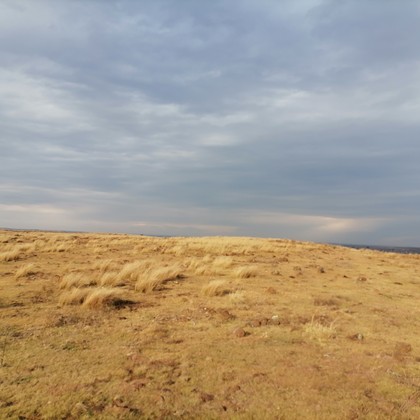
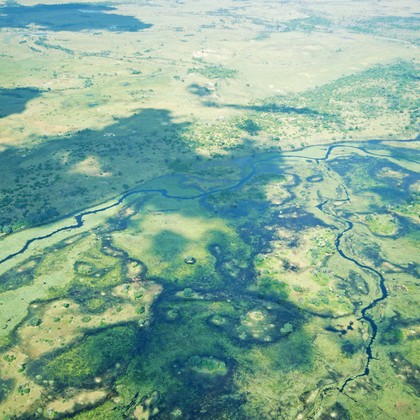
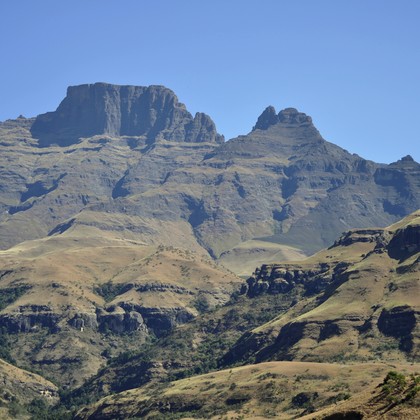
Tall, dense grassland, often damp: vleis, marsh edges, wet hollows and sedge beds, on the highveld and in the mountains to above 2000 m. It roosts and breeds on the ground in tunnels beneath the grass. It hunts in low, quartering flight, mainly for rodents such as vlei rats and multimammate mice. It disappears where grassland is ploughed, overgrazed or burnt too often.
Where the bird is most at home, classified by the vegetation units of southern Africa.
Range and movements
Mainly in eastern South Africa (Mpumalanga, Gauteng, Free State, KwaZulu-Natal and Eastern Cape), Lesotho and Eswatini; also local and scarce in eastern Zimbabwe, Zambia, Malawi, Mozambique and the Angolan highlands. Rare or absent in the dry west. Beyond the region it is scattered and local in East Africa north to Ethiopia and in Cameroon.
- Resident
- Summer visitor (c. Oct–Mar)
- Winter visitor (c. Apr–Sep)
- Passage (Mar–Apr, Oct–Nov)
- dark = core range, pale = thinly spread
How and when to look
Best at dusk over damp grassland on the highveld or in the Drakensberg foothills, when the bird quarters low over the grass; look for the dark upperparts against the pale underparts. Do not disturb breeding sites by walking into the grass; an evening drive along a vlei gives the best chance of a sighting.
Conservation status
Globally not threatened, but listed as Vulnerable on South Africa's national Red List. The main threats are the loss of damp grassland to agriculture, mining, development and dams, too-frequent burning, overgrazing, road collisions and rodenticides.
Scientific name
Tyto capensis | (Smith, 1834)
Smith described the species in 1834 as Strix Capensis; because it was later moved to another genus, the author and year stand in brackets. The genus Tyto was introduced in 1828 by Billberg. Tyto comes from Ancient Greek tutō 'owl'. capensis means 'of the Cape', after the Cape of Good Hope, where the first specimen came from. The specimen the first description was based on came from Cape Town, South Africa.