All species › Passerines › Cisticolas › Zitting Cisticola
Zitting Cisticola | Cisticola juncidis
Graszanger | Buitrón
The Zitting Cisticola is a small, short-tailed, heavily streaked songbird of grassland and fields, best known for its endlessly repeated zip in an undulating song flight high above the field. In the region it is common in the Maghreb, the Nile Valley and the Levant, and local in Iraq and south-western Arabia.
Voice
The song is a monotonous, sharp zip … zip … zip, one note at each undulation of the song flight, repeated for hours high above grassland. The call is a dry chip or a hard series when alarmed.
Recording: Manuel Grosselet — CC BY-NC-SA 4.0 · converted to mono · xeno-canto
Identification
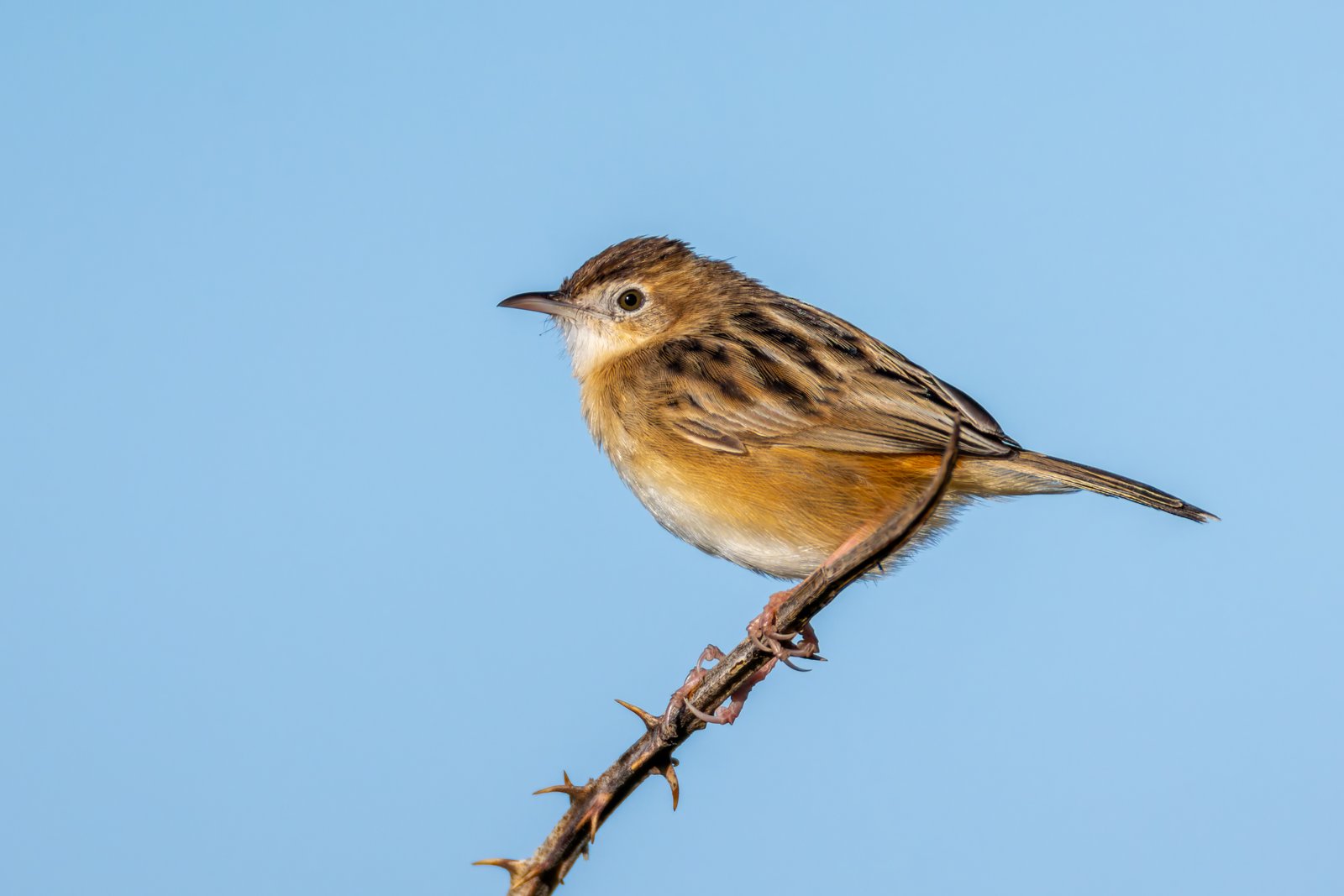
10–11 cm. Small and compact with a short, rounded tail. Upperparts warm yellowish-brown with heavy blackish-brown streaks on the crown and mantle; the rump is unstreaked rusty brown. Underparts white with warm rusty-buff flanks. Pale, fairly broad supercilium, plain pale nape. The tail, often fanned, is dark from below with black subterminal spots and white tips. Bill fine, legs pink. Sexes nearly alike; in the breeding season the male has a less streaked crown.
Confusion species
Graceful Prinia (Prinia gracilis) and Delicate Prinia (Prinia lepida) are much paler and more finely streaked with a much longer, graduated tail. Sedge Warbler (Acrocephalus schoenobaenus) is larger, with a striking pale supercilium below a dark crown and a longer tail. Common Grasshopper-Warbler (Locustella naevia) is more olive-brown, has a long, rounded tail and is skulking.
Habitat
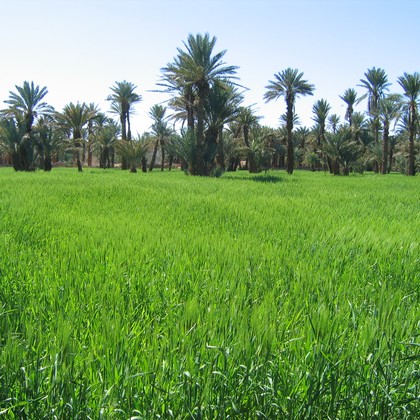
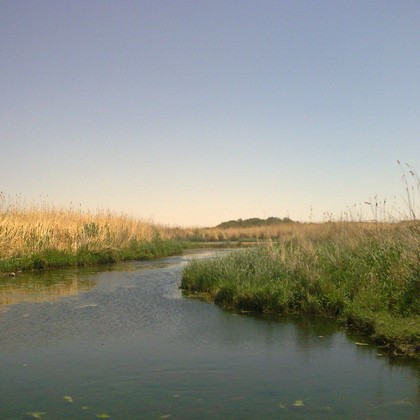
Open, grassy terrain with tall grass and herbs: cereal fields, fallow land, irrigated fields, damp meadows, reed edges and rank vegetation along canals, coastal marshes and the edges of salt flats. Eats small insects. The nest is a bottle-shaped structure of cobwebs and grass, deep in a grass tussock.
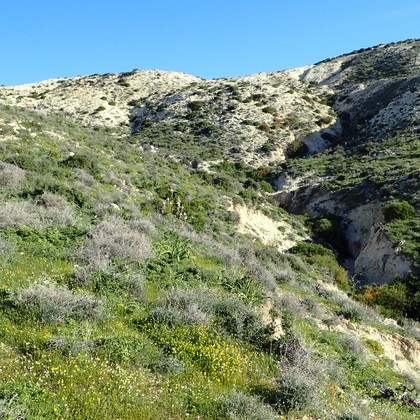
Where the bird is most at home, classified by the habitats of North Africa and the Middle East.
Range and movements
Common in Morocco north of the Atlas and in the Atlantic lowlands south to the Souss and Massa, and in northern Algeria and Tunisia; in Libya locally along the coast. In Egypt in the Nile Valley and Delta and the Faiyum. Common in Israel, scarcer in Jordan (Jordan Valley), Lebanon and Syria. In Iraq in Mesopotamia. In Arabia only in the south-west: in the Tihama of Saudi Arabia and Yemen. A rare vagrant to Kuwait and the other Gulf states. Beyond the region through southern Europe, sub-Saharan Africa and southern and eastern Asia to northern Australia.
- Resident
- Summer visitor (c. Apr–Sep)
- Winter visitor (c. Oct–Mar)
- Passage (Mar–Apr, Oct–Nov)
- dark = core range, pale = thinly spread
How and when to look
In spring above any cereal field on the Moroccan Atlantic plain, in the Nile Delta or the Hula Valley: listen for the ticking zip from the sky and look for the speck circling in undulations.
Conservation status
Not globally threatened. Benefits from arable farming and irrigation, but is sensitive to hard winters and to early mowing or ploughing of grassland.
Scientific name
Cisticola juncidis | (Rafinesque, 1810)
Rafinesque described the species in 1810 as Sylvia Juncidis; because it was later moved to another genus, the author and year stand in brackets. The genus Cisticola was introduced in 1829 by Kaup. Cisticola combines the Ancient Greek kisthos 'rock-rose' with the Latin colere 'to dwell'. juncidis is a Latin diminutive of iuncus 'reed'. The specimen the first description was based on came from Roccella, Sicily.