All species › Passerines › Cisticolas › Socotra Cisticola
Socotra Cisticola | Cisticola haesitatus
Socotragraszanger | Cistícola de Socotora
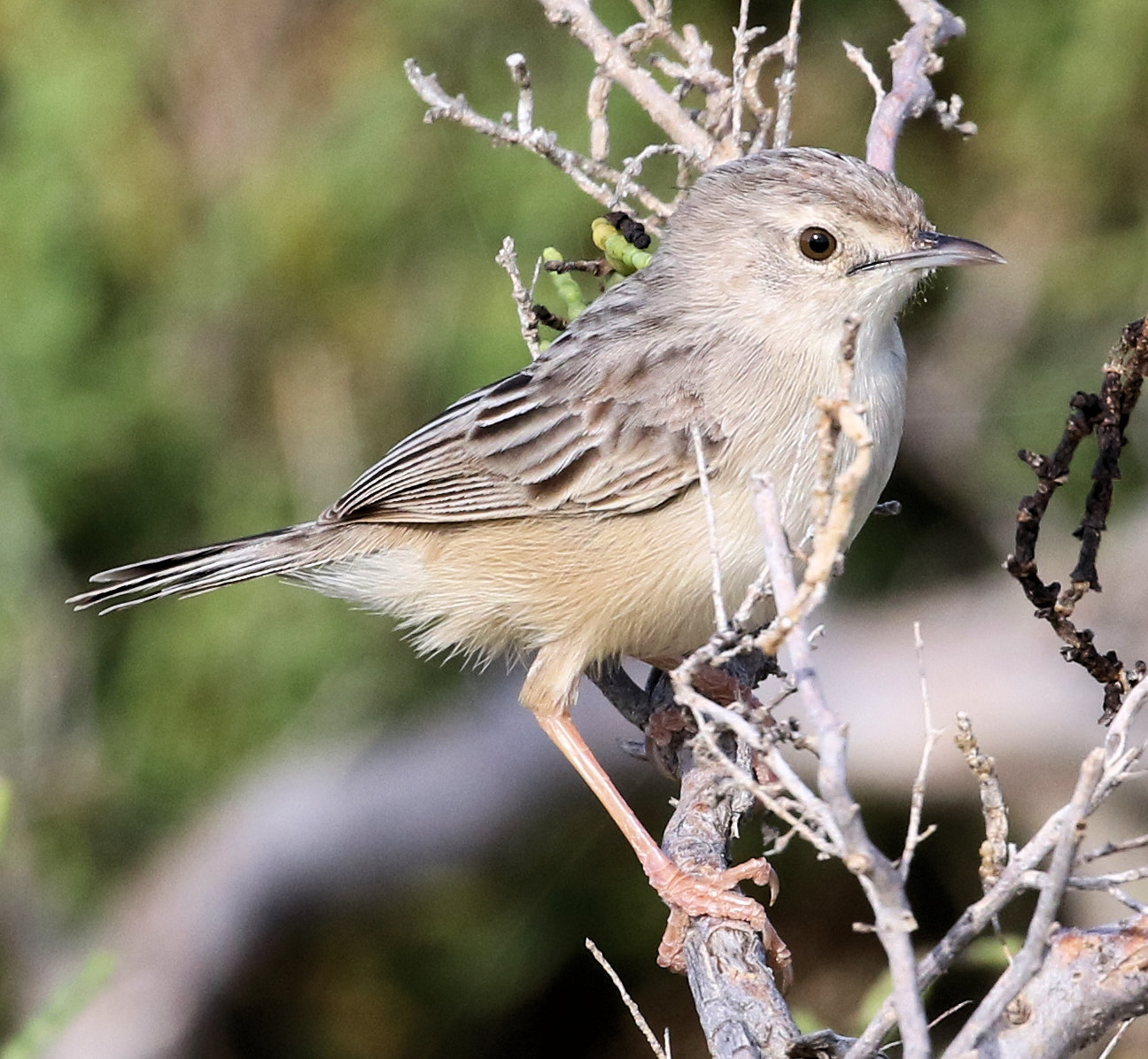
The Socotra Cisticola is the island cousin of the Zitting Cisticola and occurs only on Socotra, where it mainly inhabits low halophytic scrub along the coast. Long treated as a subspecies of Zitting Cisticola, it is now recognised as a separate species; the world population numbers only a few thousand birds.
Voice
A repeated, dry tsik or chip, partly in a short song flight low over the scrub, and a dry rattling chatter when alarmed; less conspicuous than the song of Zitting Cisticola.
Recording: Phil Gregory — CC BY-NC-SA 3.0 · converted to mono · xeno-canto
Identification
10–11 cm. Very like Zitting Cisticola: small, compact, with a short, rounded tail with dark spots and pale tips. Upperparts greyish sandy-brown with dark streaks on the crown and mantle, slightly less warm and contrasting than in Zitting Cisticola; rump rusty brown. Underparts white with buff flanks. Bill relatively long and fine. Sexes nearly alike.
Confusion species
Socotra Warbler (Incana incana) is larger, plain grey without streaks and has a much longer tail. Zitting Cisticola (Cisticola juncidis) does not occur on Socotra. Migrant Sedge Warblers (Acrocephalus schoenobaenus) are larger, with a prominent pale supercilium and a longer tail.
Habitat
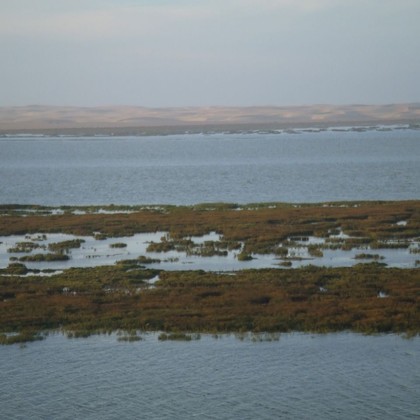
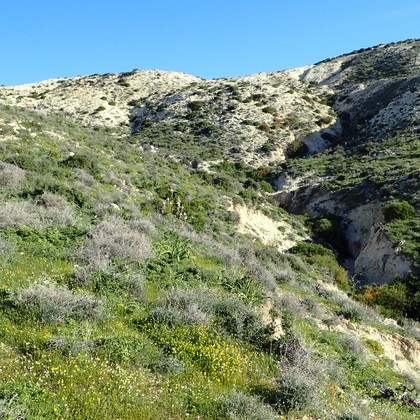
Low, dense dwarf scrub on silt or sand, with the highest densities in halophytic coastal vegetation with Suaeda and scattered tamarisk; also grassy inland plains and the Ma'la plateau at about 650 m, with a single record up to 850 m. Eats small insects.
Where the bird is most at home, classified by the habitats of North Africa and the Middle East.
Range and movements
Endemic to the island of Socotra (Yemen), where it is widespread but patchy in the lowlands along the coast and inland. Found nowhere else in the world.
- Winter visitor (c. Oct–Mar)
- Passage (Mar–Apr, Oct–Nov)
- dark = core range, pale = thinly spread
How and when to look
Search the low saltbush along the coast near Hadibu, Qalansiyah or Detwah lagoon: listen for the dry ticking and wait for a bird to perch briefly on top of a shrub.
Conservation status
Not globally threatened, with an estimated population of about 9,000 birds in less than 100 km² of suitable habitat. Road building and development in the coastal zone and on the plains could degrade its habitat.
Scientific name
Cisticola haesitatus | (Sclater & Hartlaub, 1881)
Sclater & Hartlaub described the species in 1881 as Drymoeca haesitata; because it was later moved to another genus, the author and year stand in brackets. The genus Cisticola was introduced in 1829 by Kaup. Cisticola combines the Ancient Greek kisthos 'rock-rose' with the Latin colere 'to dwell'. haesitatus is Latin for 'hesitant', from haesitare 'to hesitate, to falter'. The specimen the first description was based on came from Socotra, Yemen.