All species › Passerines › Wagtails and pipits › White Wagtail
White Wagtail | Motacilla alba
Witte kwikstaart | Lavandera blanca
The White Wagtail is in winter the most widespread wagtail of the region: it walks over lawns in Riyadh, quays along the Nile, fields in the Maghreb and car parks in Dubai. In Morocco the striking Moroccan form subpersonata, with a black mask, is also resident.
Voice
The call is a clear, disyllabic tsli-weet or tchissick, often given in the undulating flight. The song is a lively twittering of such calls with short trills, mainly in spring from roofs.
Recording: Clément Bruneau — CC BY-NC-SA 4.0 · converted to mono · xeno-canto
Identification
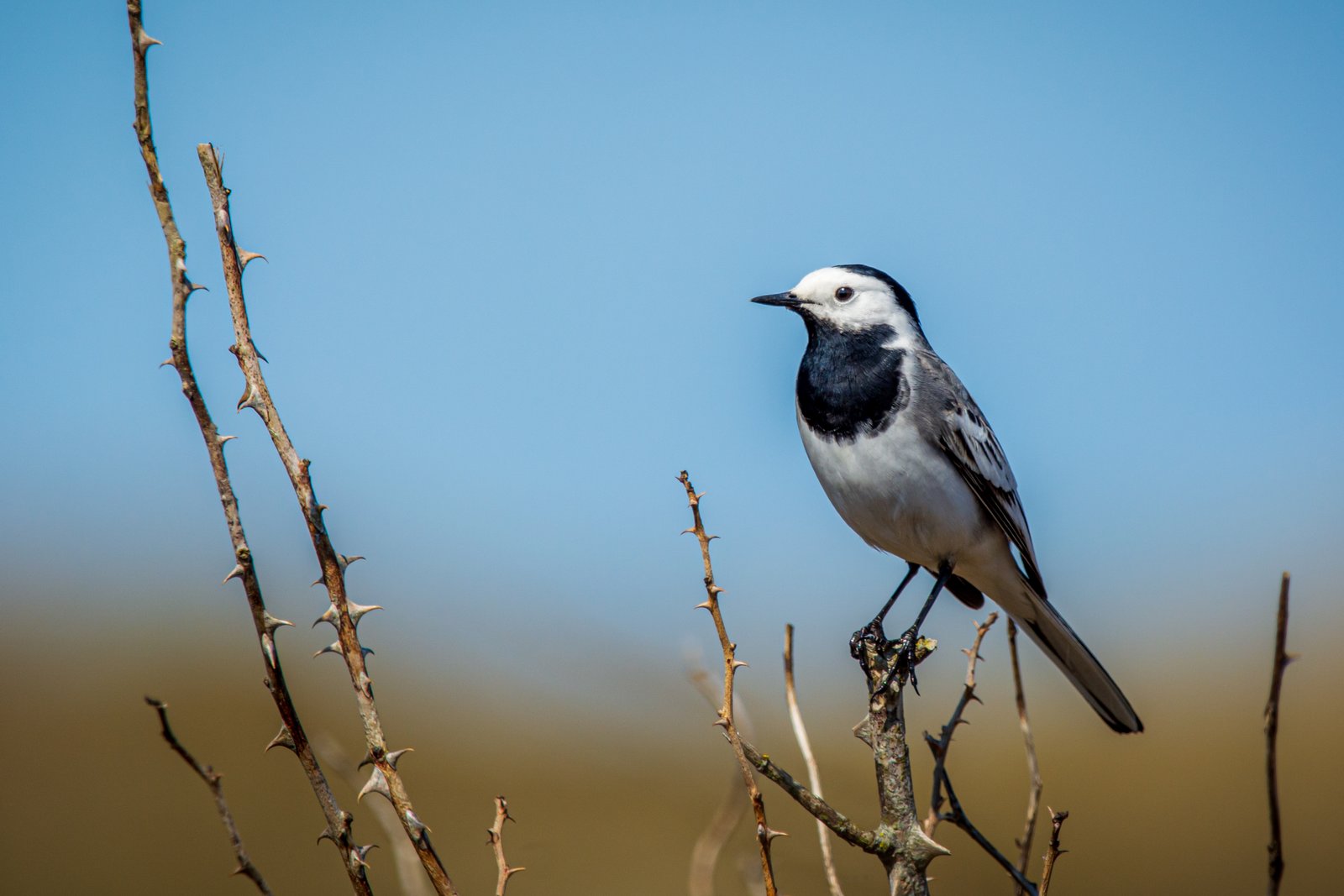
16.5–19 cm, a slim, long-tailed wagtail in grey, black and white, with black legs. The nominate form alba in breeding plumage has a white face, black crown and hindneck, black throat and breast, grey back, a black wing with two white bars and a black tail with white outer feathers. In winter the throat and chin are white and only a black breast band remains. The Moroccan form subpersonata has a black mask through the eye joining the black throat, leaving only a white supercilium and a white neck-side patch. The form personata (Masked Wagtail), from Central Asia, has a wholly black head with only a white forehead and face around the eye. Juveniles are greyer and more mottled, with a faint grey breast patch and a yellowish tinge on the face.
Confusion species
African Pied Wagtail (Motacilla aguimp), only in southern Egypt, is larger and black above with a large white wing patch. Young White Wagtails in autumn may suggest a young Citrine Wagtail (Motacilla citreola), but that is smaller, shorter-tailed, lacks the dark breast band and has a pale surround to the ear coverts. Pied Wagtail (Motacilla alba yarrellii), a British form with a black back, is at most a scarce winter visitor to Morocco in the region.
Habitat
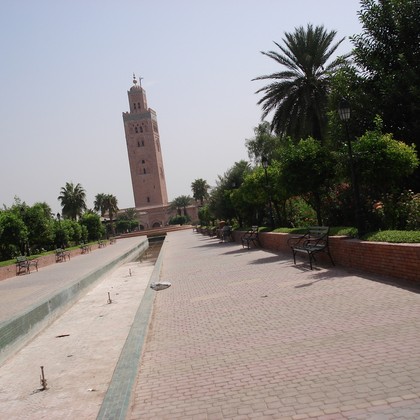
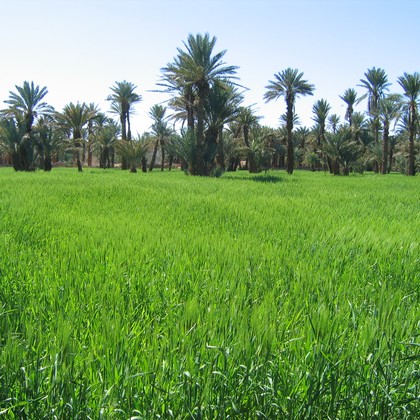
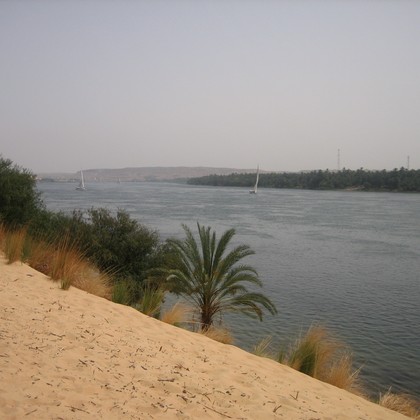
Almost any open ground with short grass or bare soil near water: river and canal banks, fields and irrigated land, lawns, golf courses, parks, car parks, harbour areas and beaches. In winter it forms large roosts in reedbeds, trees and even in lit trees in towns. It nests in cavities in buildings, bridges, rocks and banks.
Where the bird is most at home, classified by the habitats of North Africa and the Middle East.
Range and movements
The nominate form breeds in the Maghreb (mainly northern Morocco, Algeria and Tunisia), in Lebanon, Syria, northern Israel and northern Iraq, and locally in Egypt. The form subpersonata is resident in Morocco, especially in the Atlantic lowlands, the Atlas and the oases along the desert edge. In winter and on passage it is abundant throughout the region, from the Saharan oases and the Nile valley to all of Arabia, Iraq and the Gulf states; in eastern Arabia and Iraq dukhunensis and scarce personata also winter. Beyond the region the species breeds throughout Europe and Asia to Alaska, and winters south to tropical Africa, India and South-East Asia.
- Resident
- Summer visitor (c. Apr–Sep)
- Winter visitor (c. Oct–Mar)
- Passage (Mar–Apr, Oct–Nov)
- dark = core range, pale = thinly spread
How and when to look
In winter practically everywhere: check any lawn, car park or quay. The Moroccan form is easiest to find around Marrakech, in the Ourika valley and at the oases of the Draa and the Ziz valley; it often walks tamely over terraces and roofs. In the Gulf states it pays to search the winter flocks for a black-headed personata.
Conservation status
Not globally threatened and very common in the region. It benefits from buildings, irrigated farming and lawns, so that numbers of winter visitors in the Gulf states and Arabia have increased with the creation of parks and golf courses.
Scientific name
Motacilla alba | Linnaeus, 1758
Linnaeus described the species in 1758 and placed it straight away in the genus where it still stands. He introduced the genus Motacilla in that same work. Motacilla was the Roman name for the wagtail; it is really a diminutive of motare 'to move about', but from medieval times -cilla was wrongly taken to mean 'tail'. alba is Latin for 'white', after the black-and-white plumage. The specimen the first description was based on came from Sweden.