All species › Passerines › Sylvia warblers › Spectacled Warbler
Spectacled Warbler | Curruca conspicillata
Brilgrasmus | Curruca tomillera
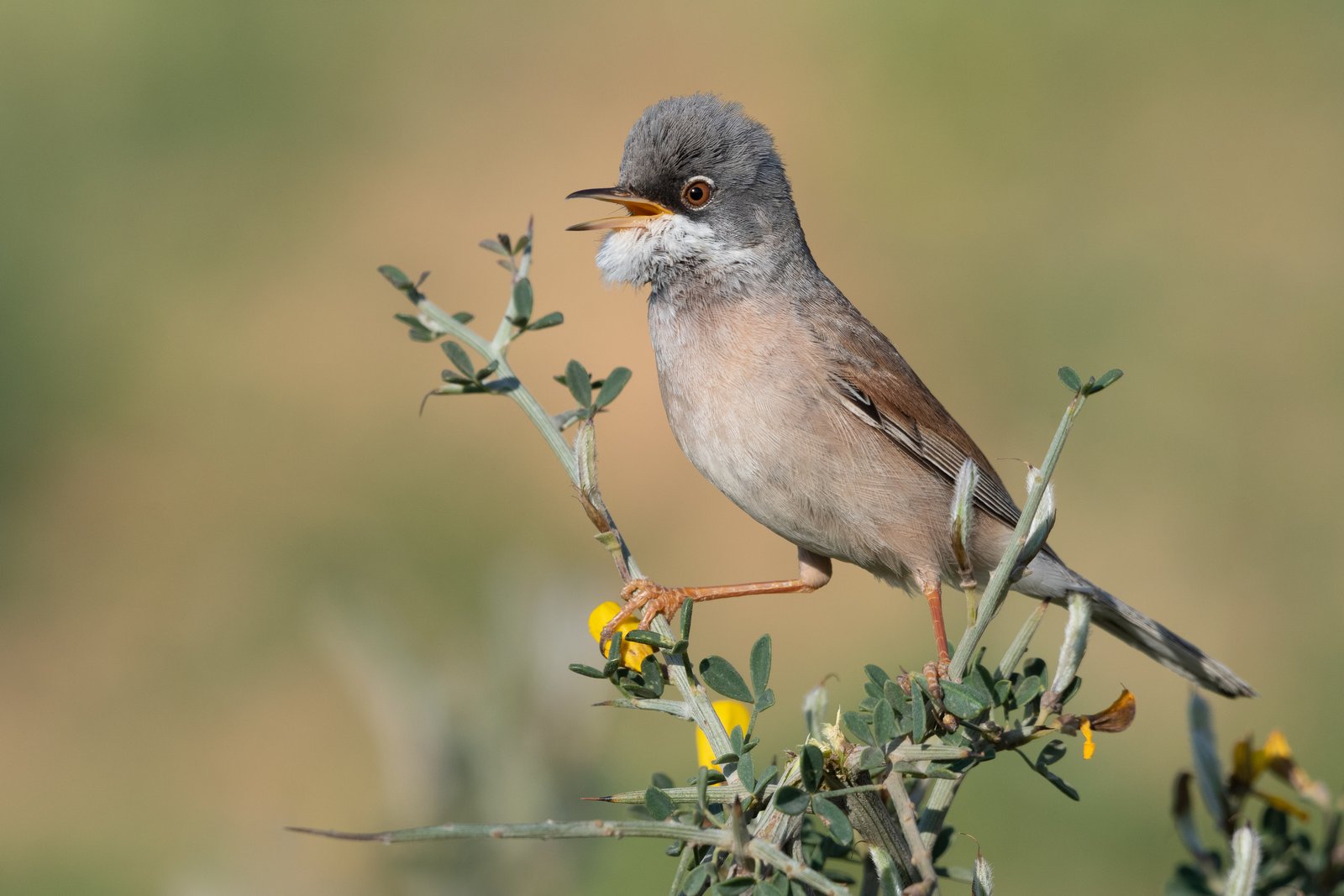
The Spectacled Warbler is a miniature warbler of low, open vegetation: saltbush around chotts and sebkhas, garrigue, coastal dunes and the edges of semi-desert. In the region it breeds from Morocco's Atlantic coast to the Levant, and it is often the only warbler in the bare, flat scrub where other species are absent.
Voice
The song is a fast, high, melodious ditty of two to four seconds, sweeter than Greater Whitethroat's scratchy chatter, often opening with a few clear whistles and ending in an accelerating trill, from a low bush or in a fluttering song flight. The call is the best feature: a dry, buzzing rattle, drrrrt, at the slightest disturbance, and a short chek.
Recording: Thierry THOMAS — CC BY-NC-SA 4.0 · converted to mono · xeno-canto
Identification
12–13 cm. Small, round and short-winged, with a long tail often cocked. The male has a grey head with blackish-grey lores and ear-coverts enclosing a broad, bright white eye-ring; the throat is pure white. The mantle is warm rufous-brown, the wing shows a bright rufous panel, and the underparts are pinkish buff. Bill fine with a pale base, legs yellowish to orange straw. The female has a browner head without a dark mask, but keeps the white eye-ring and rufous wing panel. Primary projection very short.
Confusion species
Greater Whitethroat (Curruca communis) is larger and longer-winged, lacks a dark mask, has a narrow eye-ring and a less bright wing panel. Western Subalpine Warbler (Curruca iberiae) has a red eye-ring, a white moustache and a plain grey-brown wing. Tristram's Warbler (Curruca deserticola) also has a rufous wing, but orange-brown underparts down to the belly, and lives in montane scrub. Ménétriés's Warbler (Curruca mystacea), a migrant in the Levant, has a dark tail and no rufous in the wing.
Habitat
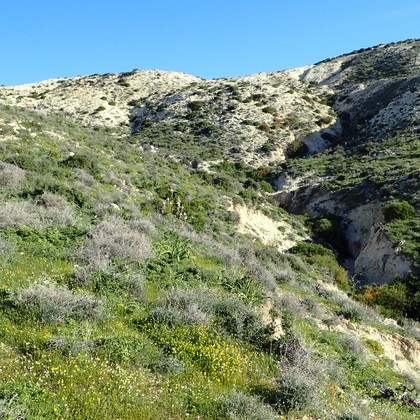
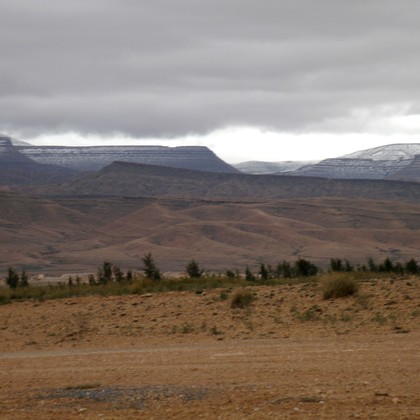
Low, open vegetation up to knee height: glasswort and saltbush around chotts, sebkhas and coastal lagoons, garrigue with thyme and Salsola, alfa steppe with low shrubs, coastal dunes and scrub on the edge of semi-desert; also in the Dead Sea valley. Avoids tall scrub and woodland. In winter also in oases, field edges and tamarisk.
Where the bird is most at home, classified by the habitats of North Africa and the Middle East.

Range and movements
Breeds throughout the Maghreb: in Morocco from the Atlantic coast and plains to the eastern high plateaux and the northern edge of the Sahara, in northern Algeria (especially around the chotts of the High Plateaux), in Tunisia south into the south, and in Libya in Tripolitania and Cyrenaica. In Egypt it breeds along the Mediterranean coast west of Alexandria and in northern Sinai. In the Levant in Israel (especially the Negev, the Dead Sea valley and the coast), Jordan, Lebanon and western Syria. In winter northern birds move to the Saharan fringe, the oases and the Nile valley; a scarce winter visitor to northern Saudi Arabia. Beyond the region around the Mediterranean, on Cyprus and in southern Turkey, and on the Canary and Cape Verde Islands and Madeira.
- Resident
- Summer visitor (c. Apr–Sep)
- Winter visitor (c. Oct–Mar)
- Passage (Mar–Apr, Oct–Nov)
- dark = core range, pale = thinly spread
How and when to look
Search the saltbush around the chotts of Tunisia (Chott el Djerid) or the lagoons at Oued Massa and Khnifiss in Morocco; in Israel at the Eilat saltpans and along the Dead Sea. The buzzing rattle from a low bush is usually the first sign.
Conservation status
Not globally threatened. Widespread and locally numerous in North Africa; sensitive to clearance and overgrazing of steppe and saltbush and to coastal development.
Scientific name
Curruca conspicillata | (Temminck, 1820) (GBIF: Sylvia conspicillata)
Temminck described the species in 1820 as Sylvia conspicillata; because it was later moved to another genus, the author and year stand in brackets. The genus Curruca was introduced in 1802 by Bechstein. Curruca is Latin, the name of an unidentified small bird mentioned by the Roman poet Juvenal. conspicillata comes from Latin conspicillum, 'a place to look from', and amounts to 'spectacled'. The specimen the first description was based on came from Sardinia.