All species › Passerines › Starlings › Socotra Starling
Socotra Starling | Onychognathus frater
Socotraspreeuw | Estornino de Socotora
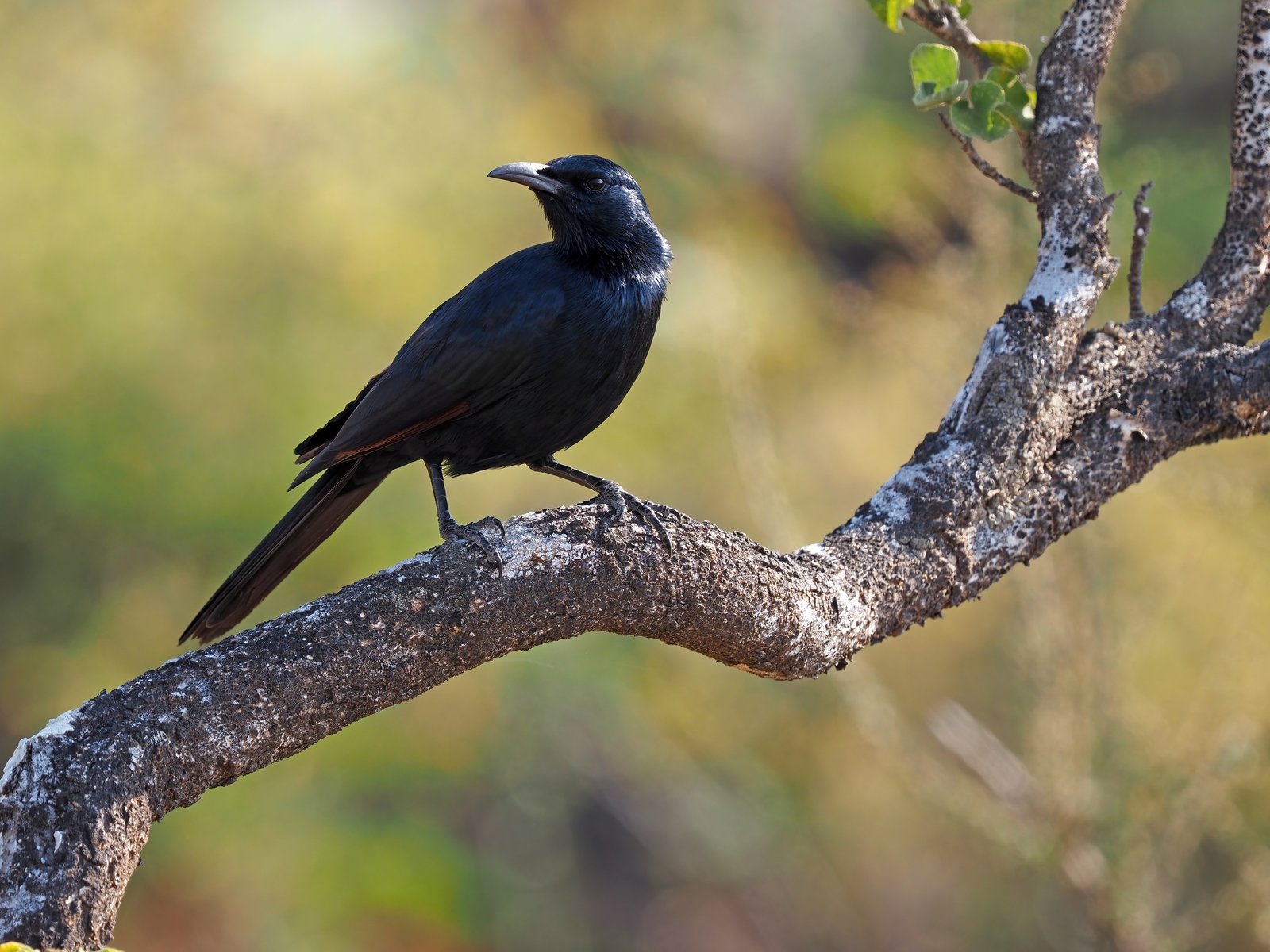
Socotra Starling is one of the endemic birds of Socotra: a robust, glossy black starling with rufous wings that is common on the island from the coast to the summits of the Hagghier Mountains. It shares the island with the slimmer Somali Starling.
Voice
Loud, clear whistles and some harsh, rattling calls; less melodious and less varied than Tristram's Starling. Groups make a chattering twitter.
Recording: Mischa Keijmel — CC BY-NC-SA 4.0 · converted to mono · xeno-canto
Identification
26–28 cm. A bulky, fairly short-tailed red-winged starling with a heavy black bill and black legs. The male is glossy blue-black. The female has a grey, finely dark-streaked head and neck. Both sexes have rufous primaries with broad black tips, showing a large rusty patch in flight. The tail is fairly short and square-ended or slightly rounded. Juveniles are a duller black.
Confusion species
Somali Starling (Onychognathus blythii) is slimmer, with a much longer, graduated and pointed tail and a slimmer bill; the female has a plain grey, hardly streaked head. Concentrate on tail length in flight. Tristram's Starling (Onychognathus tristramii) does not occur on Socotra.
Habitat
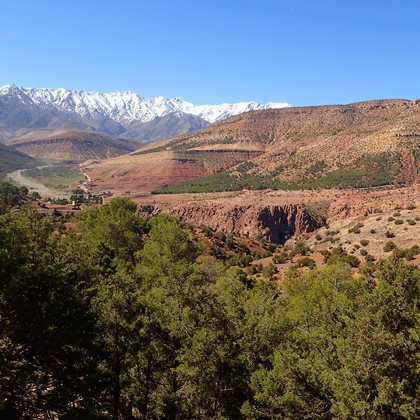
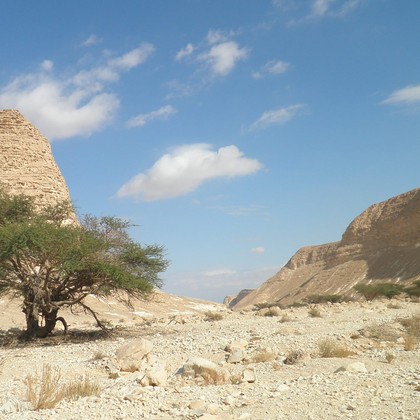
Almost any vegetated terrain on Socotra: rocky mountain slopes, gorges and wadis, scrub with dragon's blood trees and frankincense trees, palm gardens and villages, from sea level to the highest peaks. Often forages in groups for fruit, including figs, and invertebrates; also visits camps and villages.
Where the bird is most at home, classified by the habitats of North Africa and the Middle East.

Range and movements
Endemic to the Socotra archipelago (Yemen): common on the main island of Socotra; not reliably recorded from Samha and Darsa. Found nowhere else in the world.
- Winter visitor (c. Oct–Mar)
- dark = core range, pale = thinly spread
How and when to look
On the Diksam plateau, in the Homhil valley or around Hadibo: small groups sit in dragon's blood and fig trees; compare tail length with any Somali Starlings in the same group.
Conservation status
Not globally threatened despite its small range. Depends on the vegetation of Socotra remaining intact, which is under pressure from grazing, development and drought.
Scientific name
Onychognathus frater | (Sclater & Hartlaub, 1881)
Sclater & Hartlaub described the species in 1881 as Amydrus frater; because it was later moved to another genus, the author and year stand in brackets. The genus Onychognathus was introduced in 1849 by Hartlaub. Onychognathus combines the Greek onyx 'nail, claw' and gnathos 'jaw'. frater is Latin for 'brother', for its close relationship to another starling species. The specimen the first description was based on came from Socotra, Yemen.