All species › Passerines › Thrushes › Redwing
Redwing | Turdus iliacus
Koperwiek | Zorzal alirrojo
The Redwing is the smallest thrush of the region and a northern winter visitor that here reaches the southern edge of its winter range. In the Maghreb, the Levant and northern Iraq small groups appear in olive groves and forest edges in cold winters; in harsh winters on the European continent it can arrive in larger numbers.
Voice
The call is a thin, drawn-out and hoarse seeh or tseeeh, mainly at night from migrating birds; also a short, hard chup and a rattling alarm. In winter flocks sometimes chatter softly from a tree.
Recording: Philippe Grange — CC0 · converted to mono · xeno-canto
Identification
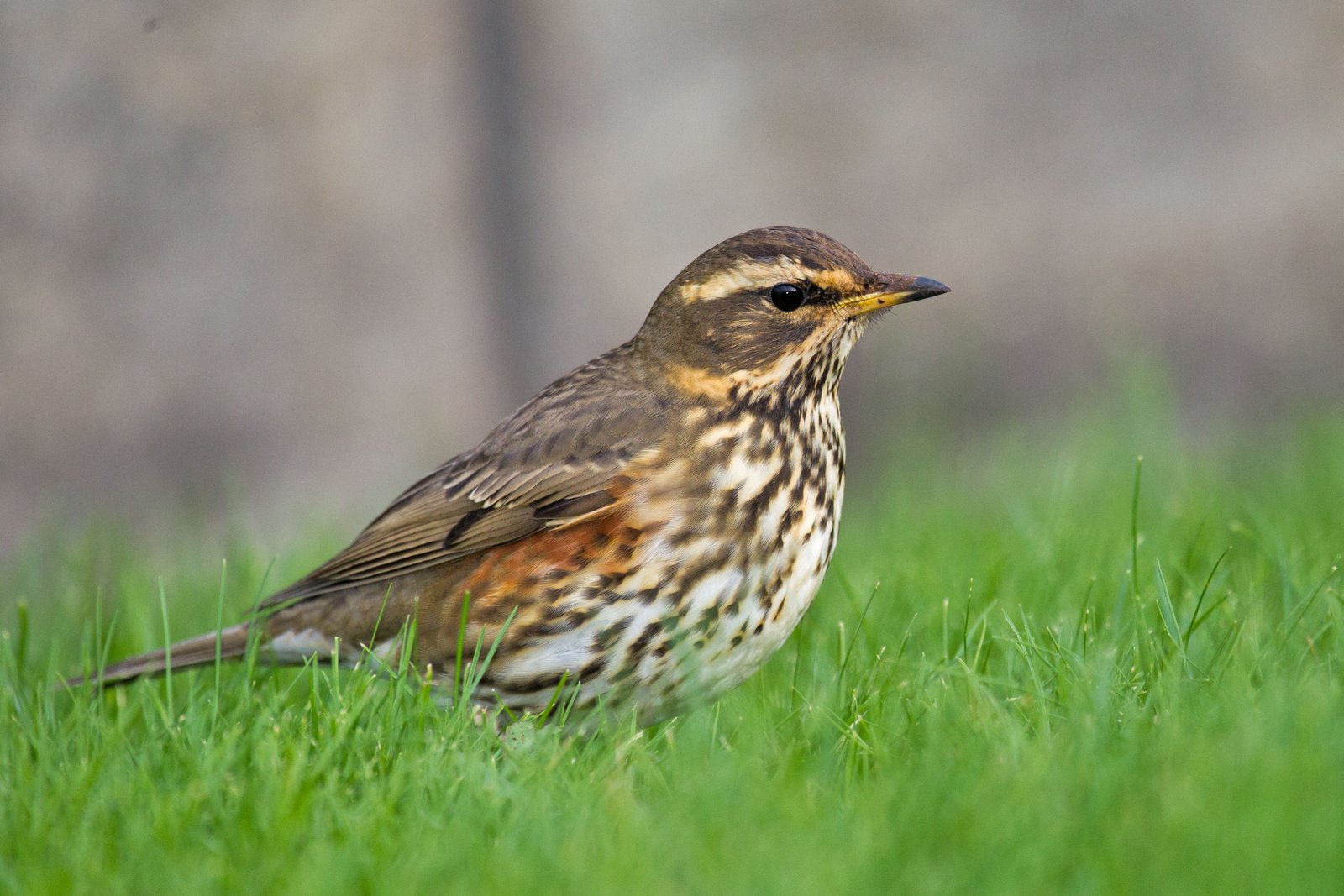
19–23 cm. A small, dark thrush with a striking head: a broad, creamy-white supercilium, a dark brown ear-covert patch and a pale malar stripe. Upperparts dark olive-brown. Underparts white with dark streaks forming a dense pattern on the breast. Characteristic are the rusty-red flanks and rusty-red underwing-coverts, easily seen in flight. The bill is dark with a yellowish base to the lower mandible.
Confusion species
Song Thrush (Turdus philomelos) lacks the white supercilium and rusty flanks and has a plain face with spots rather than streaks; its underwing is orange-buff. Black-throated Thrush (Turdus atrogularis) also has a rusty underwing, but plain grey-brown upperparts, a dull head without a sharp supercilium and, in females, a spotted necklace on white underparts without rusty flanks.
Habitat
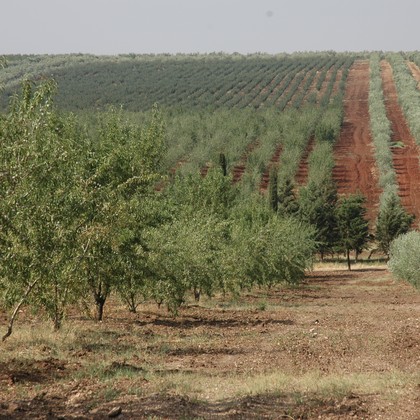
In winter olive groves, orchards, farmland with hedges, forest edges, maquis and parks, often together with Song Thrushes and Fieldfares. Forages on short grass and open fields for worms and insects and eats many berries, including juniper, holly and hawthorn.
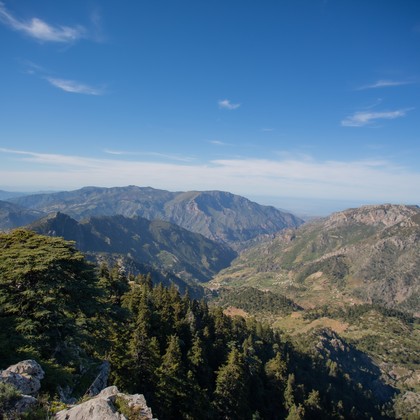
Where the bird is most at home, classified by the habitats of North Africa and the Middle East.
Range and movements
Scarce and irregular winter visitor to northern Morocco (Rif, Middle Atlas), northern Algeria and Tunisia, Lebanon, Syria, northern Israel (Hermon, Golan) and northern Iraq; more numerous in cold winters. In Libya, Egypt, Jordan and the Arabian Peninsula (including Kuwait, Saudi Arabia and the Emirates) a vagrant. Breeds from Iceland and Scandinavia through northern Europe and Russia to eastern Siberia; winters mainly in western and southern Europe, Turkey and the Caucasus.
- Winter visitor (c. Oct–Mar)
- Passage (Mar–Apr, Oct–Nov)
- dark = core range, pale = thinly spread
How and when to look
Especially after a cold spell in Europe or Turkey: search the olive groves and forest edges of the Rif and Middle Atlas or the mountains of Lebanon for flocks of Song Thrushes and look for a smaller bird with a white supercilium and rusty flanks.
Conservation status
Not globally threatened. Numbers in the region are small; like other thrushes it is trapped and shot in the Maghreb and the Levant.
Scientific name
Turdus iliacus | Linnaeus, 1758
Linnaeus described the species in 1758 and placed it straight away in the genus where it still stands. He introduced the genus Turdus in that same work. Turdus is the ordinary Latin word for 'thrush'. iliacus is Latin for 'of the flanks', from ile, ilia 'flank, groin', after the rusty-red flanks and underwings. The specimen the first description was based on came from Sweden.