All species › Passerines › Sparrows › Pale Rockfinch
Pale Rockfinch | Carpospiza brachydactyla
Bleke rotsmus | Gorrión pálido
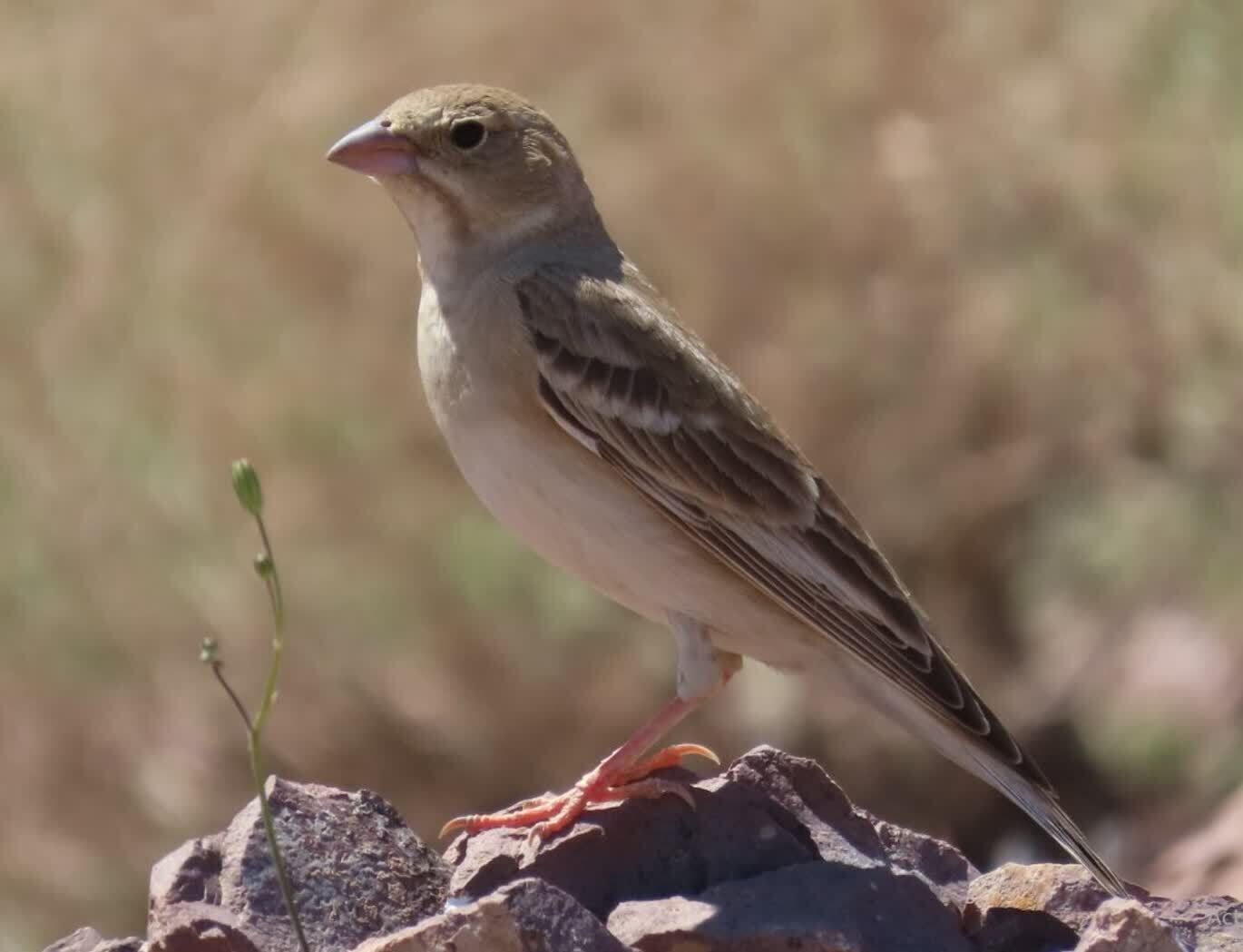
The Pale Rockfinch is a drab, sand-coloured sparrow of dry, stony hills that reveals itself by sound rather than plumage. It is a summer visitor to the north-east of the region and passes in spring, in varying numbers, through the Negev and the Arava.
Voice
Unmistakable: a long, buzzing, dry dzeeeee, like a cricket, often ending in a short click, repeated endlessly from a stone or bush, even in the midday heat. Also a soft chilp.
Recording: Geoff Carey — CC BY-NC-SA 4.0 · converted to mono · xeno-canto
Identification
14.5–15.5 cm. A slim sparrow with a heavy, blunt conical bill and long, pointed wings that make it lark-like in flight. Sandy grey to dull buff, off-white below, with a completely plain head: no crown stripe, no eye-stripe, at most a faint pale supercilium. Pale fringes to the coverts and secondaries form two faint wing bars. The bill is blue-grey to dark in the breeding season, otherwise pinkish. Sexes alike; juveniles even paler.
Confusion species
Female House Sparrow (Passer domesticus) has a clear pale supercilium and a streaked back. Rock Sparrow (Petronia petronia) is streaked, with a pale crown stripe and white tail spots. Yellow-throated Sparrow (Gymnoris xanthocollis) is smaller and finer, with crisp white wing bars. Greater Short-toed Lark (Calandrella brachydactyla) has a thinner bill and dark neck-side patches.
Habitat
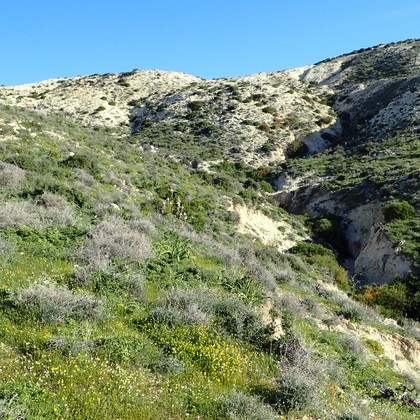
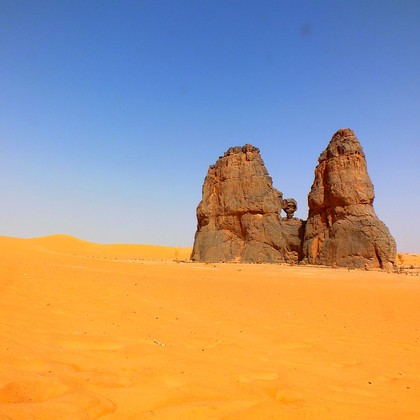
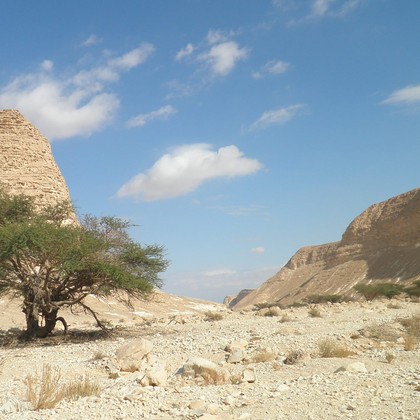
Dry, stony hills and plateaus with scattered shrubs, thistles and low trees such as pistachio and almond, garrigue and bare mountain slopes up to about 2000 m. On passage in stone desert, wadis and fields, often in small groups coming to drink.
Where the bird is most at home, classified by the habitats of North Africa and the Middle East.
Range and movements
Breeds from April to September in Syria, Lebanon (Anti-Lebanon and the edges of the Bekaa Valley), northern Iraq, and irregularly and in small numbers on the Golan, Mount Hermon and in Jordan. In April and May a passage migrant through Israel (especially the Negev and Eilat), Jordan, Sinai and Saudi Arabia; autumn passage is less noticeable. Winters in north-east Africa (Sudan, Eritrea) and possibly in south-west Arabia. Beyond the region it breeds in Turkey, the Caucasus, Iran and Turkmenistan.
- Summer visitor (c. Apr–Sep)
- Passage (Mar–Apr, Oct–Nov)
- dark = core range, pale = thinly spread
How and when to look
Visit the stony slopes around Eilat or the Golan in late April or May and listen for the cricket-like buzz; a small group dropping in at a drinking spot in the midday heat is a good chance for close views.
Conservation status
Not globally threatened. Breeding numbers fluctuate strongly from year to year, possibly depending on spring rainfall.
Scientific name
Carpospiza brachydactyla | (Bonaparte, 1850)
Bonaparte described the species in 1850 as Petronia brachydactyla; because it was later moved to another genus, the author and year stand in brackets. The genus Carpospiza was introduced in 1854 by Müller. Carpospiza is Greek, from karpos 'fruit, seed' and spiza 'finch'. brachydactyla is Greek, from brakhus 'short' and daktulos 'toe'. The specimen the first description was based on came from Al Qunfudhah, Saudi Arabia.