All species › Passerines › Swallows and martins › Pale Martin
Pale Martin | Riparia diluta
Bleke oeverzwaluw | Avión pálido
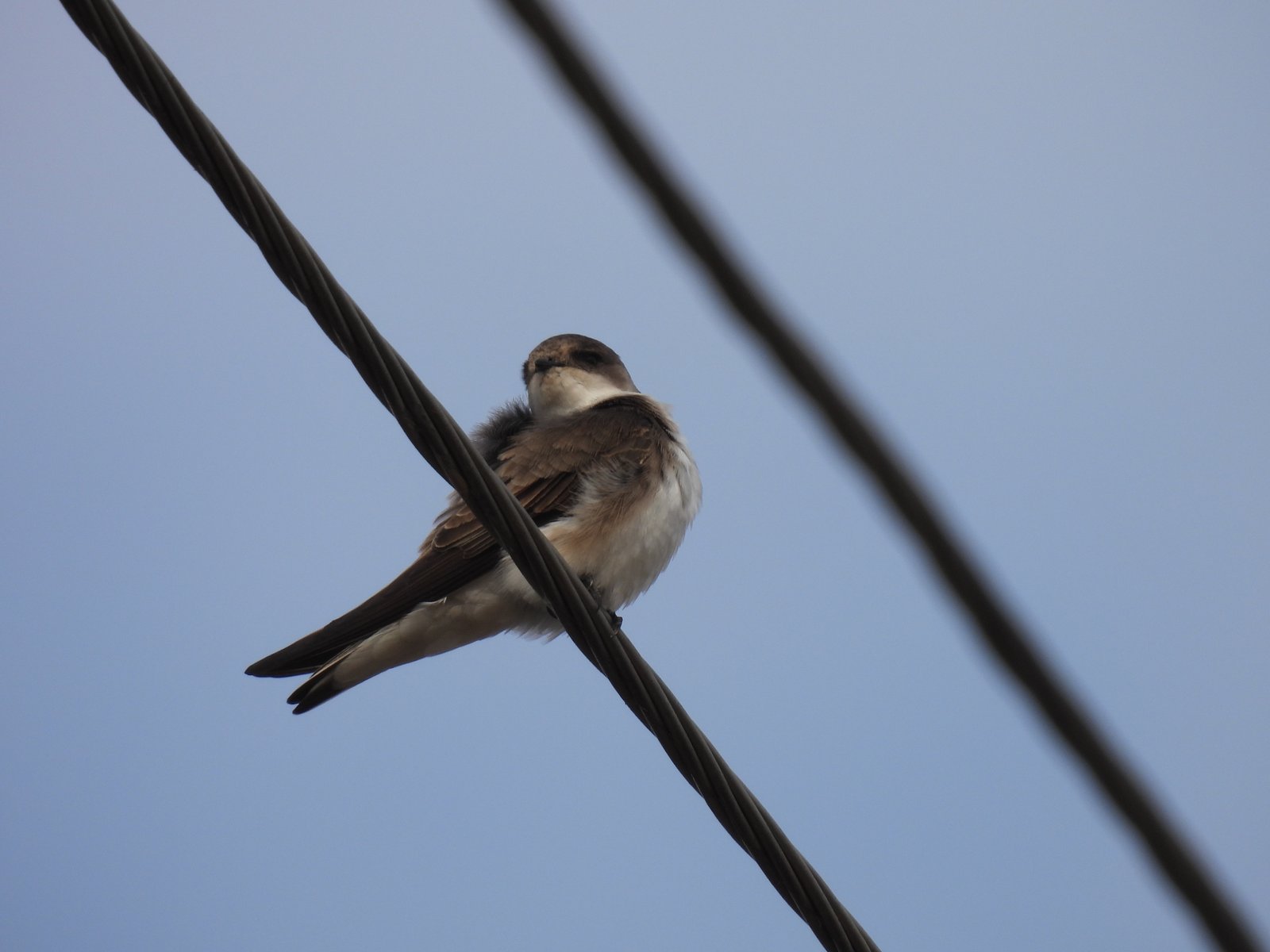
The Pale Martin is the Central Asian counterpart of the Bank Swallow, recognised as a separate species only recently. In this region it is a rare but annually reported winter visitor to the east of the Arabian Peninsula, hiding among flocks of Bank Swallows and Barn Swallows and probably often overlooked.
Voice
Calls more often than Bank Swallow: a soft, dry chrr and a higher, thinner twitter, less rasping than in Bank Swallow.
Recording: Albert Lastukhin — CC BY-NC-SA 4.0 · shortened to the first 60 s, mono · xeno-canto
Identification
11–12 cm. Slightly smaller and paler than Bank Swallow: the upperparts are pale grey-brown, the underparts off-white with a faint grey-brown breast band that is diffuse at the sides and sometimes almost disappears in the centre. The throat is white and merges without a sharp border into the band. Characteristic are the dark lores and eye surround, contrasting with a paler forehead and pale crown. The underwing is paler grey-brown than in Bank Swallow and the tail is shorter, with only a shallow notch. Sexes alike.
Confusion species
Bank Swallow (Riparia riparia) is darker brown, with a sharply defined, complete breast band, a dark underwing and a more obviously forked tail; in flight it looks larger. Juvenile or worn Bank Swallows can have a fainter band, so check several features together. Grey-throated Martin (Riparia chinensis) and Brown-throated Martin (Riparia paludicola) have a grey-brown throat without a pale throat patch above. Pale Crag Martin (Ptyonoprogne obsoleta) is bulkier, has no band and shows white spots in the tail.
Habitat
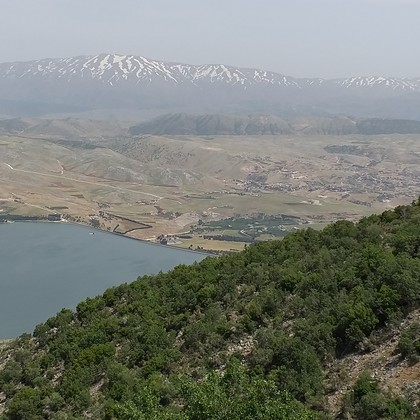
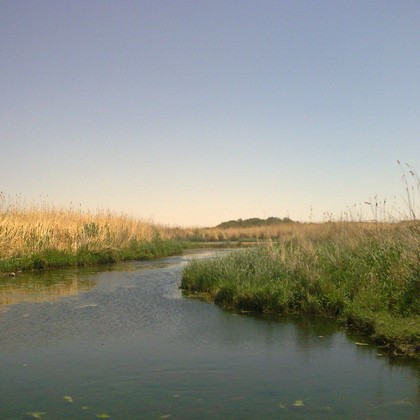
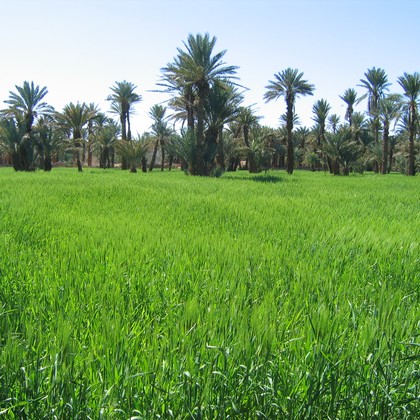
In winter over fresh water in the desert: lakes by pivot fields, sewage ponds, treatment works, marshes and irrigation pools, usually with other hirundines. Outside the region it breeds colonially in sand and loam banks along rivers and lakes in steppe and semi-desert.
Where the bird is most at home, classified by the habitats of North Africa and the Middle East.
Range and movements
In the United Arab Emirates a scarce to rare winter visitor, mainly at the desert lakes and pivot fields of Al Maha and Al Marmoom south of Dubai and at Ajman. In Oman rare in winter at sewage ponds and lagoons in Dhofar (Raysut, Khawr Rawri), on Masirah and near Sur. In Kuwait first recorded in November–December 2017 at Jahra; in Saudi Arabia first confirmed in winter 2020–2021 at Al Asfar Lake in Al Ahsa. To be expected in Qatar, Bahrain and Iraq. Beyond the region it breeds from Central Asia and southern Siberia to Mongolia and northern China and winters from Pakistan and northern India to southern China.
- Winter visitor (c. Oct–Mar)
- dark = core range, pale = thinly spread
How and when to look
From December to March at the desert lakes around Al Maha and Al Marmoom or at the sewage ponds of Dhofar. Take your time with a resting flock of hirundines on a wire or a dead branch: the pale grey-brown colour, the faint band and the dark eye in a pale face are then best seen. Photographs and sound recordings are welcome by the national records committees.
Conservation status
Not globally threatened. In the region a handful to a few dozen birds occur each winter; the number of reports is increasing, mainly through better knowledge of the identification features.
Scientific name
Riparia diluta | (Sharpe & Wyatt, 1893)
Sharpe & Wyatt described the species in 1893 as Cotile diluta; because it was later moved to another genus, the author and year stand in brackets. The genus Riparia was introduced in 1817 by Forster. Riparia comes from Latin riparius 'of the riverbank', from ripa 'riverbank', after the nest burrows these martins dig in steep banks. diluta is Latin for 'pale, washed out', from diluere 'to dilute'. The specimen the first description was based on came from the Badam River near Shymkent, Kazakhstan.