All species › Kingfishers, bee-eaters and rollers › Kingfishers › Malachite Kingfisher
Malachite Kingfisher | Corythornis cristatus
Malachietijsvogel | Martín pescador malaquita
A tiny, jewel-like kingfisher from sub-Saharan Africa that occurs in the region only as a rare visitor to Dhofar in southern Oman. There it has been seen almost every year since 2015, mainly at the reed-fringed creek of Khawr al Mughsayl. The birds probably come from the Horn of Africa, across the Gulf of Aden.
Voice
A high, sharp tseep or tseek, mostly in fast, low flight over the water, higher and thinner than Common Kingfisher’s call; when excited a squeaky twittering.
Recording: Bernard BOUSQUET — CC BY-NC-SA 4.0 · converted to mono · xeno-canto
Identification
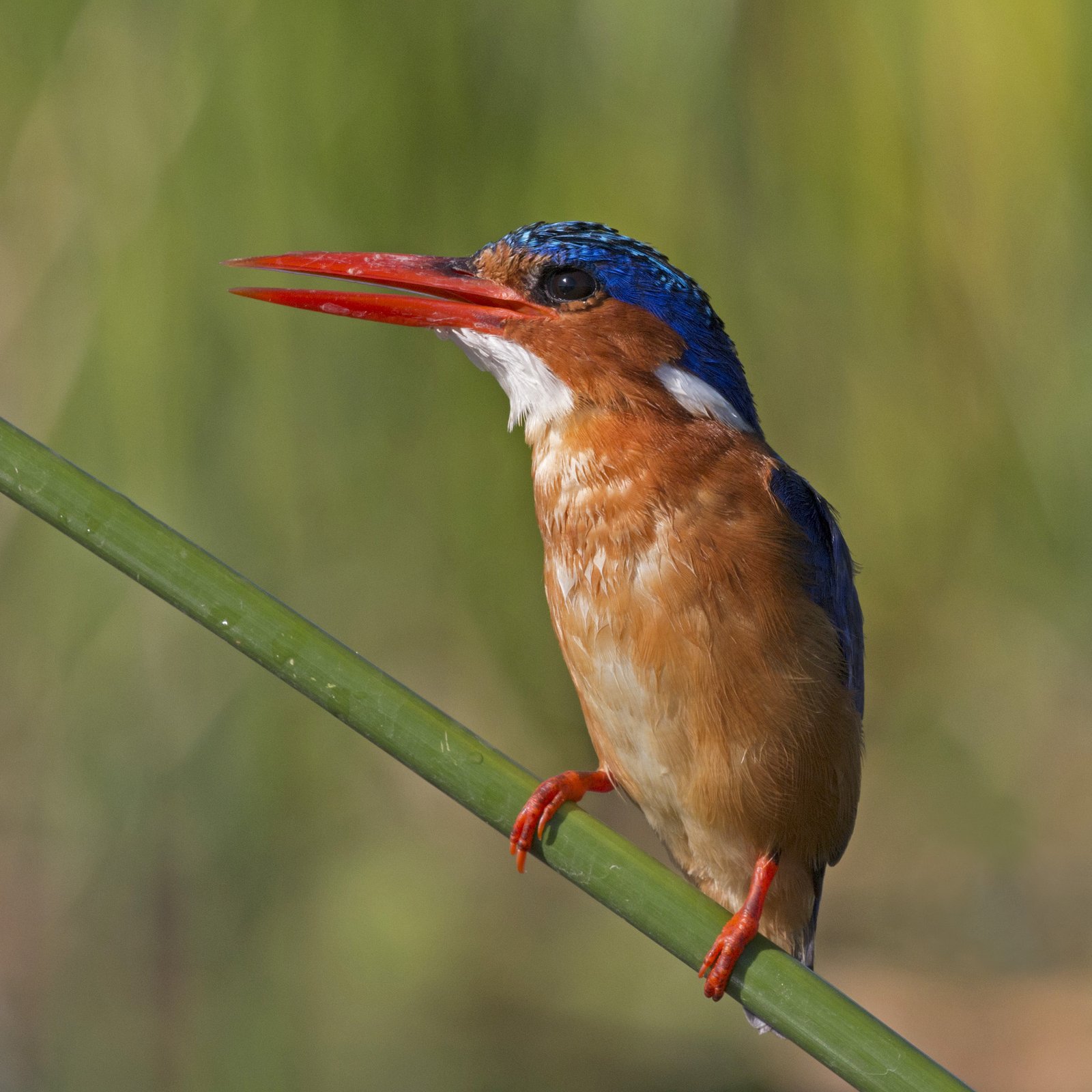
About 13 cm, smaller than Common Kingfisher. Upperparts deep ultramarine, crown and crest turquoise with fine black bars; the crest reaches the eye and can be raised. Cheeks and underparts rufous-orange, without a white ear patch, with a white throat and a white patch on the side of the neck. Bill and legs bright red. The sexes are alike; juveniles are duller, with a blackish bill that turns red over a few months.
Confusion species
Common Kingfisher (Alcedo atthis), which also winters in Dhofar, is larger, with a black or partly orange bill, an unbarred crown, a turquoise back stripe and a white patch behind the orange ear coverts. African Pygmy Kingfisher (Ispidina picta), not recorded in the region, is smaller still, has a violet cheek patch and a crown that does not reach the eye, and often lives far from water.
Habitat
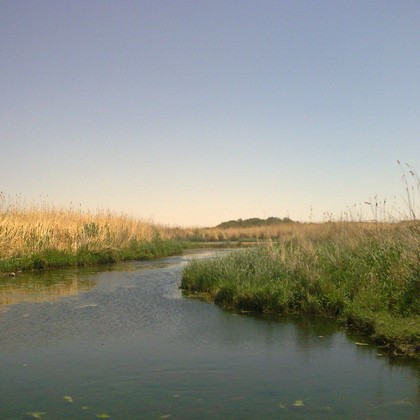
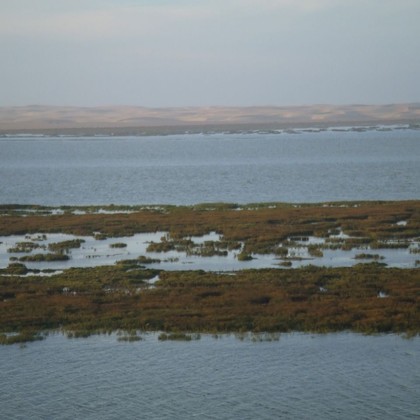
Reed fringes and low bankside vegetation along fresh and brackish creeks, lagoons and streams. Perches low, often on a reed stem just above the water, and dives for small fish, tadpoles and aquatic insects.
Where the bird is most at home, classified by the habitats of North Africa and the Middle East.
Range and movements
In the region only in Dhofar, southern Oman: mainly at Khawr al Mughsayl and the adjacent Wadi Ashawq, where birds have been seen almost annually since 2015, often by many observers at the same spot; also one report from Filim on the Arabian Sea coast of central Oman (January 2024). No breeding is known. Not recorded elsewhere in the region. Beyond it widespread in sub-Saharan Africa, from Senegal to Ethiopia and Somalia and south to South Africa, also along the Nile in Sudan.
- Resident
- Summer visitor (c. Apr–Sep)
- Winter visitor (c. Oct–Mar)
- Passage (Mar–Apr, Oct–Nov)
- dark = core range, pale = thinly spread
How and when to look
Anyone visiting Dhofar in autumn or winter can quietly walk the reed edges at Khawr al Mughsayl or scan from the road along the creek; local birding groups usually report quickly when one is present again. Look for a small orange-and-blue bird with a red bill low in the reeds.
Conservation status
Not globally threatened and common in Africa. In Oman a rare but almost annual visitor; the run of records in Dhofar since 2015 points to regular visits from the Horn of Africa rather than an established population. The khawrs of Dhofar are themselves vulnerable to disturbance and changes in water levels.
Scientific name
Corythornis cristatus | (Pallas, 1764)
Pallas described the species in 1764 as Alcedo cristata; because it was later moved to another genus, the author and year stand in brackets. The genus Corythornis was introduced in 1848 by Kaup. Corythornis comes from the Greek korys, genitive korythos, 'helmet', and ornis, 'bird' — for the barred crest on the crown of Malachite Kingfisher. cristatus is Latin for 'crested', from crista, 'crest' — for the black-and-turquoise barred crest. The specimen the first description was based on came from Cape of Good Hope.