All species › Grebes › Grebes › Little Grebe
Little Grebe | Tachybaptus ruficollis
Dodaars | Zampullín común
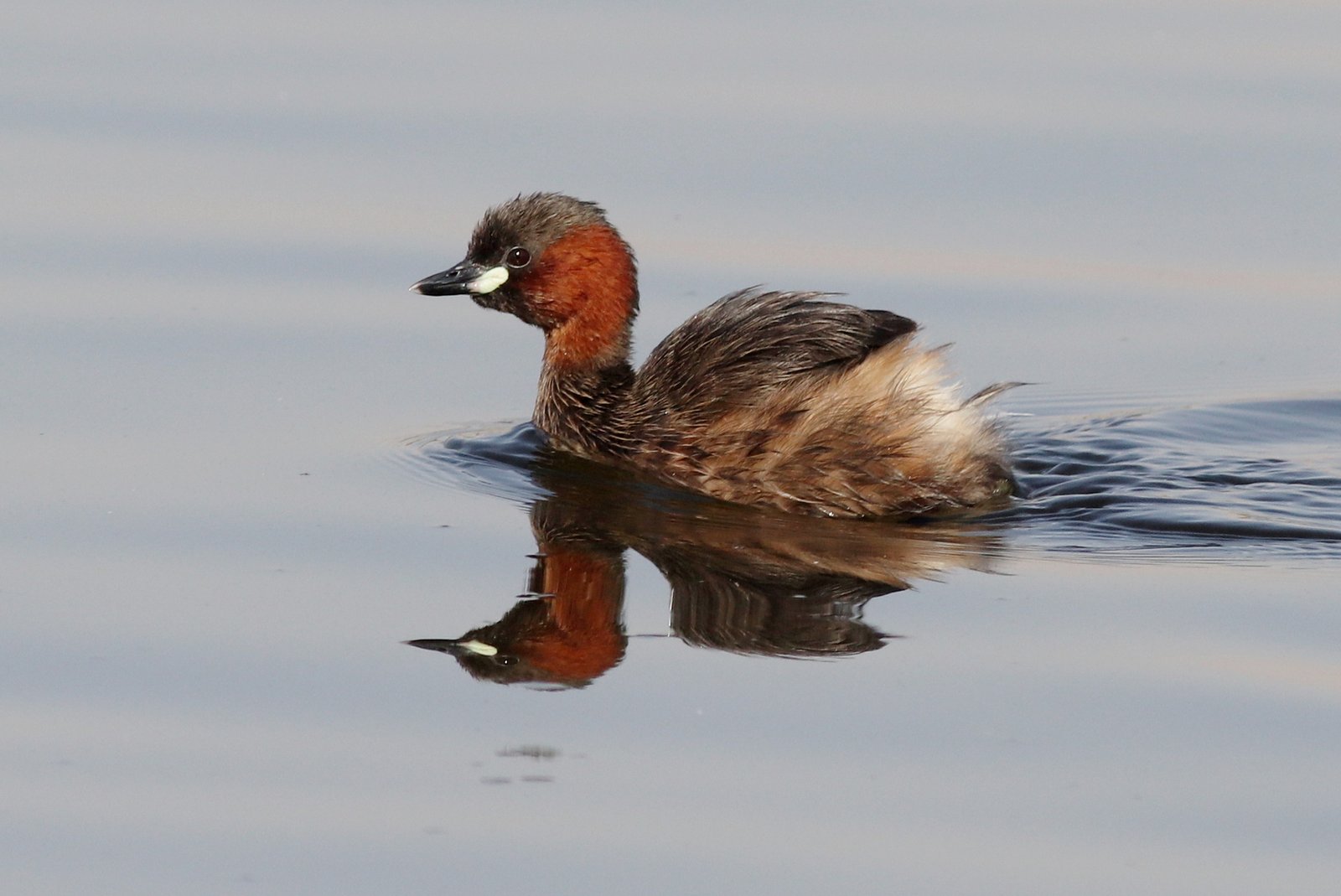
The Little Grebe is the smallest grebe in the region: a round, tailless-looking waterbird that dives at the first alarm and resurfaces further off among the water plants. Its whinnying trill is often the first and sometimes the only sign that it is present.
Voice
A drawn-out whinnying trill that swells and fades, bibibibibibi-i-i, often in duet. Also a short, sharp bee-ip as a contact call. Heard in winter and at night as well.
Recording: Beatrix Saadi-Varchmin — CC BY-NC-SA 4.0 · converted to mono · xeno-canto
Identification
Small and dumpy, with a short bill, a rounded head and a fluffy rear end that gives a cork-like outline. In breeding plumage dark brown with chestnut cheeks and foreneck, a striking yellow-green spot at the bill base and a dark eye. In winter much paler, buff-brown with dark crown and back and pale flanks; the pale bill base remains visible. Juveniles show stripes on the cheeks. In flight, rarely seen, there are no clear white wing panels.
Confusion species
Eared Grebe (Podiceps nigricollis) is larger and slimmer, with an upturned bill, red eye, steeper forehead and, in winter, much crisper black-and-white pattern. Horned Grebe (Podiceps auritus) is an extreme rarity in the region. Young Eurasian Moorhens swim with a nodding head and have a longer neck and tail.
Habitat
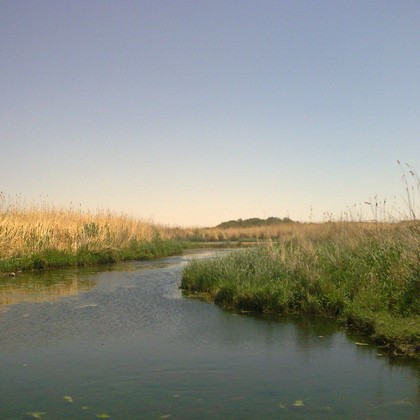
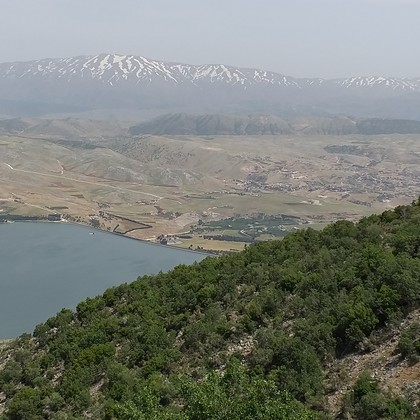
Small and medium-sized fresh waters with a fringe of reed, rushes or submerged plants: ponds, fishponds, irrigation basins, reservoirs, river backwaters, oases and marshes. It benefits greatly from artificial water, such as sewage treatment ponds, wadi dams and ponds in parks and on golf courses. In winter also on larger open waters and sheltered brackish lagoons. It eats aquatic insects, larvae, small fish and tadpoles.
Where the bird is most at home, classified by the habitats of North Africa and the Middle East.
Range and movements
Breeds in the Maghreb from Morocco to Tunisia, along the Nile and in the Nile Delta, in the Levant from Lebanon and Syria to Israel and Jordan, and in the marshes of Iraq (the endemic subspecies iraquensis). In Arabia a local resident in Saudi Arabia, Yemen, Oman and the United Arab Emirates, greatly increased with the spread of sewage ponds and dams; scarce in the smaller Gulf states. In winter birds from Europe and Turkey arrive, mainly in the north of the region. Beyond the region from Europe and Africa to South and East Asia and New Guinea.
- Resident
- Summer visitor (c. Apr–Sep)
- Winter visitor (c. Oct–Mar)
- Passage (Mar–Apr, Oct–Nov)
- dark = core range, pale = thinly spread
How and when to look
Listen at any reed edge for the whinnying trill, then scan the water for a small dark ball. Sewage ponds and the ponds of oases and kibbutzim are reliable sites, even in the heart of Arabia. A diving bird stays under for a long time and often surfaces metres away under the waterside plants: keep watching the edge of the vegetation.
Conservation status
Not threatened and locally increasing in the region thanks to artificial water. Drainage of marshes, loss of waterside vegetation and the salinisation and drying out of oases work in the opposite direction locally.
Scientific name
Tachybaptus ruficollis | (Pallas, 1764)
Pallas described the species in 1764 as Colymbus ruficollis; because it was later moved to another genus, the author and year stand in brackets. The genus Tachybaptus was introduced in 1853 by Reichenbach. Tachybaptus is Greek, from takhus 'fast' and baptō 'to sink under, dive'. ruficollis is Latin, from rufus 'reddish' and collum 'neck', after the chestnut throat and neck sides in breeding plumage. The specimen the first description was based on came from Holland.