All species › Grebes › Grebes › Eared Grebe
Eared Grebe | Podiceps nigricollis
Geoorde fuut | Zampullín cuellinegro
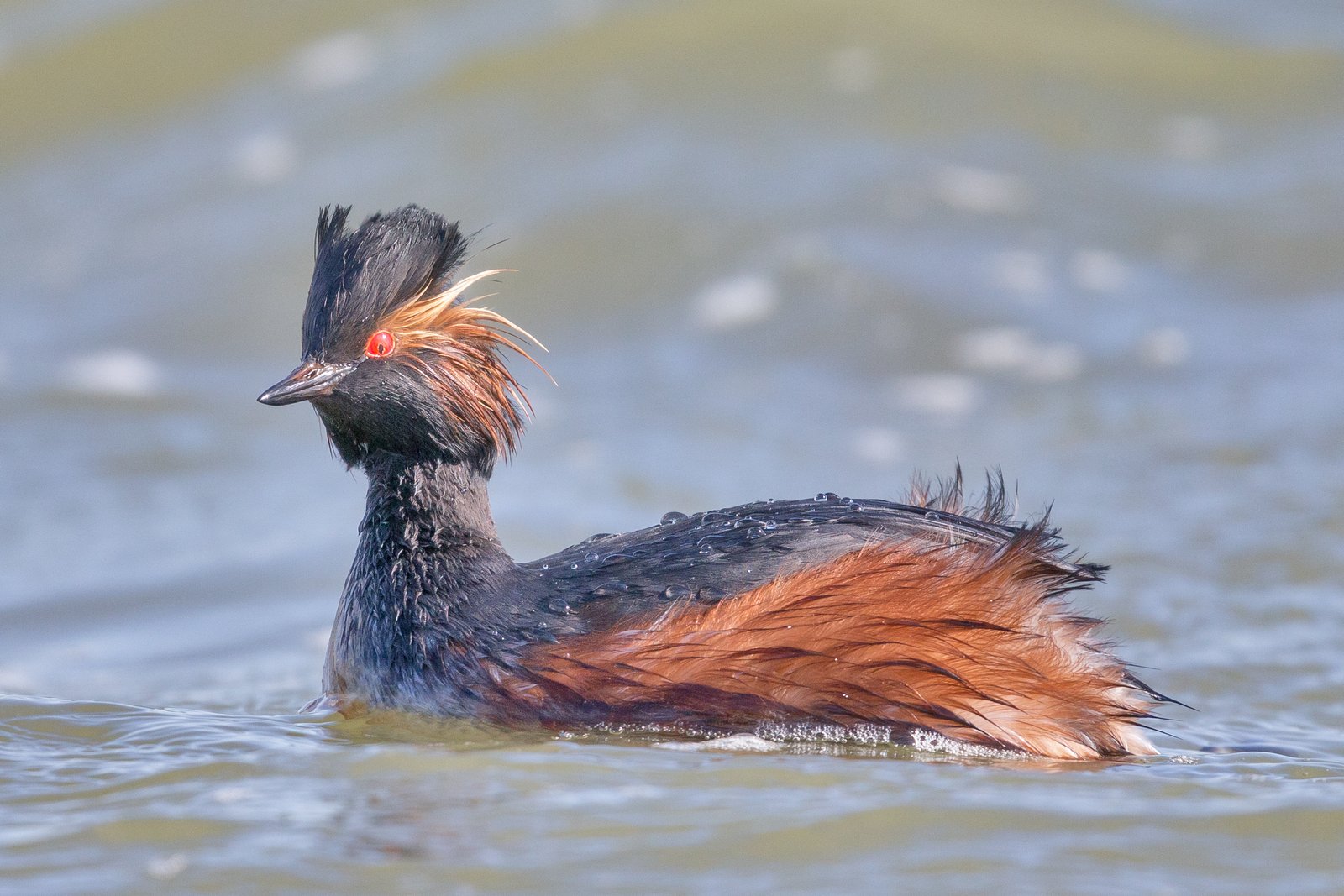
The Eared Grebe is a small, lively grebe with an upturned bill and a bright red eye. In winter it gathers in large flocks on salt lakes, lagoons and sheltered bays, where it is the most numerous grebe in the region.
Voice
In the breeding colony a soft, rising whistled poo-eet and a fast twittering trill. Rarely heard outside the breeding season.
Recording: Julien Piette — CC BY-NC-SA 4.0 · converted to mono · xeno-canto
Identification
Small, with a steep forehead, a peaked crown above the eye and a thin, slightly upturned black bill; the eye is bright red. In breeding plumage black on head, neck and back, with a fan of golden plumes behind the eye and rufous flanks. In winter black and white: a dark crown extending below the eye, dusky white cheeks that sweep up behind, and a greyish foreneck. In flight a white trailing edge to the inner wing.
Confusion species
Horned Grebe (Podiceps auritus), an extreme rarity in the region, has a straight bill with a pale tip, a flat crown and, in winter, a sharply demarcated black cap above clean white cheeks. Little Grebe (Tachybaptus ruficollis) is smaller, browner and rounder, with a dark eye and a pale spot at the bill base.
Habitat
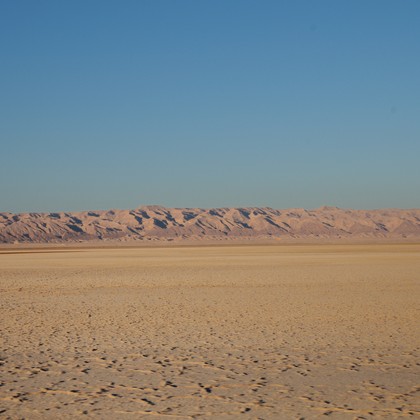
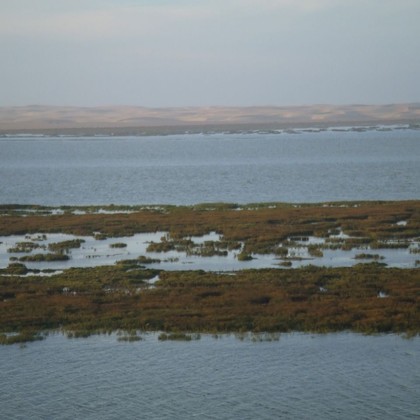
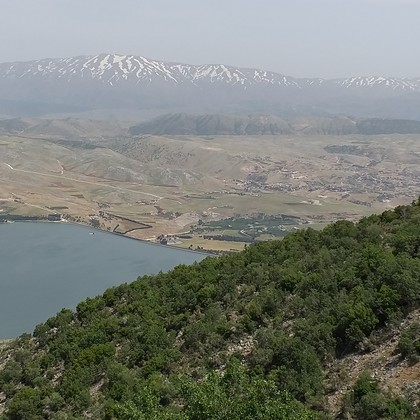
Breeds in small colonies on shallow, productive fresh and slightly brackish lakes with abundant waterside and aquatic vegetation, often alongside gulls or terns. In winter on salt lakes, sebkhas, coastal lagoons, sewage ponds, reservoirs and sheltered bays, where flocks of hundreds to thousands take small crustaceans, insect larvae and small fish.
Where the bird is most at home, classified by the habitats of North Africa and the Middle East.
Range and movements
Breeds locally and erratically in the Maghreb, mainly on the lakes of the Middle Atlas in Morocco and in north-eastern Algeria and Tunisia, and irregularly in the Levant and Iraq. Widespread in winter: along the Mediterranean coast, on the Egyptian lakes of the Nile Delta, Bardawil and the Fayoum, along the Gulf of Suez and the northern Red Sea to Eilat and Aqaba, in Iraq and Kuwait and along the Persian Gulf coasts to Bahrain, Qatar and the United Arab Emirates; scarcer in inland Saudi Arabia and in Oman, rare in Yemen. Beyond the region it breeds from Europe to Central Asia and China, in western North America and in eastern and southern Africa.
- Resident
- Summer visitor (c. Apr–Sep)
- Winter visitor (c. Oct–Mar)
- Passage (Mar–Apr, Oct–Nov)
- dark = core range, pale = thinly spread
How and when to look
The best chance is in winter, on salt lakes and lagoons or from a beach on the Gulf of Suez and at Eilat: look for flocks of small black-and-white grebes diving in unison. In spring, breeding birds in full plumage can be seen on the lakes of the Middle Atlas.
Conservation status
Not threatened. In the region the breeding population varies greatly with water levels, and in dry years many lakes stay empty. The large winter flocks are vulnerable to oil pollution, drowning in fishing nets and the drying out or salinisation of lakes and lagoons.
Scientific name
Podiceps nigricollis | Brehm, 1831
Brehm described the species in 1831 and placed it straight away in the genus where it still stands. The genus Podiceps was introduced in 1787 by Latham. Podiceps is Latin, from podex, genitive podicis, 'rear end', and pes 'foot', after the legs set far back on the body. nigricollis is Latin, from niger 'black' and collum 'neck', after the black neck in breeding plumage. The specimen the first description was based on came from Germany.