All species › Passerines › Accentors › Dunnock
Dunnock | Prunella modularis
Heggenmus | Acentor común
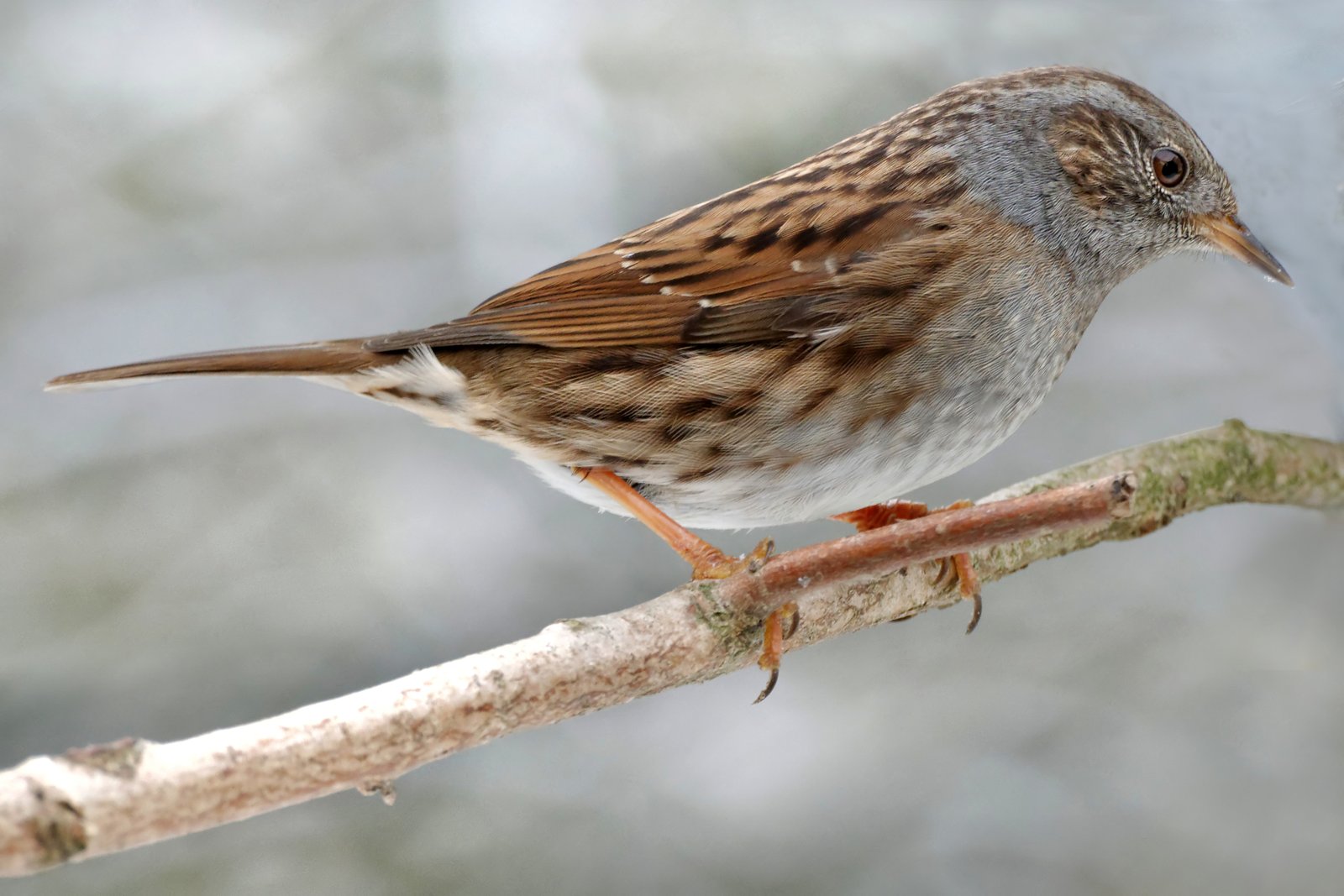
In Europe Dunnock is an everyday garden bird, but in this region it is an inconspicuous winter visitor to the northern edges: the mountains and dense vegetation of the Maghreb and the Levant. A small grey-brown bird that creeps mouse-like beneath bushes and is easily overlooked.
Voice
The call is a high, piercing tseeh or sree, and in flight a fine trilling tihihihi. The song, also heard in late winter, is a quick, flat, warbling jingle of short high notes.
Recording: Paul Kelly — CC BY-NC-SA 4.0 · converted to mono · xeno-canto
Identification
13–14.5 cm. Small and slim, with a fine, pointed, dark bill. Head, throat and breast slate-grey, with brown crown and ear-coverts; back and wings warm brown with black streaks, flanks with brown streaks, belly off-white. The eye is red-brown to orange-red and stands out in the grey face. Legs pinkish-brown. Sexes alike. Moves with a creeping, shuffling gait and brief flicks of wings and tail, low on the ground beneath bushes.
Confusion species
A female sparrow such as House Sparrow (Passer domesticus) has a thick conical bill, no grey breast and a pale supercilium. Eurasian Wren (Troglodytes troglodytes) is much smaller, warm brown and barred, with a cocked tail. European Robin (Erithacus rubecula) has an orange breast. Alpine Accentor (Prunella collaris) is larger, with a spotted throat and chestnut flanks, and Radde's Accentor (Prunella ocularis) has a broad creamy supercilium.
Habitat
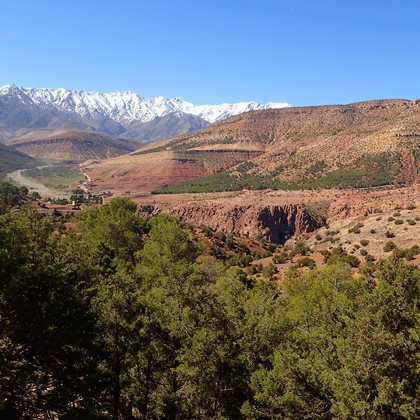
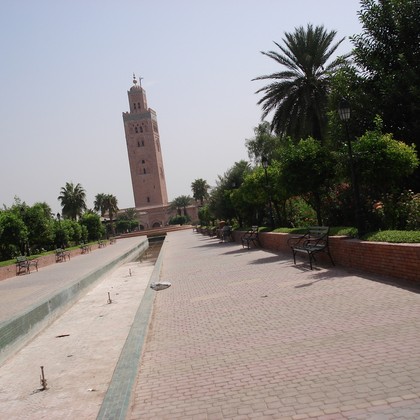
In winter dense undergrowth: maquis, scrub at woodland edges, oak, cedar and juniper woodland in the mountains, hedges, gardens and parks, olive groves and dense thickets along streams. Feeds on the ground on small insects and seeds, usually close to cover.
Where the bird is most at home, classified by the habitats of North Africa and the Middle East.

Range and movements
Winter visitor from November to March to northern Morocco (Rif, Middle Atlas, Atlantic lowlands), northern Algeria and northern Tunisia, scarce and varying in numbers. In the Middle East a winter visitor to Lebanon, western Syria, northern Israel (Hermon, Golan, Galilee and Carmel; rare further south), north-west Jordan and Iraqi Kurdistan. Elsewhere, as in Libya, Egypt, Saudi Arabia, Kuwait and the Gulf states, a vagrant. No regular breeding area is known within the region. Beyond it the species breeds across almost all of Europe, Turkey, the Caucasus and northern Iran.
- Resident
- Summer visitor (c. Apr–Sep)
- Winter visitor (c. Oct–Mar)
- Passage (Mar–Apr, Oct–Nov)
- dark = core range, pale = thinly spread
How and when to look
In winter in the cedar forests and scrub around Ifrane in the Middle Atlas, or in northern Israel on Mount Hermon and in the scrub of the Golan and Carmel. Listen for the thin high call from a bush and wait for the bird to shuffle into an open patch on the ground.
Conservation status
Not globally threatened and common in Europe. Within the region numbers depend on the severity of the winter further north; little is known about trends.
Scientific name
Prunella modularis | (Linnaeus, 1758)
Linnaeus described the species in 1758 as Motacilla modularis; because it was later moved to another genus, the author and year stand in brackets. The genus Prunella was introduced in 1816 by Vieillot. Prunella comes from the German Braunelle, the name for the dunnock, a diminutive of braun 'brown'. modularis is Latin for 'singing', from modulari 'to sing melodiously'. The specimen the first description was based on came from Sweden.