All species › Gamebirds › Pheasants and partridges › Common Quail
Common Quail | Coturnix coturnix
Kwartel | Codorniz común
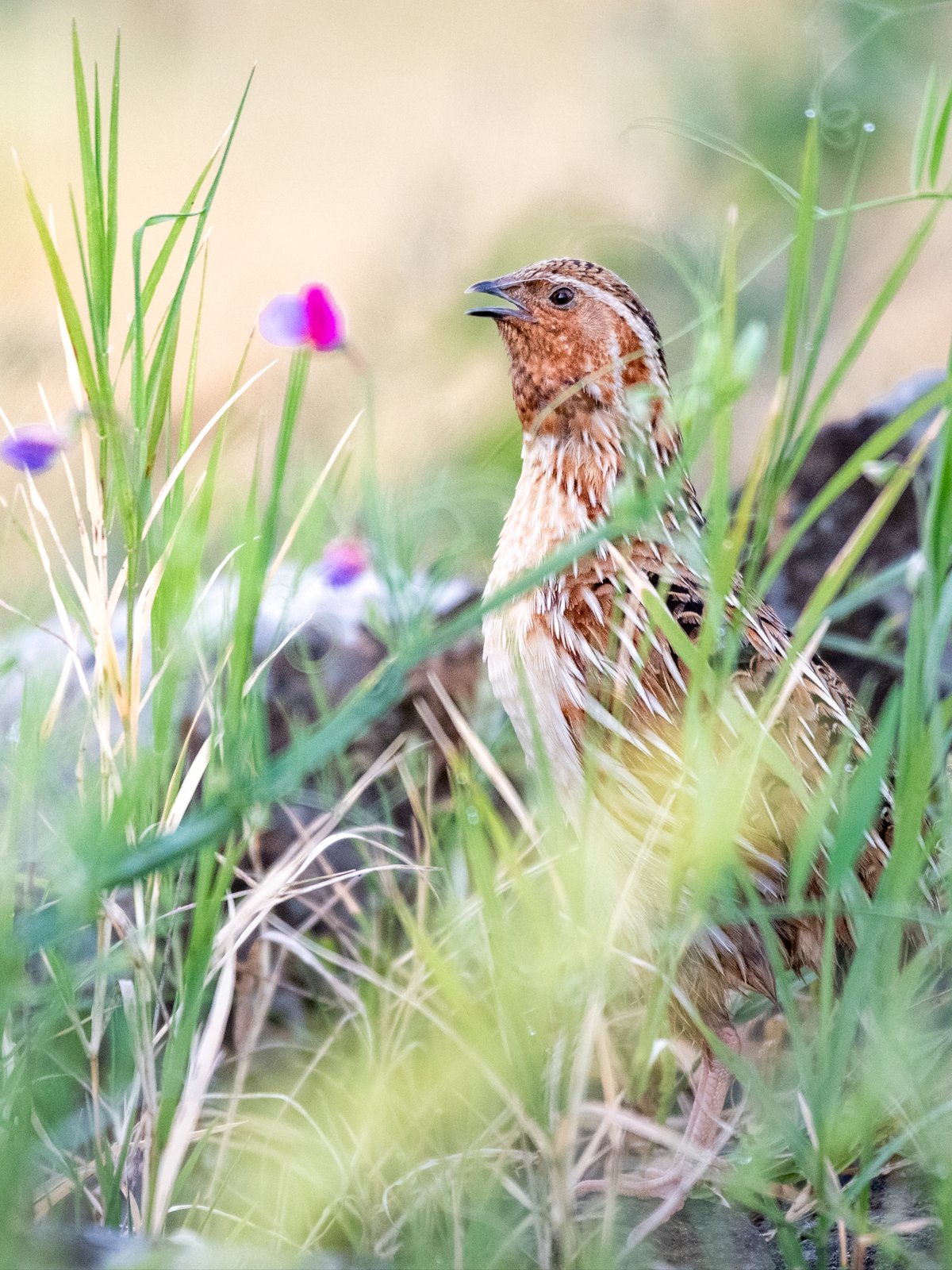
The only truly migratory gamebird of the region, crossing the Sahara and the Arabian deserts in large numbers twice a year. Seldom seen, often heard: the male's three-part 'wet-my-lips' from a cereal field is one of the best-known rural sounds in spring and summer from Morocco to Iraq.
Voice
The male's call is a clear, three-part, far-carrying whic-whic-ic ('wet-my-lips'), often preceded by a soft, nasal wau-wau audible only at close range. Calls by day and by night, on migration also at night from the air. The female answers with a soft bru-bru.
Recording: MarekJas — CC BY-NC-SA 4.0 · converted to mono · xeno-canto
Identification
About 17 cm, the smallest gamebird of the region. Dumpy, with a very short tail and relatively long, pointed wings. The upperparts are brown with black spotting and conspicuous creamy-white streaks; the crown has a pale central stripe, the supercilium is cream. The male has a variable dark throat pattern, from a black 'anchor' to a rufous throat, with a rufous breast and pale shaft streaks on the flanks. The female has a pale throat without black and a spotted breast. In flight the long, pointed wings beat fast; it flies low and far before dropping in again.
Confusion species
Common Buttonquail (Turnix sylvaticus), in the region at most at a few sites in Morocco and possibly extinct, is slightly smaller, has a buff breast bordered with black spots, pale eyes and a plainer back, and gives a deep, booming hoot. Harlequin Quail (Coturnix delegorguei), only in the Tihama of south-western Arabia, is slightly smaller; the male has a black-and-white striped head, a black breast and chestnut flanks. Corn Crake (Crex crex) is larger, with rufous wings that stand out in flight and dangling legs. Young francolins and partridges move in coveys with their parents.
Habitat
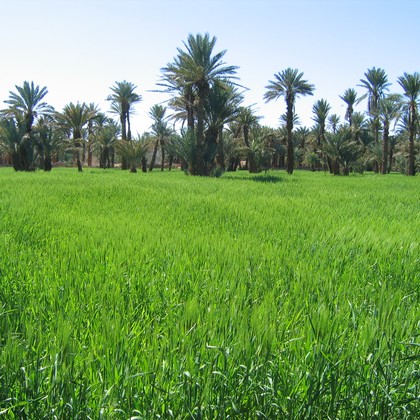
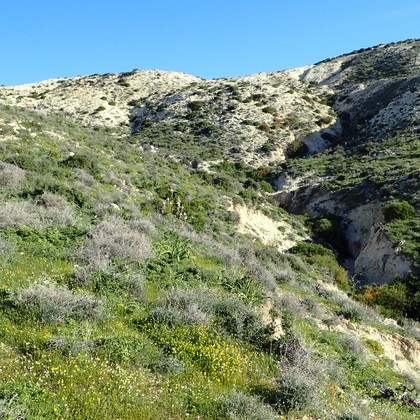
Open land with grass or crop cover: cereal fields, lucerne, hay meadows, fallow and herb-rich steppe, in the Atlas up to the high plateaus and mountain meadows above 2,500 metres. On migration anywhere with some green, including oases, irrigated farmland, coastal plains and gardens; in the Nile Delta and along the Mediterranean coast of Egypt and Libya migrants come ashore exhausted after the crossing.
Where the bird is most at home, classified by the habitats of North Africa and the Middle East.
Range and movements
Breeds in Morocco, northern Algeria, Tunisia, north-western and north-eastern Libya, the Nile Delta and valley in Egypt, and in the Levant, Syria and Iraq. A passage migrant throughout the region, including across the central Sahara and Arabia; winters in small numbers in North Africa, Egypt and south-western Arabia, while most migrants continue to the Sahel. In Yemen and south-western Saudi Arabia it also breeds locally in the highlands. Beyond the region across much of Europe and western and central Asia, with the resident subspecies C. c. africana in sub-Saharan Africa.
- Resident
- Summer visitor (c. Apr–Sep)
- Winter visitor (c. Oct–Mar)
- Passage (Mar–Apr, Oct–Nov)
- dark = core range, pale = thinly spread
How and when to look
Listen in April and May beside a cereal field in the Moroccan Middle Atlas, in Galilee or in the Bekaa Valley, especially at dawn and dusk. Seeing one is harder: it almost only shows when flushed. In April and September migrants on the coastal plain of northern Sinai or in the oases of the Western Desert can be strikingly numerous and may then be seen in bare patches.
Conservation status
Not globally threatened, but numbers fluctuate strongly from year to year. Along the Egyptian and Libyan Mediterranean coast large numbers of migrants are caught in autumn in kilometres of nets; elsewhere in the region it is a favoured quarry. It also suffers from agricultural intensification and early mowing. Releases of farmed Japanese Quail and hybrids locally threaten its genetic integrity.
Scientific name
Coturnix coturnix | (Linnaeus, 1758)
Linnaeus described the species in 1758 as Tetrao Coturnix; because it was later moved to another genus, the author and year stand in brackets. The genus Coturnix was introduced in 1764 by De Garsault. Coturnix is the Latin word for the quail. The specific name repeats the genus name. The specimen the first description was based on came from Sweden.