All species › Falcons › Falcons › Common Kestrel
Common Kestrel | Falco tinnunculus
Torenvalk | Cernícalo vulgar
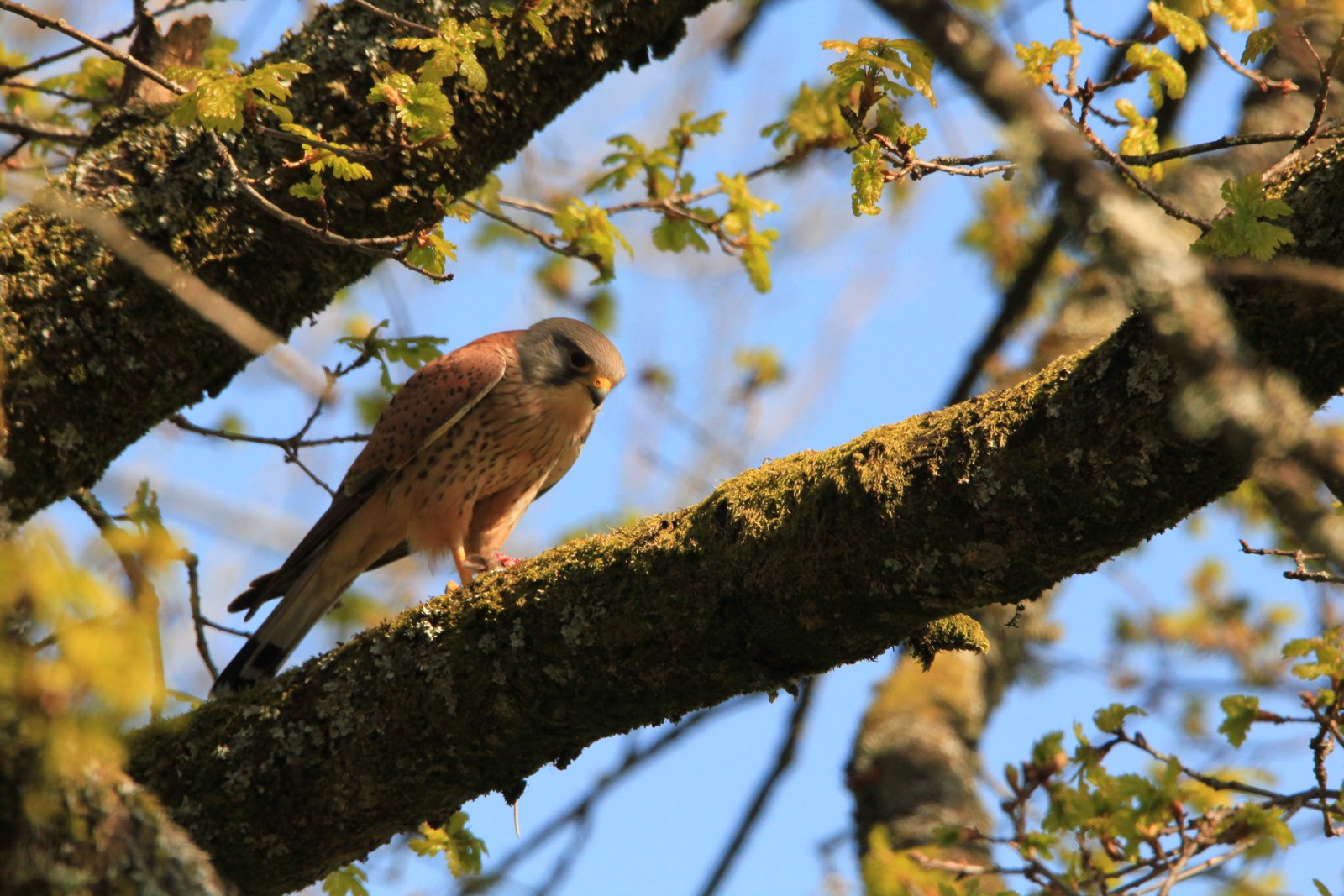
The Common Kestrel is the commonest and most widespread raptor in the region, from the Atlas and the Nile valley to the Arabian mountains and Socotra. Its prolonged hovering over one spot, with fanned tail and motionless head, makes it one of the most easily recognised falcons.
Voice
A shrill, rapidly repeated kee-kee-kee-kee, mainly at the nest and in territorial disputes; young and begging females give a trilling kreee.
Recording: Arjun Dutta — CC BY-NC-SA 4.0 · converted to mono · xeno-canto
Identification
32–37 cm, wingspan 68–80 cm. A medium-sized falcon with long, fairly pointed wings and a long tail rounded at the tip. The male has a blue-grey head with a narrow dark moustache, a rufous back spotted black, and a blue-grey tail with a broad black subterminal band and white tip; the primaries are dark and contrast with the back. The female is warm brown barred black above, with a barred brown tail and more heavily streaked buff underparts. In flight the underwing shows fine spots and bars. Desert birds, such as the Egyptian form of the Nile valley and Arabia, are often paler and sandier.
Confusion species
Lesser Kestrel (Falco naumanni) is smaller and slimmer, with a wedge-shaped tail and white claws; the male has an unspotted back, a blue-grey wing panel and no moustache. Females of the two are hardest; note the clearer moustache and more densely marked underwing of Common Kestrel. The female Red-footed Falcon (Falco vespertinus) has an orange crown and a dark eye mask and hovers less. Merlin (Falco columbarius) is smaller and more compact and hardly ever hovers.
Habitat
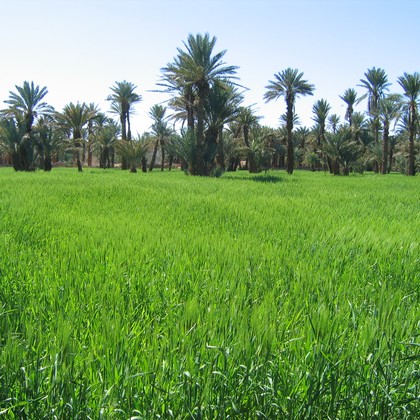
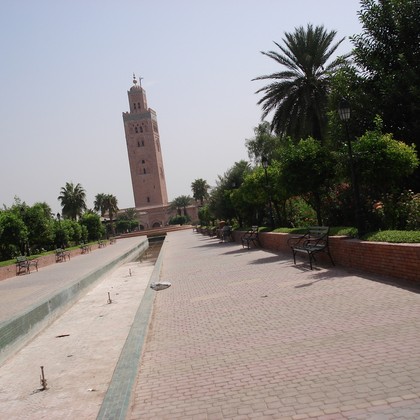
Almost any open landscape with perches: cliffs and gorges in mountains and desert, wadis, farmland and orchards, steppe, sea cliffs, oases and towns, where it nests on minarets, apartment blocks and ruins. It builds no nest but lays in a rock cavity, an old crow's nest or a niche in a building. Hunts by hovering or from a perch for mice, lizards, large insects and small birds.
Where the bird is most at home, classified by the habitats of North Africa and the Middle East.

Range and movements
Resident and widespread in Morocco, including Western Sahara, and in northern Algeria, Tunisia and coastal Libya, scarcer deep in the Sahara at rock massifs such as the Hoggar. In Egypt common in the Nile valley and delta and in Sinai. In the Levant common in Israel, Jordan, Lebanon and Syria, and in Iraq. In Arabia it breeds in the mountains and rocky deserts of Saudi Arabia, Yemen and Oman and in the Hajar Mountains of the UAE; in the flat Gulf states (Kuwait, Qatar, Bahrain) mainly a winter visitor and passage migrant, with a few breeding pairs locally. Resident on Socotra. In winter migrants from Europe and Central Asia join them. Beyond the region in almost all of Europe, Asia and Africa.
- Resident
- Summer visitor (c. Apr–Sep)
- Winter visitor (c. Oct–Mar)
- Passage (Mar–Apr, Oct–Nov)
- dark = core range, pale = thinly spread
How and when to look
Seen everywhere; look for a falcon hanging on the wind for minutes over a verge or field. In Morocco on the kasbahs and gorges of the south, in Egypt over the fields along the Nile, in Arabia along wadi walls and on pylons. In spring compare with Lesser Kestrels passing through the same areas.
Conservation status
Not threatened; the species is widespread and adapts well to towns and farmland. In parts of Europe it has declined through agricultural intensification and fewer voles; in the region rodenticide poisoning, electrocution on power poles and trapping play a local role.
Scientific name
Falco tinnunculus | Linnaeus, 1758
Linnaeus described the species in 1758 and placed it straight away in the genus where it still stands. He introduced the genus Falco in that same work. Falco is Late Latin for 'falcon', from falx, falcis 'sickle', after the sickle-shaped claws of the bird. tinnunculus is the Latin name of the kestrel, from tinnulus 'shrill', after the call. The specimen the first description was based on came from Sweden.