All species › Waterfowl › Ducks, geese and swans › Common Goldeneye
Common Goldeneye | Bucephala clangula
Brilduiker | Porrón osculado
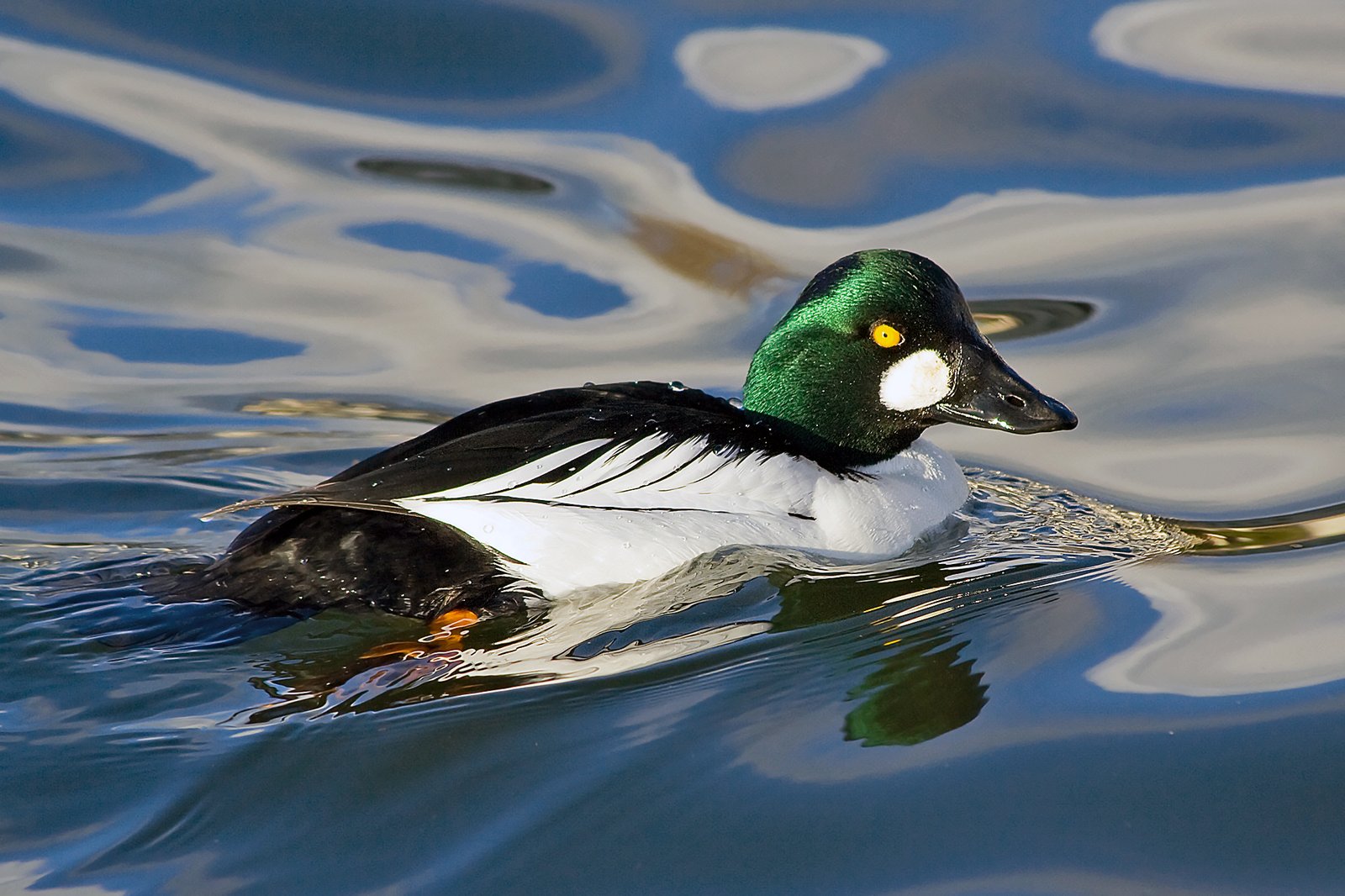
The Common Goldeneye is a compact diving duck with a triangular head and a bright yellow eye, which breeds in tree holes in the northern forests. Within the region it is a rare vagrant, turning up now and then in winter on a lake or reservoir, usually as a female or immature.
Voice
In display the male gives a rasping, creaking bee-eek with the head thrown back; females call a hoarse berr-berr. More noticeable is the high whistling of the wings, especially in adult males.
Recording: Stanislas Wroza — CC BY-NC-SA 4.0 · shortened to the first 60 s, mono · xeno-canto
Identification
About 45 cm, with a high, triangular head, a short bill and a yellow eye. The male is strikingly white with a black back, a green-glossed black head and a round white spot between bill and eye. The female has a chocolate-brown head, a narrow white collar, a grey body and a dark bill with a yellow tip. Immatures resemble the female but lack the collar and have a dark eye. In flight large white wing panels and a whistling wing noise.
Confusion species
A female Tufted Duck (Aythya fuligula) is wholly dark brown with a round head and a small tuft. A female Red-crested Pochard (Netta rufina) has a pale cheek and a brown cap. A female Long-tailed Duck (Clangula hyemalis) has a white head with dark patches. A male goldeneye at distance can recall a male Red-breasted Merganser (Mergus serrator), but that is slimmer with a long red bill.
Habitat
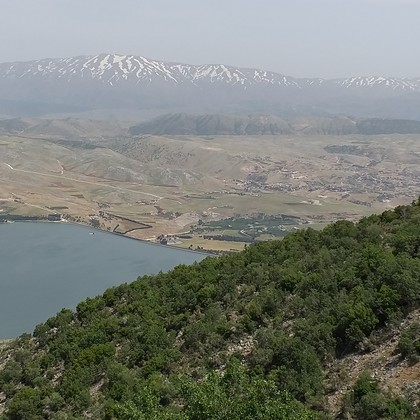
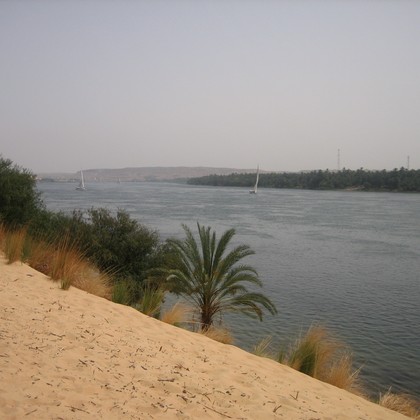
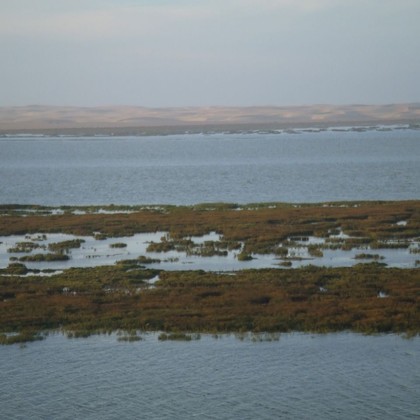
Winters on clear lakes, reservoirs, rivers and sheltered coastal waters, diving for mussels, snails, larvae and small crustaceans. Vagrants in the region have been seen on lakes, reservoirs, fishponds and coastal lagoons.
Where the bird is most at home, classified by the habitats of North Africa and the Middle East.
Range and movements
A rare vagrant. Most often in Israel, with several records in winter on the Sea of Galilee, in the Hula Valley and on fishponds and reservoirs elsewhere; further a few records from Morocco, Tunisia, Egypt and Iraq, where it was formerly also a scarce winter visitor. Beyond the region it breeds in the taiga from Scandinavia and Russia to Alaska and Canada, wintering in western and central Europe, on the Black and Caspian Seas, in east Asia and North America.
How and when to look
In winter check flocks of Tufted Ducks and Common Pochards on large lakes and reservoirs carefully. A goldeneye dives often and for long periods, then resurfaces well away from the flock; the white flanks and high head of a male show up from afar.
Conservation status
Not threatened and stable over much of its range. In parts of Europe it benefits from nest boxes. The number of vagrants in the region appears to be falling now that milder winters let the species winter further north.
Scientific name
Bucephala clangula | (Linnaeus, 1758)
Linnaeus described the species in 1758 as Anas Clangula; because it was later moved to another genus, the author and year stand in brackets. The genus Bucephala was introduced in 1858 by Baird. Bucephala is Greek, from boukephalos 'bull-headed', from bous 'bull' and kephalē 'head', after the bulbous head. clangula derives from Latin clangere 'to resound', after the sound the bird makes. The specimen the first description was based on came from Sweden.