All species › Cuckoos › Cuckoos › Common Cuckoo
Common Cuckoo | Cuculus canorus
Koekoek | Cuco común
The familiar brood parasite with its two-note call, which breeds in the north of the region and in spring and autumn migrates across the whole region to and from its winter quarters in sub-Saharan Africa. On passage it turns up in the most unlikely oases and desert gardens.
Voice
The male gives the familiar cuck-oo, the second note clearly lower, mainly from April to June, sometimes with a stuttering or three-note variant. The female has a bubbling, laughing trill. Usually silent on passage, though migrant males sometimes sing in oases in spring.
Recording: Aku Kalliomäki — CC BY-NC-SA 4.0 · converted to mono · xeno-canto
Identification
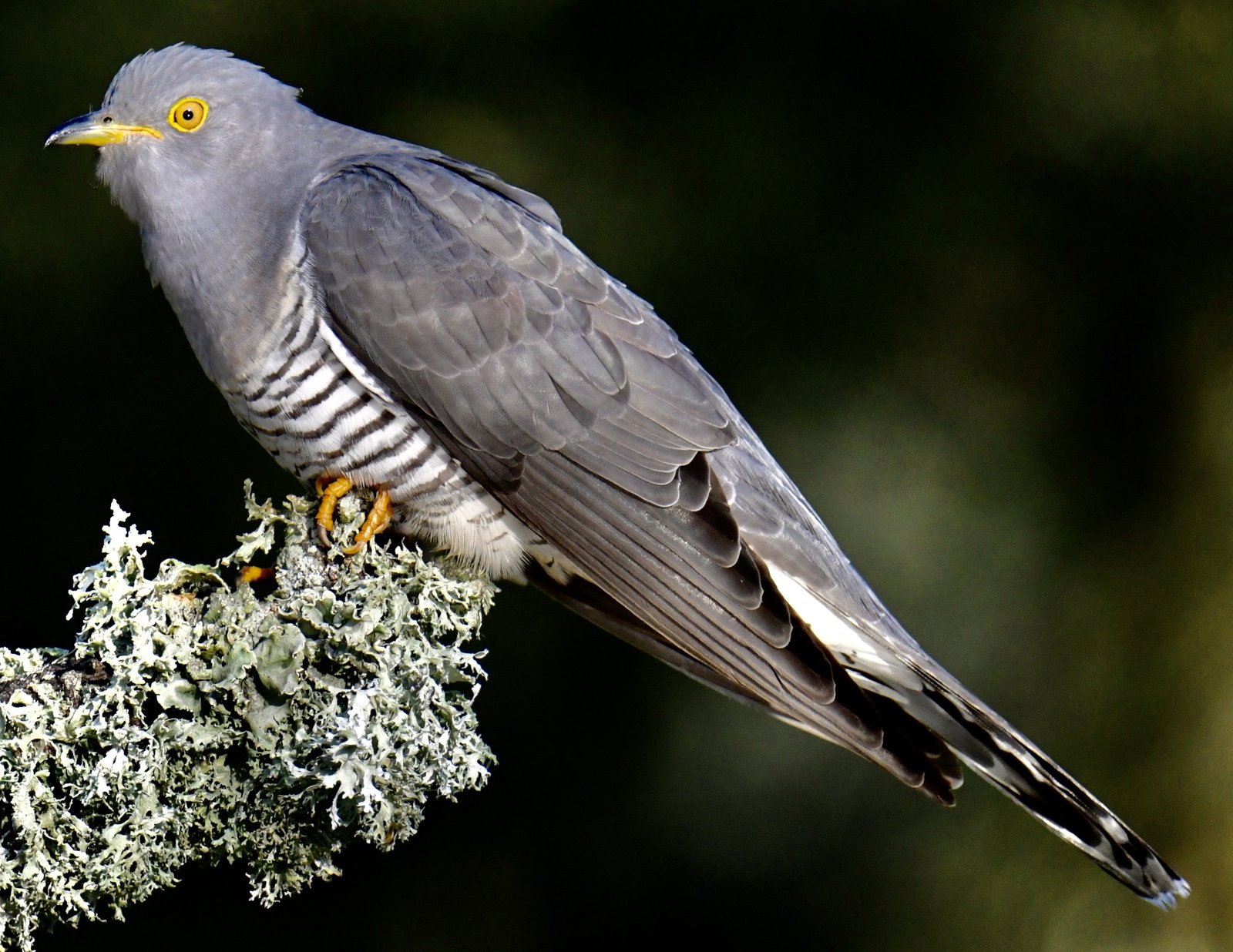
Slender, with a long tail and pointed wings; in flight falcon-like, the wingbeats not rising above the back and the head slightly raised. Males and most females are slate-grey above, on head and breast, with a white, finely dark-barred belly; females often have a rufous wash on the upper breast. A rufous (hepatic) female morph is entirely rufous with dense black barring. Yellow eye-ring and legs; bill dark with yellow at the base. First-year birds are grey-brown or rufous with white feather edges and a white nape patch. Often perches with drooping wings and raised tail.
Confusion species
Eurasian Sparrowhawk (Accipiter nisus), Levant Sparrowhawk (Tachyspiza brevipes) and Shikra (Tachyspiza badia) have a hooked bill, more rounded wings and a flap-and-glide flight. Great Spotted Cuckoo (Clamator glandarius) is larger, with a grey crest, a white-spotted back and unbarred underparts. Grey-bellied Cuckoo (Cacomantis passerinus), a rare vagrant in the east, is much smaller and has an unbarred grey breast and belly.
Habitat
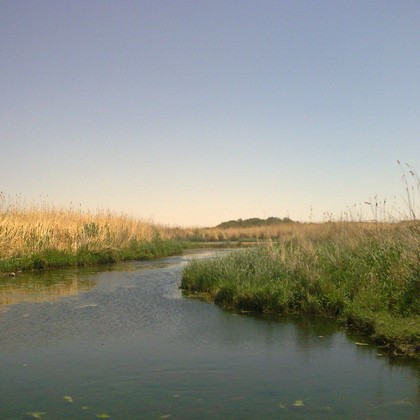
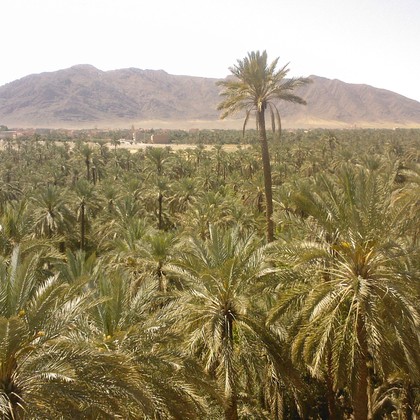
Breeds in forests and woodland edges in the Atlas and the Rif, in oak and cedar forest, in reed marshes and riverside vegetation, and in wooded farmland in the Levant and northern Iraq; always where its hosts are numerous, such as Eurasian Reed Warbler (Acrocephalus scirpaceus). On passage in any landscape with some vegetation: oases, date-palm groves, parks, wadis with acacias and coastal scrub. Eats mainly hairy caterpillars.
Where the bird is most at home, classified by the habitats of North Africa and the Middle East.

Range and movements
Breeds in Morocco (Rif, Middle and High Atlas and the forests of the north-west), northern Algeria and Tunisia, Israel, Lebanon, Syria, western Jordan and northern Iraq; in Egypt and Libya at most sporadically. Passage migrant through the whole region, also across the Sahara, along the Nile and the Red Sea and over the Arabian Peninsula, from March to May and from August to October; a few winter in southern Arabia. Beyond the region it breeds across almost all of Europe and Asia; winters in sub-Saharan Africa and South Asia.
- Resident
- Summer visitor (c. Apr–Sep)
- Passage (Mar–Apr, Oct–Nov)
- dark = core range, pale = thinly spread
How and when to look
In the Atlas and the Levant it can be heard in April and May from dawn; follow the call and look for a bird flying low over a woodland edge or sitting on a bare branch. On passage, oases, kibbutz gardens near Eilat and the parks of the Gulf states are good places; look especially for grey or rufous juveniles in September.
Conservation status
Not globally threatened, but it has declined sharply in parts of Europe, partly through the decline of large caterpillars and problems along the migration route across the Sahara and in the wintering areas. In the region it suffers locally from the loss of woodland and reed marshes.
Scientific name
Cuculus canorus | Linnaeus, 1758
Linnaeus described the species in 1758 and placed it straight away in the genus where it still stands. He introduced the genus Cuculus in that same work. Cuculus is the Latin word for the cuckoo. canorus is Latin for 'melodious, tuneful', from canere 'to sing'. The specimen the first description was based on came from Sweden.